
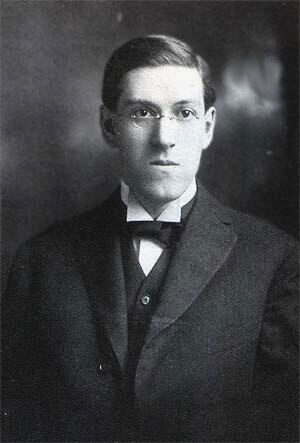
H. P. Lovecraft
H. P. Lovecraft was an American writer and editor. Born August 20, 1890, in Providence. Died March 15, 1937, in Providence. Known for The Call of Cthulhu, The Shadow Out of Time and At the Mountains of Madness. Educated at Hope High School. Awards include Science Fiction and Fantasy Hall of Fame and Retro Hugo Award for Best Series.
Facts
41 facts · 2 confirmed by two sources · 13 cited · 26 from one source
Where this comes from
Papalocal keeps its own record. It started from these sources; what each one said is kept here as it was copied, so a change on their side never changes this page by itself. Tap one to read its version.
What Wikidata says · copied November 13, 2026 · revision 2560122404
- Described as
- American writer and editor (1890–1937)
- Other names
- Howard Phillips Lovecraft, Howard P. Lovecraft, HPL, E'ch-Pi-El, Grandpa Theobald, Ward Phillips, Lovecraft
- Born
- August 20, 1890 · 14 references
- Died
- March 15, 1937 · 14 references
- Born in
- Providence · 1 reference
- Died in
- Providence · 1 reference
- Buried in
- Swan Point Cemetery · 1 reference
- Cause of death
- small intestine cancer
- Citizen of
- United States
- Occupation
- novelist; poet; journalist; science fiction writer; essayist; writer · 2 references
- Education
- Hope High School · 1 reference
- Genre
- mystery fiction; fantasy; Gothic novel; science fiction; cosmicism; horror literature · 1 reference
- Known for
- The Call of Cthulhu; The Shadow Out of Time; At the Mountains of Madness; The Case of Charles Dexter Ward; The Cats of Ulthar; Beyond the Wall of Sleep; The Dream-Quest of Unknown Kadath; The Shadow Over Innsmouth
- Awards
- Science Fiction and Fantasy Hall of Fame (2016) · 1 reference; Retro Hugo Award for Best Series (2020) · 1 reference
- Field
- horror fiction · 1 reference; weird fiction; creative and professional writing · 1 reference; belletristic literature · 1 reference; fantasy literature · 1 reference; horror literature · 1 reference
- Spouse
- Sonia Greene (1924–1926)
- Father
- Winfield Scott Lovecraft · 1 reference
- Mother
- Sarah Susan Phillips Lovecraft · 1 reference
- Religion
- atheism · 1 reference
- Website
- https://hplovecraft.com
- Wikipedias with a page
- 117
Wikidata item Q169566 (wikidata.org/wiki/Q169566), public domain (CC0). Copied November 13, 2026.
What Wikipedia says · copied November 13, 2026 · revision 1384685471
Howard Phillips Lovecraft (US: ; August 20, 1890 – March 15, 1937) was an American writer of weird, horror, fantasy, and science fiction. He is best known for his creation of the Cthulhu Mythos, but his legacy is also apparent in terms like "Lovecraftian horror" and an enduring fandom.
Born in Providence, Rhode Island, Lovecraft spent most of his life in New England. Following the institutionalization of his father in 1893, he lived affluently until his family's wealth dissipated after the death of his grandfather. Lovecraft then lived with his mother with reduced financial security until she too was institutionalized in 1919. He began to write essays for the United Amateur Press Association and in 1913 wrote a critical letter to a pulp magazine that ultimately led to his involvement in pulp fiction. He became active in the speculative fiction community and was published in several pulp magazines. Marrying Sonia Greene in 1924, Lovecraft moved to New York City and later became a central figure in a wider group of authors known as the "Lovecraft Circle". Friends in New York encouraged him to submit to Weird Tales, which became his most prominent publisher. Lovecraft's time in New York took a toll on his mental state and financial conditions. He returned to Providence in 1926 and remained active as a writer for 11 years, until his death at the age of 46. It was during this final period that Lovecraft produced some of his most popular works, including The Call of Cthulhu, At the Mountains of Madness, The Shadow over Innsmouth, and The Shadow Out of Time.
Lovecraft's literary corpus is rooted in cosmicism, which was simultaneously his personal philosophy and the main theme of his fiction. Cosmicism posits that humanity is an insignificant part of the cosmos. He incorporated fantasy and science fiction elements into his stories, representing the fragility of anthropocentrism. This was tied to his ambivalent views on knowledge. His works were largely set in a fictionalized version of New England. Civilizational decline also plays a major role in his works, as he believed that the West was in decline during his lifetime. Lovecraft's early political views were conservative and traditionalist; additionally, he held a number of racist views for much of his adult life. Following the Great Depression, Lovecraft's political views became more socialist while still remaining elitist and aristocratic.
Throughout his adult life, Lovecraft was never able to support himself from his earnings as an author and editor. He was virtually unknown during his lifetime, and was almost exclusively published in pulp magazines before his death. A scholarly revival of Lovecraft's work began in the 1970s, and he is now regarded as one of the most significant 20th-century authors of supernatural horror fiction. Many direct adaptations and spiritual successors followed. Works inspired by Lovecraft, adaptations or original works, began to form the basis of the Cthulhu Mythos, which utilizes Lovecraft's characters, setting, and themes.
- Born, in its opening lines
- August 20, 1890
- Died, in its opening lines
- March 15, 1937
From the Wikipedia article “H. P. Lovecraft” (en.wikipedia.org/wiki/H._P._Lovecraft), by its contributors, under CC BY-SA 4.0 (creativecommons.org/licenses/by-sa/4.0/). Copied November 13, 2026; not changed.
Confirmed Two sources agree. Cited One source, and it names where it got it. One source One source, without a reference of its own. Sources disagree The sources disagree. We show the best-supported value and keep theirs below.
