
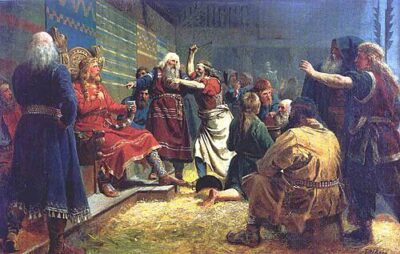
Haakon the Good
Haakon the Good was a King of Norway. Born 920, in Hordaland. Died 961, in Battle of Fitjar. Positions held include Monarch of Norway (933–961).
Facts
21 facts · 2 confirmed by two sources · 2 cited · 17 from one source
What’s different
- Born: we show 920 (Confirmed). Wikidata also lists 918
Where this comes from
Papalocal keeps its own record. It started from these sources; what each one said is kept here as it was copied, so a change on their side never changes this page by itself. Tap one to read its version.
What Wikidata says · copied November 16, 2026 · revision 2568267616
- Described as
- King of Norway
- Other names
- Håkon I av Norge, Haakon I, King of Norway
- Born
- 918; 920 · 2 references
- Died
- 961 · 1 reference
- Born in
- Hordaland
- Died in
- Battle of Fitjar
- Buried in
- Seim
- Citizen of
- Norway
- Occupation
- monarch
- Positions held
- Monarch of Norway (933–961)
- Father
- Harald Fairhair · 2 references
- Mother
- Tora Mosterstong
- Siblings
- Ólöf árbót Haraldsdóttir; Eric Bloodaxe · 1 reference; Olaf Haraldsson Geirstadalf; Bjørn Farmann; Halvdan Hålegg; Guttorm Haraldsson; Halfdan Haraldsson the Black; Rørek Haraldsson; Halfdan Hvide (?); Frode Haraldsson
- Religion
- Old Norse religion
- Wikipedias with a page
- 42
Wikidata item Q314477 (wikidata.org/wiki/Q314477), public domain (CC0). Copied November 16, 2026.
What Wikipedia says · copied November 16, 2026 · revision 1385217053
Haakon Haraldsson (c. 920–961), also Haakon the Good (Old Norse: Hákon góði, Norwegian: Håkon den gode) and Haakon Adalsteinfostre (Old Norse: Hákon Aðalsteinsfóstri, Norwegian: Håkon Adalsteinsfostre), was the king of Norway from 934 to 961. He was noted for his attempts to introduce Christianity into Norway.
- Born, in its opening lines
- 920
- Died, in its opening lines
- 961
From the Wikipedia article “Haakon the Good” (en.wikipedia.org/wiki/Haakon_the_Good), by its contributors, under CC BY-SA 4.0 (creativecommons.org/licenses/by-sa/4.0/). Copied November 16, 2026; not changed.
Confirmed Two sources agree. Cited One source, and it names where it got it. One source One source, without a reference of its own. Sources disagree The sources disagree. We show the best-supported value and keep theirs below.
