
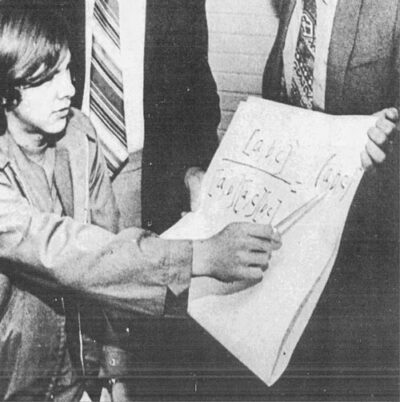
Hal Finney
Hal Finney was an American software developer. Born May 4, 1956, in Coalinga. Died August 28, 2014, in Phoenix. Educated at California Institute of Technology.
Facts
13 facts · 2 confirmed by two sources · 1 cited · 10 from one source
Where this comes from
Papalocal keeps its own record. It started from these sources; what each one said is kept here as it was copied, so a change on their side never changes this page by itself. Tap one to read its version.
What Wikidata says · copied November 16, 2026 · revision 2543463110
- Described as
- American software developer (1956-2014)
- Other names
- Harold Thomas Finney II
- Born
- May 4, 1956
- Died
- August 28, 2014
- Born in
- Coalinga
- Died in
- Phoenix · 1 reference
- Cause of death
- amyotrophic lateral sclerosis
- Name at birth
- Harold Thomas Finney
- Citizen of
- United States
- Occupation
- computer scientist; programmer; cryptographer
- Education
- California Institute of Technology (–1979)
- Sport
- athletics
- Field
- informatics
- Wikipedias with a page
- 22
Wikidata item Q5640761 (wikidata.org/wiki/Q5640761), public domain (CC0). Copied November 16, 2026.
What Wikipedia says · copied November 16, 2026 · revision 1373674672
Harold Thomas Finney II (May 4, 1956 – August 28, 2014) was an American software developer. In his early career, he was credited as lead developer on several console games. He later worked for PGP Corporation. He was an early Bitcoin contributor, and received the first Bitcoin transaction from the currency's creator Satoshi Nakamoto.
- Born, in its opening lines
- May 4, 1956
- Died, in its opening lines
- August 28, 2014
From the Wikipedia article “Hal Finney (computer scientist)” (en.wikipedia.org/wiki/Hal_Finney_(computer_scientist)), by its contributors, under CC BY-SA 4.0 (creativecommons.org/licenses/by-sa/4.0/). Copied November 16, 2026; not changed.
Confirmed Two sources agree. Cited One source, and it names where it got it. One source One source, without a reference of its own. Sources disagree The sources disagree. We show the best-supported value and keep theirs below.
