
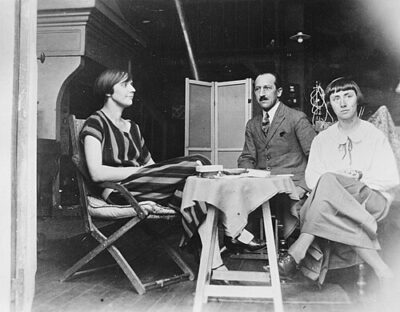
Hannah Höch
Hannah Höch was a German artist. Born November 1, 1889, in Gotha. Died May 31, 1978, in West Berlin.
Facts
25 facts · 2 confirmed by two sources · 16 cited · 6 from one source · 1 where the sources disagree
What’s different
- Died in: we show West Berlin (Sources disagree). Wikidata also lists Berlin
Where this comes from
Papalocal keeps its own record. It started from these sources; what each one said is kept here as it was copied, so a change on their side never changes this page by itself. Tap one to read its version.
What Wikidata says · copied November 16, 2026 · revision 2565962543
- Described as
- German artist (1889–1978)
- Other names
- Hannah Johanne Höch, Hannah Hoch, Anna Höch, Hannah Hoech, Johanne Höch
- Born
- November 1, 1889 · 17 references
- Died
- May 31, 1978 · 13 references
- Born in
- Gotha · 6 references
- Died in
- West Berlin · 2 references; Berlin · 2 references
- Buried in
- Heiligensee cemetery · 1 reference
- Name at birth
- Anna Therese Johanne Höch
- Citizen of
- German Reich; Germany · 2 references
- Occupation
- photographer · 2 references; painter · 3 references; draftsperson · 1 reference; graphic artist · 1 reference; collagist · 3 references; artist · 1 reference; opinion journalist · 1 reference; watercolorist · 1 reference
- Genre
- photomontage; portrait · 1 reference
- Field
- painting; photography; visual arts · 1 reference; graphics · 1 reference; collaging · 1 reference; Dada · 1 reference
- Spouse
- Kurt Heinz Matthies · 1 reference
- Wikipedias with a page
- 39
Wikidata item Q463411 (wikidata.org/wiki/Q463411), public domain (CC0). Copied November 16, 2026.
What Wikipedia says · copied November 16, 2026 · revision 1380079882
Hannah Höch (German: [hœç]; 1 November 1889 – 31 May 1978) was a German Dada artist. She is best known for her work of the Weimar period, when she was one of the originators of photomontage. Photomontage, or fotomontage, is a type of collage in which the pasted items are actual photographs, or photographic reproductions pulled from the press and other widely produced media.
An important element in Höch's work was the intention to dismantle the fable and dichotomy that existed in the concept of the "New Woman": an energetic, professional, and androgynous woman, who is ready to take her place as man's equal. Her interest in the topic was in how the dichotomy was structured, as well as in who structures social roles.
Other key themes in Höch's works were androgyny, political discourse, and shifting gender roles. These themes all interacted to create a feminist discourse surrounding Höch's works, which encouraged the liberation and agency of women during the Weimar Republic (1919–1933) and continuing through to today.
- Born, in its opening lines
- November 1, 1889
- Died, in its opening lines
- May 31, 1978
From the Wikipedia article “Hannah Höch” (en.wikipedia.org/wiki/Hannah_Höch), by its contributors, under CC BY-SA 4.0 (creativecommons.org/licenses/by-sa/4.0/). Copied November 16, 2026; not changed.
Confirmed Two sources agree. Cited One source, and it names where it got it. One source One source, without a reference of its own. Sources disagree The sources disagree. We show the best-supported value and keep theirs below.
