
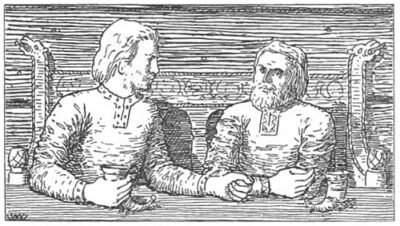
Harald III of Norway
Harald III of Norway was a King of Norway from 1046 to 1066. Born 1015, in Ringerike. Died September 25, 1066, in Stamford Bridge. Positions held include king.
Facts
23 facts · 2 confirmed by two sources · 4 cited · 16 from one source · 1 where the sources disagree
What’s different
- Buried in: we show Trondheim (1066–) (Sources disagree). Wikidata also lists Helgeseter Priory
Where this comes from
Papalocal keeps its own record. It started from these sources; what each one said is kept here as it was copied, so a change on their side never changes this page by itself. Tap one to read its version.
What Wikidata says · copied November 16, 2026 · revision 2557910202
- Described as
- King of Norway from 1046 to 1066
- Other names
- Harald Hardrada, Harald III Sigurdsson, Harald Fairhair, Harald the fairhaired, Araltes, Haralld Harfagyr, Harald Harfagera, Harald Harvagra, Harald harðráði, Harald Harvagre, Harald Harfagyr
- Born
- 1015 · 9 references
- Died
- September 25, 1066 · 1 reference
- Born in
- Ringerike
- Died in
- Stamford Bridge · 1 reference
- Buried in
- Trondheim (1066–); Helgeseter Priory
- Citizen of
- Kingdom of Norway
- Occupation
- explorer; ruler; military personnel · 1 reference
- Positions held
- king
- Worked for
- Varangian Guard (1033–1042)
- Spouse
- Tora Torbergsdatter (1048–1066); Elisiv of Kiev (1045–1066) · 2 references
- Children
- Ingegerd of Norway; Maria Haraldsdotter; Magnus II of Norway; Olaf III of Norway
- Father
- Sigurd Syr · 2 references
- Mother
- Åsta Gudbrandsdatter · 1 reference
- Siblings
- Olaf II of Norway; Halfdan Sigurdsson; Ingerid Sigurdsdottir · 1 reference
- Religion
- Christianity
- Wikipedias with a page
- 61
Wikidata item Q203647 (wikidata.org/wiki/Q203647), public domain (CC0). Copied November 16, 2026.
What Wikipedia says · copied November 16, 2026 · revision 1384823147
Harald Sigurdsson (Old Norse: Haraldr Sigurðarson; c. 1015 – 25 September 1066), also known as Harald Hardrada or Harald III, was King of Norway from 1046 to 1066. He unsuccessfully claimed the Danish throne until 1064 and the English throne in 1066. Before becoming king, Harald spent 15 years in exile as a mercenary and military commander in Kievan Rus' and chief of the Varangian Guard in the Byzantine Empire. In his chronicle, Adam of Bremen called him the "Thunderbolt of the North".
In 1030, the fifteen-year-old Harald fought in the Battle of Stiklestad alongside his half-brother Olaf Haraldsson. Olaf sought to reclaim the Norwegian throne, which he had lost to Danish king Cnut two years previously. Olaf and Harald were defeated by forces loyal to Cnut, and Harald was forced into exile to Kievan Rus'. Thereafter, he was in the army of Grand Prince Yaroslav the Wise, becoming captain, until he moved on to Constantinople with his companions around 1034. In Constantinople, he rose quickly to become the commander of the Byzantine Varangian Guard, seeing action on the Mediterranean Sea, in Asia Minor, Sicily, possibly in the Holy Land, Bulgaria and in Constantinople itself, where he became involved in the imperial dynastic disputes. Harald amassed wealth whilst in the Byzantine Empire, which he shipped to Yaroslav in Kievan Rus' for safekeeping. In 1042, he left the Byzantine Empire, returning to Kievan Rus' to prepare to reclaim the Norwegian throne. In his absence the Norwegian throne had been restored from the Danes to Olaf's illegitimate son Magnus the Good.
In 1046, Harald joined forces with Magnus's rival in Denmark, the pretender Sweyn II of Denmark, raiding the Danish coast. Magnus, unwilling to fight his uncle, agreed to share the kingship with Harald, since Harald in turn would share his wealth with him. The co-rule ended abruptly the next year as Magnus died: Harald became the sole ruler of Norway. Domestically, Harald crushed opposition, and outlined the unification of Norway. Harald's reign was one of relative peace and stability, and he instituted a coin economy and foreign trade. Seeking to restore Cnut's "North Sea Empire", Harald claimed the Danish throne, and spent nearly every year until 1064 raiding the Danish coast and fighting his former ally, Sweyn. Although the campaigns were successful, he was never able to conquer Denmark.
Not long after Harald had renounced his claim to Denmark, the former earl of Northumbria, Tostig Godwinson, brother of English king Harold Godwinson, pledged his allegiance to Harald, inviting him to claim the English throne. Harald assented, invading northern England with 10,000 troops and 300 longships in September 1066, defeating the English regional forces of Northumbria and Mercia in the Battle of Fulford near York on 20 September. Harald was defeated and killed in a surprise attack by Harold Godwinson's forces in the Battle of Stamford Bridge on 25 September, which wiped out his army. Historians often consider Harald's death the end of the Viking Age.
- Born, in its opening lines
- c. 1015
- Died, in its opening lines
- September 25, 1066
From the Wikipedia article “Harald Hardrada” (en.wikipedia.org/wiki/Harald_Hardrada), by its contributors, under CC BY-SA 4.0 (creativecommons.org/licenses/by-sa/4.0/). Copied November 16, 2026; not changed.
Confirmed Two sources agree. Cited One source, and it names where it got it. One source One source, without a reference of its own. Sources disagree The sources disagree. We show the best-supported value and keep theirs below.
