Kingdom of Norway
The Kingdom of Norway is a former Kingdom from 872 to 1397.
- Country
- Norway
- Created
- 872
All 6 facts, and where they come from
Facts
6 facts · 0 confirmed by two sources · 0 cited · 6 from one source
Where this comes from
Papalocal keeps its own record. It started from these sources; what each one said is kept here as it was copied, so a change on their side never changes this page by itself. Tap one to read its version.
What Wikidata says · copied November 19, 2026 · revision 2564039523
- Described as
- former Kingdom from 872 to 1397
- Other names
- Norwegian Empire, Norway
- What it is
- historical country (1387–); empire; monarchy
- Created
- 872
- Ended
- 1397
- Country
- Norway
- Wikipedias with a page
- 30
Wikidata item Q2196956 (wikidata.org/wiki/Q2196956), public domain (CC0). Copied 2026-11-19.
What Wikipedia says · copied November 19, 2026 · revision 1382643729
The term Norwegian Realm (Old Norse: *Noregsveldi, Bokmål: Norgesveldet, Nynorsk: Noregsveldi or Noregsveldet) and Old Kingdom of Norway refer to the Kingdom of Norway's peak of power in the 13th century after a long period of civil war before 1240. The kingdom was a loosely unified state including the territory of modern-day Norway, modern-day Swedish territory of Jämtland, Herjedalen, Ranrike (Bohuslän) and Idre and Särna, as well as Norway's overseas possessions which had been settled by Norwegian seafarers for centuries before being annexed or incorporated into the kingdom as 'tax territories'. To the North, Norway also bordered extensive tax territories on the mainland. Norway, whose expansionism starts from the very foundation of the Kingdom in 872, reached the peak of its power in the years between 1240 and 1319.
A unified realm was initiated by warrior bands that had coalesced around Harald "Shockhead" Hálfdanarson—later known as King Harald Fairhair—in the 9th century. Before Harald, the coastal stretch from Vík (the Oslofjord area and the Skagerrak coast) in the south to Hálogaland (the northern Atlantic coast, roughly from Namdalen to present-day Troms, and beyond) consisted of shifting alliances and persistent hostility among groups whose political loyalties were tied to smaller fylki (districts). As far as historians can determine, none before him had ever asserted that these separate districts ought to form a single political unit—the entity later called the Kingdom of Norway. That claim built, however, on an already older conception of Norðvegr (the North Way) as a maritime transit route and a shared sociocultural landscape, inhabited by people known as "Northmen"—the common appellation for "Norwegians" in each of the North Germanic languages (to wit, Norwegian, Danish, Swedish, Icelandic, and Faroese)—alongside other peoples, notably the Sámi.
At the peak of Norwegian expansion before the civil war (1130–1240), Sigurd I led the Norwegian Crusade (1107–1110). The crusaders won battles in Lisbon and the Balearic Islands. In the Siege of Sidon they fought alongside Baldwin I and Ordelafo Faliero, and the siege resulted in an expansion of the Kingdom of Jerusalem. Leif Erikson, an Icelander of Norwegian origin and official hirdman of King Olaf I of Norway, explored America 500 years before Columbus. Adam of Bremen wrote about the new lands in Gesta Hammaburgensis ecclesiae pontificum (1076) when meeting Sweyn I of Denmark, but no other sources indicate that this knowledge went farther into Europe than Bremen, Germany. The Kingdom of Norway was the second European country after England to enforce a unified code of law to be applied for the whole country, called Magnus Lagabøtes landslov (1274).
The secular power was at its strongest at the end of King Haakon Haakonsson's reign in 1263. An important element of the period was the ecclesiastical supremacy of the archdiocese of Nidaros from 1152. There are no reliable sources for when Jämtland was placed under the archbishop of Uppsala. Uppsala was established later, and was the third metropolitan diocese in Scandinavia after Lund and Nidaros. The church participated in a political process both before and during the Kalmar Union that aimed at Swedish side, to establish a position for Sweden in Jämtland. This area had been a borderland in relation to the Swedish kingdom, and probably in some sort of alliance with Trøndelag, just as with Hålogaland.
From the Wikipedia article “Kingdom of Norway (872–1397)” (en.wikipedia.org/wiki/Kingdom_of_Norway_(872–1397)), by its contributors, under CC BY-SA 4.0 (creativecommons.org/licenses/by-sa/4.0/). Copied 2026-11-19; not changed.
Confirmed Two sources agree. Cited One source, and it names where it got it. One source One source, without a reference of its own. Sources disagree The sources disagree. We show the best-supported value and keep theirs below.
People connected 6
Citizen of
 Harald III of NorwayKing of Norway from 1046 to 1066
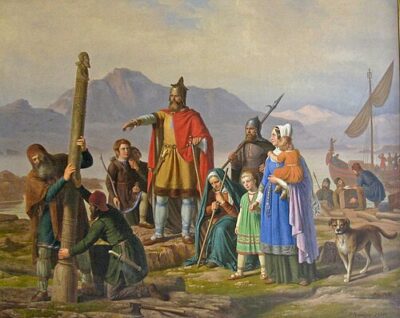 Ingólfr ArnarsonViking settler of Iceland
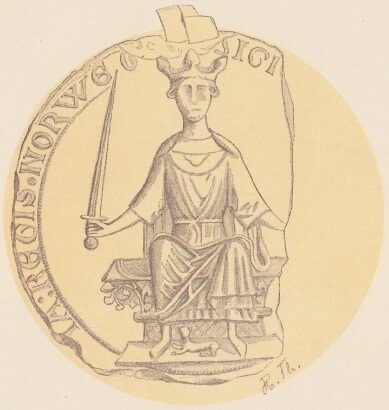 Haakon IV of NorwayKing of Norway
 Eric Haakonssonearl of Lade, ruler of Norway and earl of Northumbria
- NNaddoddNorwegian explorer