
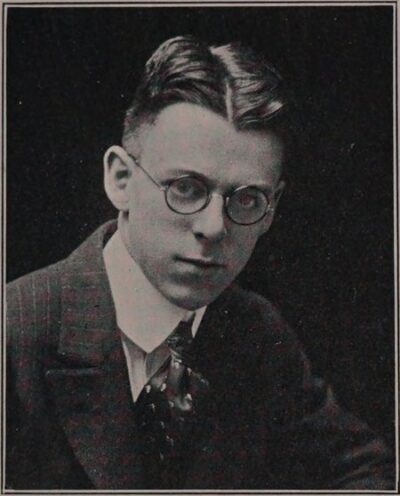
Harold Stephen Black
Harold Stephen Black was an American electrical engineer. Born April 14, 1898, in Leominster. Died December 11, 1983, in Summit. Educated at Worcester Polytechnic Institute. Awards include National Inventors Hall of Fame, John Price Wetherill Medal and IEEE Lamme Medal.
Facts
15 facts · 2 confirmed by two sources · 6 cited · 7 from one source
Where this comes from
Papalocal keeps its own record. It started from these sources; what each one said is kept here as it was copied, so a change on their side never changes this page by itself. Tap one to read its version.
What Wikidata says · copied November 18, 2026 · revision 2562566519
- Described as
- American electrical engineer (1898–1983)
- Other names
- Harold S. Black
- Born
- April 14, 1898 · 1 reference
- Died
- December 11, 1983 · 2 references
- Born in
- Leominster
- Died in
- Summit
- Citizen of
- United States
- Occupation
- inventor; electrical engineer; engineer · 1 reference; scientist · 1 reference; electrotechnician · 1 reference
- Education
- Worcester Polytechnic Institute
- Awards
- National Inventors Hall of Fame (1981) · 1 reference; John Price Wetherill Medal (1941) · 1 reference; IEEE Lamme Medal (1957) · 1 reference
- Field
- electrical engineering · 1 reference
- Wikipedias with a page
- 16
Wikidata item Q1585955 (wikidata.org/wiki/Q1585955), public domain (CC0). Copied November 18, 2026.
What Wikipedia says · copied November 18, 2026 · revision 1372003673
Harold Stephen Black (April 14, 1898 – December 11, 1983) was an American electrical engineer, who revolutionized the field of applied electronics by inventing the negative feedback amplifier in 1927. To some, his invention is considered the most important breakthrough of the twentieth century in the field of electronics, since it has a wide area of application. This is because all electronic devices (vacuum tubes, bipolar transistors and MOS transistors) are inherently nonlinear, but they can be made substantially linear with the application of negative feedback. Negative feedback works by sacrificing gain for higher linearity (or in other words, smaller distortion/intermodulation). By sacrificing gain, it also has an additional effect of increasing the bandwidth of the amplifier. However, a negative feedback amplifier can be unstable such that it may oscillate. Once the stability problem is solved, the negative feedback amplifier is extremely useful in the field of electronics. Black published a famous paper, Stabilized feedback amplifiers, in 1934.
- Born, in its opening lines
- April 14, 1898
- Died, in its opening lines
- December 11, 1983
From the Wikipedia article “Harold Stephen Black” (en.wikipedia.org/wiki/Harold_Stephen_Black), by its contributors, under CC BY-SA 4.0 (creativecommons.org/licenses/by-sa/4.0/). Copied November 18, 2026; not changed.
Confirmed Two sources agree. Cited One source, and it names where it got it. One source One source, without a reference of its own. Sources disagree The sources disagree. We show the best-supported value and keep theirs below.
