
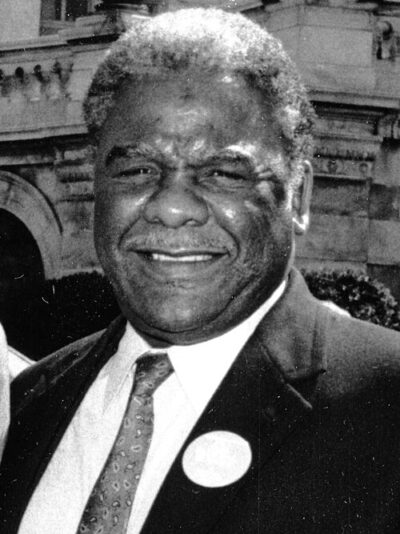
Harold Washington
Harold Washington was an American politician, former Mayor of the city of Chicago (1922—1987). Born April 15, 1922, in Chicago. Died November 25, 1987, in Chicago. Positions held include United States representative (1981–1983), member of the Illinois House of Representatives and Mayor of Chicago (1983–1987). Educated at DuSable High School and Roosevelt University. Awards include Chicago Gay and Lesbian Hall of Fame and Phoenix Award.
Facts
20 facts · 2 confirmed by two sources · 2 cited · 16 from one source
Where this comes from
Papalocal keeps its own record. It started from these sources; what each one said is kept here as it was copied, so a change on their side never changes this page by itself. Tap one to read its version.
What Wikidata says · copied November 19, 2026 · revision 2567294339
- Described as
- American politician, former Mayor of the city of Chicago (1922—1987)
- Other names
- Harold Lee Washington
- Born
- April 15, 1922 · 4 references
- Died
- November 25, 1987 · 4 references
- Born in
- Chicago
- Died in
- Chicago
- Buried in
- Oak Woods Cemetery · 1 reference
- Cause of death
- myocardial infarction
- Citizen of
- United States
- Occupation
- politician · 1 reference; lawyer
- Positions held
- United States representative (1981–1983); member of the Illinois House of Representatives; Mayor of Chicago (1983–1987); member of the State Senate of Illinois
- Political party
- Democratic Party
- Education
- DuSable High School; Roosevelt University; Northwestern University Pritzker School of Law
- Awards
- Chicago Gay and Lesbian Hall of Fame (2007); Phoenix Award (1983)
- Military rank
- First Sergeant
- Wikipedias with a page
- 14
Wikidata item Q295584 (wikidata.org/wiki/Q295584), public domain (CC0). Copied November 19, 2026.
What Wikipedia says · copied November 19, 2026 · revision 1385814557
Harold Lee Washington (April 15, 1922 – November 25, 1987) was an American politician and lawyer who was the 51st mayor of Chicago from 1983 until his death in 1987. A member of the Democratic Party, he was the first Black person to hold the office.
Entering politics as a critic of Chicago mayor Richard J. Daley, Washington served in both houses of the Illinois General Assembly. He was subsequently elected to the United States House of Representatives in 1980 and was reelected in 1982. He ran for Mayor of Chicago in the 1983 election. During the Democratic primary, he defeated incumbent mayor Jane Byrne and State's Attorney Richard M. Daley, son of the late mayor. Many members of the city's ethnic white Democratic political machine backed his Republican opponent, Bernard Epton, in the general election. However, Washington prevailed, winning the close race.
Washington's first term as mayor was dominated by a racially polarized political conflict dubbed the Council Wars. A 29-alderman majority on the Chicago City Council, led by Edward Vrdolyak and Edward Burke, battled Washington and effectively blocked his agenda. Running for reelection in 1987, he won the Democratic primary against former mayor Jane Byrne. He went on to defeat Vrdolyak in the general election, expanding upon his 1983 margins. Starting his second term with a supportive majority on the city council, the Council Wars largely subsided. However, Washington died in office a few months later.
Considered one of the most prominent Black elected officials of the 1980s, Washington's progressive agenda and multi-racial political coalition inspired many, including future President Barack Obama. Multiple Chicago landmarks are named in honor of Washington, including the Chicago Public Library's main branch and one of the city's community colleges.
- Born, in its opening lines
- April 15, 1922
- Died, in its opening lines
- November 25, 1987
From the Wikipedia article “Harold Washington” (en.wikipedia.org/wiki/Harold_Washington), by its contributors, under CC BY-SA 4.0 (creativecommons.org/licenses/by-sa/4.0/). Copied November 19, 2026; not changed.
Confirmed Two sources agree. Cited One source, and it names where it got it. One source One source, without a reference of its own. Sources disagree The sources disagree. We show the best-supported value and keep theirs below.
