
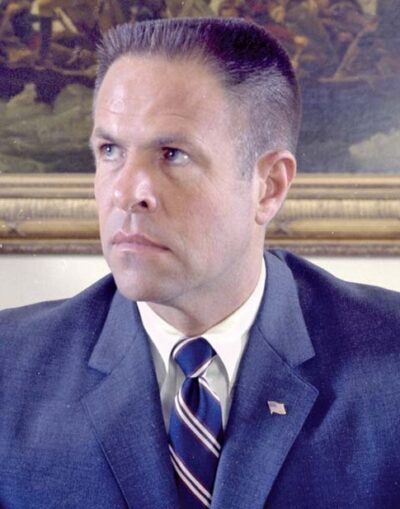
Harry Robbins Haldeman
Harry Robbins Haldeman was an American political aide and Watergate Scandal figure. Born October 27, 1926, in Los Angeles. Died November 12, 1993, in Santa Barbara. Positions held include White House Chief of Staff (1969–1973). Educated at University of California, Los Angeles and USC Gould School of Law. Awards include Eagle Scout.
Facts
18 facts · 2 confirmed by two sources · 3 cited · 13 from one source
Where this comes from
Papalocal keeps its own record. It started from these sources; what each one said is kept here as it was copied, so a change on their side never changes this page by itself. Tap one to read its version.
What Wikidata says · copied November 16, 2026 · revision 2567391000
- Described as
- American political aide and Watergate Scandal figure (1926–1993)
- Other names
- H. R. Haldeman, Bob Haldeman
- Born
- October 27, 1926 · 6 references
- Died
- November 12, 1993 · 5 references
- Born in
- Los Angeles · 1 reference
- Died in
- Santa Barbara · 1 reference
- Cause of death
- stomach cancer
- Name at birth
- Harry Robbins Haldeman
- Citizen of
- United States
- Occupation
- politician · 1 reference; entrepreneur
- Positions held
- White House Chief of Staff (1969–1973)
- Political party
- Republican Party
- Education
- University of California, Los Angeles; USC Gould School of Law; University of Southern California · 1 reference; Harvard-Westlake School · 1 reference
- Awards
- Eagle Scout · 1 reference
- Religion
- Christian Science
- Nickname
- Bob Haldeman
- Wikipedias with a page
- 22
Wikidata item Q958413 (wikidata.org/wiki/Q958413), public domain (CC0). Copied November 16, 2026.
What Wikipedia says · copied November 16, 2026 · revision 1365749960
Harry Robbins "Bob" Haldeman (October 27, 1926 – November 12, 1993) was an American political aide and businessman, best known for his service as White House Chief of Staff to President Richard Nixon and his consequent involvement in the Watergate scandal.
Born in California, Haldeman served in the Navy Reserves in World War II and attended UCLA. In 1949, he joined the J. Walter Thompson advertising agency, where he worked for 20 years as a prominent advertising executive in both Los Angeles and New York City. He made a name for himself early in Los Angeles social circles from his work as chairman of the UCLA Alumni Association and a member of the University of California Board of Regents.
A long family association with the Republican Party and his own interest drew Haldeman to politics. In the 1950s, he became acquainted with Nixon, for whom he developed both an intense respect and steadfast loyalty. He began as an advance man on President Dwight D. Eisenhower's reelection campaign in 1956, again worked as an advance man on Nixon's 1960 presidential campaign, and managed Nixon's 1962 run for governor of California. When Nixon was elected President in 1968, he selected Haldeman as his chief of staff.
Haldeman implemented changes to White House staffing systems and Executive Branch governance and operations. Subsequent presidential administrations have continued to use the staffing system he developed. His management style resulted in a reputation for expecting specific performance standards from staff.
After he left the Nixon administration in April 1973, Haldeman was tried on charges of perjury, conspiracy, and obstruction of justice for his role in the Watergate cover-up. He was found guilty and imprisoned for 18 months. Upon Haldeman's release, he returned to private life and was a successful businessman and real estate developer until his death from cancer in 1993 at the age of 67.
- Born, in its opening lines
- October 27, 1926
- Died, in its opening lines
- November 12, 1993
From the Wikipedia article “H. R. Haldeman” (en.wikipedia.org/wiki/H._R._Haldeman), by its contributors, under CC BY-SA 4.0 (creativecommons.org/licenses/by-sa/4.0/). Copied November 16, 2026; not changed.
Confirmed Two sources agree. Cited One source, and it names where it got it. One source One source, without a reference of its own. Sources disagree The sources disagree. We show the best-supported value and keep theirs below.
