
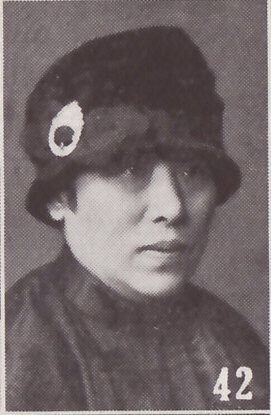
He Xiangning
He Xiangning was a Chinese politician and artist. Born June 27, 1878, in British Hong Kong. Died September 1, 1972, in Beijing. Positions held include member of the National Committee of the Chinese People's Political Consultative Conference and National People's Congress deputy. Educated at Japan Women's University and Joshibi University of Art and Design.
Facts
20 facts · 2 confirmed by two sources · 3 cited · 14 from one source · 1 where the sources disagree
What’s different
- Buried in: we show Nanjing (Sources disagree). Wikidata also lists Tomb of Liao Zhongkai and He Xiangning
Where this comes from
Papalocal keeps its own record. It started from these sources; what each one said is kept here as it was copied, so a change on their side never changes this page by itself. Tap one to read its version.
What Wikidata says · copied November 18, 2026 · revision 2566423805
- Described as
- Chinese politician and artist (1878-1972)
- Other names
- Ho Hsiang-ning, Xiangning He, Hsiang-ning Ho
- Born
- June 27, 1878
- Died
- September 1, 1972
- Born in
- British Hong Kong
- Died in
- Beijing · 1 reference
- Buried in
- Nanjing; Tomb of Liao Zhongkai and He Xiangning
- Citizen of
- People's Republic of China; Republic of China
- Occupation
- painter · 1 reference; politician · 1 reference; writer · 1 reference; poet; human rights defender · 1 reference
- Positions held
- member of the National Committee of the Chinese People's Political Consultative Conference; National People's Congress deputy
- Political party
- Tongmenghui; Revolutionary Committee of the Chinese Kuomintang
- Education
- Japan Women's University; Joshibi University of Art and Design
- Spouse
- Liao Zhongkai · 1 reference
- Children
- Liao Chengzhi
- Wikipedias with a page
- 21
Wikidata item Q8248830 (wikidata.org/wiki/Q8248830), public domain (CC0). Copied November 18, 2026.
What Wikipedia says · copied November 18, 2026 · revision 1372125097
He Xiangning (Chinese: 何香凝; Wade–Giles: Ho Hsiang-ning; 27 June 1878 – 1 September 1972) was a Chinese revolutionary, feminist, politician, painter, and poet. Together with her husband Liao Zhongkai, she was one of the earliest members of Sun Yat-sen's revolutionary movement Tongmenghui. As Minister for Women's Affairs in Sun's Nationalist government in Guangzhou (Canton), she advocated equal rights for women and organized China's first rally for International Women's Day in 1924. After her husband's assassination in 1925 and Chiang Kai-shek's persecution of the Communists in 1927, she stayed away from party politics for two decades, but actively worked to organize resistance against the Japanese invasion of China.
In 1948, she cofounded the Revolutionary Committee of the Chinese Kuomintang. She served in many high-ranking positions after the foundation of the People's Republic of China, including Vice Chairwoman of the CPPCC (1954–64), Vice Chairwoman of the National People's Congress (1959–72), Chairwoman of the Revolutionary Committee of the Chinese Kuomintang (1960–72), and Honorary Chairwoman of the All-China Women's Federation.
He Xiangning was a renowned painter of the Lingnan School of Chinese art and served as Chairwoman of the China Artists Association in the 1960s. The National He Xiangning Art Museum was opened in Shenzhen in 1997, and her paintings have been featured on Chinese stamps.
- Born, in its opening lines
- June 27, 1878
- Died, in its opening lines
- September 1, 1972
From the Wikipedia article “He Xiangning” (en.wikipedia.org/wiki/He_Xiangning), by its contributors, under CC BY-SA 4.0 (creativecommons.org/licenses/by-sa/4.0/). Copied November 18, 2026; not changed.
Confirmed Two sources agree. Cited One source, and it names where it got it. One source One source, without a reference of its own. Sources disagree The sources disagree. We show the best-supported value and keep theirs below.
