
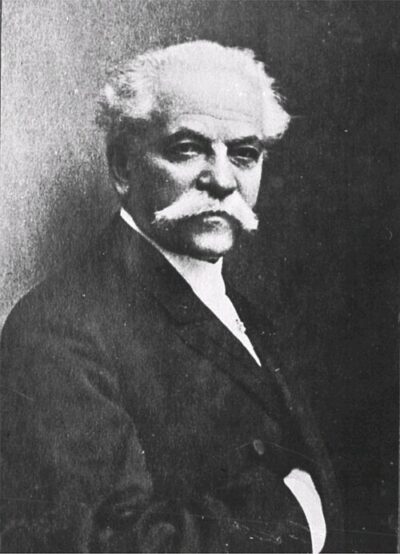
Heinrich Caro
Heinrich Caro was a German chemist. Born February 13, 1834, in Poznań. Died September 11, 1910, in Dresden. Educated at Humboldt-Universität zu Berlin. Awards include honorary member of the Physics Association (Frankfurt am Main, Germany).
Facts
9 facts · 2 confirmed by two sources · 3 cited · 4 from one source
Where this comes from
Papalocal keeps its own record. It started from these sources; what each one said is kept here as it was copied, so a change on their side never changes this page by itself. Tap one to read its version.
What Wikidata says · copied November 18, 2026 · revision 2569007687
- Described as
- German chemist (1834–1910)
- Born
- February 13, 1834 · 3 references
- Died
- September 11, 1910 · 2 references
- Born in
- Poznań · 1 reference
- Died in
- Dresden · 1 reference
- Citizen of
- Kingdom of Prussia
- Occupation
- chemist · 1 reference
- Education
- Humboldt-Universität zu Berlin
- Member of
- VDI – The Association of German Engineers (1856–)
- Awards
- honorary member of the Physics Association (Frankfurt am Main, Germany) (1895)
- Wikipedias with a page
- 23
Wikidata item Q76628 (wikidata.org/wiki/Q76628), public domain (CC0). Copied November 18, 2026.
What Wikipedia says · copied November 18, 2026 · revision 1376516852
Heinrich Caro (February 13, 1834 – September 11, 1910) was a German chemist. He was the first to isolate acridine and "Caro's acid" (peroxymonosulfuric acid) is named after him. He and Adolf von Baeyer synthesised the first Indigo dye in 1878.
Caro was of Sephardic Jewish origin. He started his study of chemistry at the Friedrich Wilhelms University and later chemistry and dyeing in Berlin at the Royal Trades Institute. On the initiative of Nicolaus Druckenmüller, he trained as a calico printer in Germany, worked at Troost's calico printing works in Mülheim and then worked at the chemical firm of T Roberts and John Dale (Chemist) in Manchester. During this time he improved the analysis of madder lake. After he returned to Germany he conducted his military service in 1857 and 1858. He worked in the laboratory of Jacques Meyer the father of Viktor Meyer in Berlin. In 1858 he was able to return to Mühlheim where he was not able to conduct his work. He joined the chemical firm Roberts and Dale in Manchester for 7 years (1859-1866) which he knew from his former visit.
During his time in England he improved the extraction of Mauveine from the residues of the synthesis and developed a synthesis for aniline red and other dyes.
In 1861 Caro returned to Germany and stayed at the laboratory of Robert Bunsen until he joined the Chemische Fabrik Dyckerhoff Clemm & Co. This chemical company later became BASF.
Caro was responsible for indigo research at BASF and he and Adolf von Baeyer synthesised the first indigo dye in 1878. Caro also patented the dye alizarin on behalf of BASF. He was the first to isolate acridine and "Caro's acid" (peroxymonosulfuric acid) is named after him. At BASF, Caro discovered eosin in 1874 and first synthesized methylene blue in 1876.
- Born, in its opening lines
- February 13, 1834
- Died, in its opening lines
- September 11, 1910
From the Wikipedia article “Heinrich Caro” (en.wikipedia.org/wiki/Heinrich_Caro), by its contributors, under CC BY-SA 4.0 (creativecommons.org/licenses/by-sa/4.0/). Copied November 18, 2026; not changed.
Confirmed Two sources agree. Cited One source, and it names where it got it. One source One source, without a reference of its own. Sources disagree The sources disagree. We show the best-supported value and keep theirs below.
