
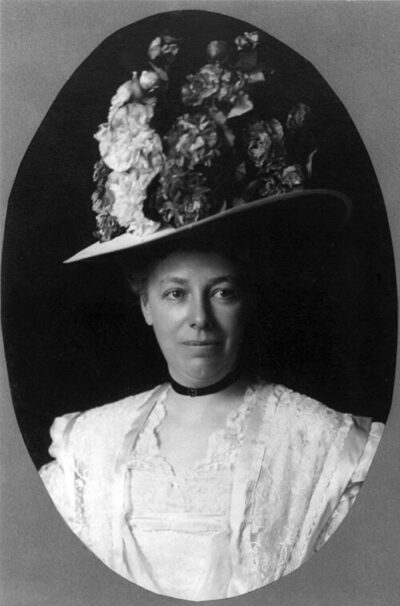
Helen Herron Taft
Helen Herron Taft was a First Lady of the United States from 1909 to 1913. Born June 2, 1861, in Cincinnati. Died May 22, 1943, in Washington, D.C.. Positions held include First Lady of the United States (1909–1913). Educated at University of Cincinnati.
Facts
18 facts · 2 confirmed by two sources · 3 cited · 13 from one source
Where this comes from
Papalocal keeps its own record. It started from these sources; what each one said is kept here as it was copied, so a change on their side never changes this page by itself. Tap one to read its version.
What Wikidata says · copied November 14, 2026 · revision 2561123135
- Described as
- First Lady of the United States from 1909 to 1913
- Other names
- Helen Louise Taft, Helen Herron, Helen Louise Herron, Helen Taft, Nellie Herron, Nellie Taft
- Born
- June 2, 1861 · 6 references
- Died
- May 22, 1943 · 6 references
- Born in
- Cincinnati
- Died in
- Washington, D.C.
- Buried in
- Arlington National Cemetery
- Citizen of
- United States
- Occupation
- politician; university teacher
- Positions held
- First Lady of the United States (1909–1913)
- Political party
- Republican Party
- Education
- University of Cincinnati
- Spouse
- William Howard Taft (1886–1930) · 2 references
- Children
- Robert A. Taft; Helen Taft Manning; Charles Phelps Taft II
- Father
- John Williamson Herron · 1 reference
- Mother
- Harriet Anne Collins · 1 reference
- Siblings
- Lucy Hayes Herron
- Wikipedias with a page
- 40
Wikidata item Q255115 (wikidata.org/wiki/Q255115), public domain (CC0). Copied November 14, 2026.
What Wikipedia says · copied November 14, 2026 · revision 1385326508
Helen Louise Taft (née Herron; June 2, 1861 – May 22, 1943) was First Lady of the United States from 1909 to 1913 as the wife of President William Howard Taft. Born to a politically well-connected Ohio family, she took an early interest in political life, deciding at the age of 17 that she wished to become first lady. Herron married Taft in 1886, and she guided him throughout his political career, encouraging him to take actions that would bring him closer to the presidency. Accompanying her husband to the Philippines in 1900, she became a prominent socialite in Manila, contributing to US-Philippines relations. After her husband was appointed Secretary of War, she played a significant role in convincing him to run for president in the 1908 presidential election and making the necessary connections to ensure his success.
As first lady, Taft was closely involved in the political aspects of the presidency, regularly sitting in on meetings and serving as her husband's closest advisor. She held a strong influence over the president's decisions, expressing her concerns when she disagreed with him and providing her input on presidential appointments. She also carried out a reorganization of the White House staff and decor. Inspired by her experience in the Philippines, she converted the White House lawn and the West Potomac Park into social hubs with regular live shows and events. Her decision to plant cherry trees in the park proved to be a success, creating a popular tourist attraction. Taft's influence as first lady was cut short by a stroke two months into her tenure, permanently limiting her mobility and leaving her absent for a year while she partially recovered.
Though President Taft was relieved that his term had ended, Helen Taft was upset by his defeat for reelection. She remained active after leaving the White House, supporting the Red Cross during World War I and participating in activities for the Colonial Dames of America. She was widowed in 1930, and was buried beside her husband in Arlington National Cemetery after her death in 1943.
- Born, in its opening lines
- June 2, 1861
- Died, in its opening lines
- May 22, 1943
From the Wikipedia article “Helen Herron Taft” (en.wikipedia.org/wiki/Helen_Herron_Taft), by its contributors, under CC BY-SA 4.0 (creativecommons.org/licenses/by-sa/4.0/). Copied November 14, 2026; not changed.
Confirmed Two sources agree. Cited One source, and it names where it got it. One source One source, without a reference of its own. Sources disagree The sources disagree. We show the best-supported value and keep theirs below.
