
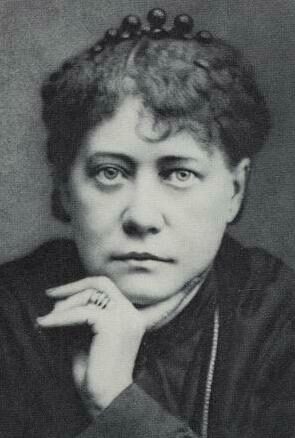
Helena Blavatsky
Helena Blavatsky was a Russian occult writer. Born July 31, 1831, in Dnipro. Died April 26, 1891, in London. Known for The Secret Doctrine. Awards include Subba Row Medal.
Facts
21 facts · 0 confirmed by two sources · 9 cited · 9 from one source · 3 where the sources disagree
What’s different
- Born: we show July 31, 1831 (Sources disagree). Wikipedia says August 12, 1831
- Died: we show April 26, 1891 (Sources disagree). Wikipedia says May 8, 1891
- Name at birth: we show Елена Петровна Ган (Sources disagree). Wikidata also lists Helena Petrovna von Hahn
Where this comes from
Papalocal keeps its own record. It started from these sources; what each one said is kept here as it was copied, so a change on their side never changes this page by itself. Tap one to read its version.
What Wikidata says · copied November 13, 2026 · revision 2565528651
- Described as
- Russian occult writer (1831-1891)
- Other names
- Helena von Hahn, Helena Petrovna Blavatsky, H.P. Blavatsky, Madame Blavatsky, Yelena Petrovna von Hahn, Mme. Blavatsky, HPB
- Born
- July 31, 1831
- Died
- April 26, 1891 · 2 references
- Born in
- Dnipro · 1 reference
- Died in
- London · 3 references
- Cause of death
- influenza
- Name at birth
- Елена Петровна Ган; Helena Petrovna von Hahn
- Citizen of
- Russian Empire (–1878); United States (1878–) · 1 reference
- Occupation
- philosopher; writer · 1 reference; occultist; editor · 1 reference; theosophist · 1 reference; mystic
- Member of
- Theosophical Society · 1 reference
- Known for
- The Secret Doctrine
- Awards
- Subba Row Medal (1888) · 1 reference
- Father
- Peter Hahn
- Mother
- Yelena Hahn · 1 reference
- Siblings
- Vera Zhelikhovsky
- Religion
- Theosophy
- Wikipedias with a page
- 78
Wikidata item Q189454 (wikidata.org/wiki/Q189454), public domain (CC0). Copied November 13, 2026.
What Wikipedia says · copied November 13, 2026 · revision 1376745349
Helena Petrovna Blavatsky (née Hahn von Rottenstern; 12 August [O.S. 31 July] 1831 – 8 May 1891), often known as Madame Blavatsky, was a Russian and American mystic and writer who co-founded the Theosophical Society in 1875. She gained an international following as the primary founder of Theosophy as a belief system.
Born into an aristocratic family in Yekaterinoslav, Russian Empire, Blavatsky traveled widely around the empire as a child. Largely self-educated, she developed an interest in Western esotericism during her teenage years. According to her later claims, in 1849 she embarked on a series of world travels, visiting Europe, the Americas, and India. She also claimed that during this period she encountered a group of spiritual adepts, the "Masters of the Ancient Wisdom", who sent her to Shigatse, Tibet, where they trained her to develop a deeper understanding of the synthesis of religion, philosophy, and science.
Both contemporary critics and later biographers have argued that some or all of these foreign visits were fictitious, and that she spent this period in Europe. By the early 1870s, Blavatsky was involved in the Spiritualist movement. But while defending the genuine existence of Spiritualist phenomena, she argued against the mainstream Spiritualist idea that the entities contacted were the spirits of the dead. Relocating to the United States in 1873, she befriended Henry Steel Olcott. She rose to public attention as a spirit medium and drew accusations that she was a charlatan.
In 1875, in New York City, Blavatsky co-founded the Theosophical Society with Olcott and William Quan Judge. In 1877, she published Isis Unveiled, a book outlining her Theosophical world-view. Associating it closely with the esoteric doctrines of Hermeticism and Neoplatonism, Blavatsky described Theosophy as "the synthesis of science, religion and philosophy", and claimed it revived the "Ancient Wisdom" which underlay all the world's religions. In 1880, she and Olcott moved to India, where the Society tried to ally with the Arya Samaj, a Hindu reform movement. On 26 March 1882 Maharishi Dayananda spoke about the Humbuggery of the Theosophists. That same year, while in Ceylon, she and Olcott became the first people from the United States to formally convert to Buddhism.
Although opposed by the British colonial administration, Theosophy spread rapidly in India but experienced internal problems after Blavatsky was accused of producing fraudulent paranormal phenomena. In ailing health, in 1885 she returned to Europe, establishing the Blavatsky Lodge in London, where she met then student lawyer, Mahatma Gandhi. There she published The Secret Doctrine, a commentary on what she claimed were ancient Tibetan manuscripts, as well as two further books, The Key to Theosophy and The Voice of the Silence. She died of influenza in 1891.
Blavatsky was a controversial figure during her lifetime, championed by supporters as an enlightened sage and derided by critics as a charlatan. Her Theosophical doctrines influenced the spread of Hindu and Buddhist ideas in the West, as well as the development of Western esoteric currents like Ariosophy, Anthroposophy, and the New Age Movement.
- Born, in its opening lines
- August 12, 1831
- Died, in its opening lines
- May 8, 1891
From the Wikipedia article “Helena Blavatsky” (en.wikipedia.org/wiki/Helena_Blavatsky), by its contributors, under CC BY-SA 4.0 (creativecommons.org/licenses/by-sa/4.0/). Copied November 13, 2026; not changed.
Confirmed Two sources agree. Cited One source, and it names where it got it. One source One source, without a reference of its own. Sources disagree The sources disagree. We show the best-supported value and keep theirs below.
