
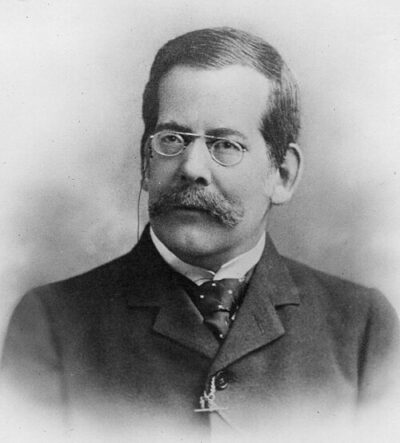
Henry Sweet
Henry Sweet was a British linguist. Born September 15, 1845, in London. Died April 30, 1912, in Oxford. Educated at Balliol College and King's College School.
Facts
18 facts · 2 confirmed by two sources · 4 cited · 12 from one source
Where this comes from
Papalocal keeps its own record. It started from these sources; what each one said is kept here as it was copied, so a change on their side never changes this page by itself. Tap one to read its version.
What Wikidata says · copied November 18, 2026 · revision 2557920019
- Described as
- British linguist (1845–1912)
- Born
- September 15, 1845 · 5 references
- Died
- April 30, 1912 · 5 references
- Born in
- London · 2 references
- Died in
- Oxford · 3 references
- Cause of death
- pernicious anemia
- Citizen of
- United Kingdom of Great Britain and Ireland
- Occupation
- linguist · 1 reference; university teacher; philologist; phonetician; scholar of English · 1 reference
- Worked for
- University of Oxford
- Education
- Balliol College; King's College School; Bruce Castle School
- Member of
- Bavarian Academy of Sciences and Humanities; Royal Prussian Academy of Sciences
- Field
- philology
- Wikipedias with a page
- 22
Wikidata item Q636326 (wikidata.org/wiki/Q636326), public domain (CC0). Copied November 18, 2026.
What Wikipedia says · copied November 18, 2026 · revision 1380715329
Henry Sweet (15 September 1845 – 30 April 1912) was an English philologist, phonetician and grammarian.
As a philologist, he specialized in the Germanic languages, particularly Old English and Old Norse. In addition, Sweet published works on larger issues of phonetics and grammar in language and the teaching of languages. Many of his ideas have remained influential, and a number of his works continue to be in print, being used as course texts at colleges and universities.
- Born, in its opening lines
- September 15, 1845
- Died, in its opening lines
- April 30, 1912
From the Wikipedia article “Henry Sweet” (en.wikipedia.org/wiki/Henry_Sweet), by its contributors, under CC BY-SA 4.0 (creativecommons.org/licenses/by-sa/4.0/). Copied November 18, 2026; not changed.
Confirmed Two sources agree. Cited One source, and it names where it got it. One source One source, without a reference of its own. Sources disagree The sources disagree. We show the best-supported value and keep theirs below.
