
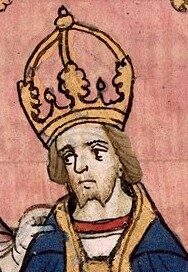
Henry VII, Holy Roman Emperor
Henry VII, Holy Roman Emperor was a King of the Romans from 1308 to 1313. Born July 12, 1275, in Valenciennes. Died August 24, 1313, in Buonconvento. Positions held include Holy Roman Emperor (1312–1313) and Count of Luxembourg (1288–1313).
Facts
17 facts · 0 confirmed by two sources · 6 cited · 10 from one source · 1 where the sources disagree
What’s different
- Buried in: we show Henry VII's tomb (Sources disagree). Wikidata also lists Pisa Cathedral
Where this comes from
Papalocal keeps its own record. It started from these sources; what each one said is kept here as it was copied, so a change on their side never changes this page by itself. Tap one to read its version.
What Wikidata says · copied November 16, 2026 · revision 2569839745
- Described as
- King of the Romans from 1308 to 1313 (1275–1313)
- Other names
- Heinrich VII, Henry VII of Luxembourg, Henry VII, Holy Roman Emperor, 1269?-1313
- Born
- July 12, 1275
- Died
- August 24, 1313 · 1 reference
- Born in
- Valenciennes · 2 references
- Died in
- Buonconvento · 2 references
- Buried in
- Pisa Cathedral; Henry VII's tomb · 1 reference
- Occupation
- patron of the arts · 1 reference
- Positions held
- Holy Roman Emperor (1312–1313); Count of Luxembourg (1288–1313)
- Spouse
- Margaret of Brabant (1292–) · 2 references
- Children
- John of Bohemia · 1 reference; Marie of Luxembourg; Beatrice of Luxembourg
- Father
- Henry VI, Count of Luxembourg
- Mother
- Beatrice d'Avesnes
- Siblings
- Markéta Lucemburská; Baldwin of Luxembourg; Walram of Luxembourg
- Wikipedias with a page
- 52
Wikidata item Q152717 (wikidata.org/wiki/Q152717), public domain (CC0). Copied November 16, 2026.
What Wikipedia says · copied November 16, 2026 · revision 1376924083
Henry VII (1275 or 1278/79 – 24 August 1313) was the King of Germany from 1308 and Holy Roman Emperor from 1312. He was the first emperor of the House of Luxembourg. During his brief career he reinvigorated the imperial cause in Italy, which was racked with the partisan struggles between the divided Guelph and Ghibelline factions, and inspired the praise of Dino Compagni and Dante Alighieri. He was the first emperor since the death of Frederick II in 1250, ending the Great Interregnum of the Holy Roman Empire; however, his premature death threatened to undo his life's work. His son, John of Bohemia, failed to be elected as his successor, and there was briefly another anti-king, Frederick the Fair, who contested the rule of Louis IV.
From the Wikipedia article “Henry VII, Holy Roman Emperor” (en.wikipedia.org/wiki/Henry_VII,_Holy_Roman_Emperor), by its contributors, under CC BY-SA 4.0 (creativecommons.org/licenses/by-sa/4.0/). Copied November 16, 2026; not changed.
Confirmed Two sources agree. Cited One source, and it names where it got it. One source One source, without a reference of its own. Sources disagree The sources disagree. We show the best-supported value and keep theirs below.
