
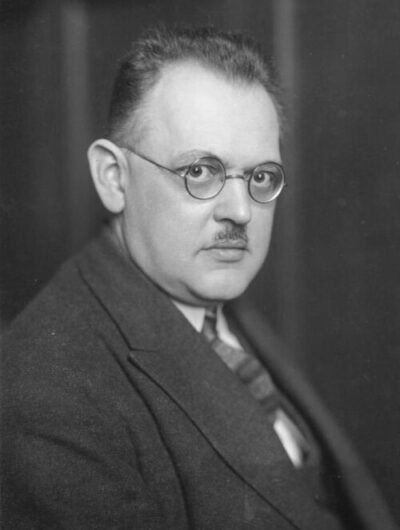
Hermann Müller
Hermann Müller was a German politician. Born May 18, 1876, in Mannheim. Died March 20, 1931, in Berlin. Positions held include member of the Reichstag of the Weimar Republic, member of the Reichstag of the German Empire and Reich Chancellor in the Weimar Republic (2 times) (1920–1930). Educated at gymnasium.
Facts
18 facts · 2 confirmed by two sources · 5 cited · 11 from one source
Where this comes from
Papalocal keeps its own record. It started from these sources; what each one said is kept here as it was copied, so a change on their side never changes this page by itself. Tap one to read its version.
What Wikidata says · copied November 16, 2026 · revision 2569004024
- Described as
- German politician (1876–1931)
- Other names
- Hermann Müller-Breslau, Hermann Müller-Franken
- Born
- May 18, 1876 · 7 references
- Died
- March 20, 1931 · 7 references
- Born in
- Mannheim · 2 references
- Died in
- Berlin · 2 references
- Buried in
- The Socialists' Memorial
- Citizen of
- Germany
- Occupation
- journalist; politician · 1 reference; shop assistant; head of government · 1 reference
- Positions held
- member of the Reichstag of the Weimar Republic; member of the Reichstag of the German Empire; Reich Chancellor in the Weimar Republic (2 times) (1920–1930); Federal Minister for Foreign Affairs (1919–1920) · 1 reference
- Political party
- Social Democratic Party of Germany
- Education
- gymnasium
- Spouse
- Gottliebe Müller · 1 reference
- Religion
- irreligion
- Wikipedias with a page
- 52
Wikidata item Q57158 (wikidata.org/wiki/Q57158), public domain (CC0). Copied November 16, 2026.
What Wikipedia says · copied November 16, 2026 · revision 1373952854
Hermann Müller (18 May 1876 – 20 March 1931; ) was a German Social Democratic politician who served as foreign minister (1919–1920) and was twice chancellor of Germany (1920, 1928–1930) during the Weimar Republic.
Müller rose quickly through the ranks of the Social Democratic Party (SPD) after joining it in 1893. He was elected to the Reichstag of the German Empire in 1916 and to the Weimar National Assembly in 1919. In his capacity as foreign minister, he was one of the German signatories of the Treaty of Versailles (28 June 1919).
During the three months Müller was chancellor in 1920, his government passed a number of progressive social reforms before it had to resign due to the Social Democratic Party of Germany's (SPD) poor showing in the 1920 election. In his second term as chancellor, from June 1928 to 1930, he led a grand coalition through a period marked by budgetary and international relations issues. The coalition broke apart after the onset of the Great Depression, and Müller, already suffering from poor health, died a year after leaving office.
- Born, in its opening lines
- May 18, 1876
- Died, in its opening lines
- March 20, 1931
From the Wikipedia article “Hermann Müller (politician, born 1876)” (en.wikipedia.org/wiki/Hermann_Müller_(politician,_born_1876)), by its contributors, under CC BY-SA 4.0 (creativecommons.org/licenses/by-sa/4.0/). Copied November 16, 2026; not changed.
Confirmed Two sources agree. Cited One source, and it names where it got it. One source One source, without a reference of its own. Sources disagree The sources disagree. We show the best-supported value and keep theirs below.
