
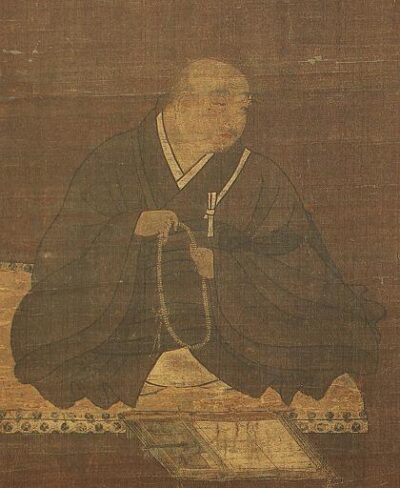
Hōnen
Hōnen was a Japanese Buddhist monk. Born May 13, 1133, in Tanjō-ji Temple. Died February 29, 1212, in Chion-in Temple. Known for Senchaku Hongan Nembutsushū, One-Sheet Document and Isshi Koshōsoku.
Facts
14 facts · 2 confirmed by two sources · 2 cited · 9 from one source · 1 where the sources disagree
What’s different
- Buried in: we show Chion-in Temple (Sources disagree). Wikidata also lists Konkaikōmyō-ji Temple and Hōnen-ji Temple
Where this comes from
Papalocal keeps its own record. It started from these sources; what each one said is kept here as it was copied, so a change on their side never changes this page by itself. Tap one to read its version.
What Wikidata says · copied November 16, 2026 · revision 2557924982
- Described as
- Japanese Buddhist monk
- Other names
- Honen, Hounen, Genkū, Hōnen-bō Genkū, Hōnen Shōnin
- Born
- May 13, 1133 · 1 reference
- Died
- February 29, 1212 · 1 reference
- Born in
- Tanjō-ji Temple
- Died in
- Chion-in Temple · 1 reference
- Buried in
- Chion-in Temple; Konkaikōmyō-ji Temple; Hōnen-ji Temple
- Name at birth
- 勢至丸
- Citizen of
- Japan
- Occupation
- Buddhist monk · 1 reference
- Known for
- Senchaku Hongan Nembutsushū; One-Sheet Document; Isshi Koshōsoku
- Father
- Uruma no Tokikuni
- Mother
- Hata-uji no Kimi Kiyotoji
- Religion
- Jōdo-shū
- Wikipedias with a page
- 28
Wikidata item Q507980 (wikidata.org/wiki/Q507980), public domain (CC0). Copied November 16, 2026.
What Wikipedia says · copied November 16, 2026 · revision 1375290363
Hōnen (法然; Japanese pronunciation: [hoꜜː.neɴ], May 13 (April 7), 1133 – February 29, 1212), also known as Genkū, was the founding figure of the Jōdo-shū (浄土宗; "Pure Land School"), the first independent branch of Japanese Pure Land Buddhism.
Hōnen became a Tendai initiate at an early age, but grew disaffected and sought an approach to Buddhism that all people of all classes and genders could follow, even during the current Age of Dharma Decline. After reading Shandao's Commentary on the Amitāyus Contemplation Sūtra, Hōnen devoted himself to attaining birth in the pure land of Amitābha Buddha (Amida) through the practice of "recitation of the Buddha's name" (Jp: nembutsu) and to spreading this teaching among all people.
Hōnen gathered a wide array of followers and attracted numerous critics. He taught them all the simple practice of reciting "Namo Amida Butsu" while entrusting oneself to Amida's universal vow power. Hōnen's Pure Land teaching was very popular among laypersons, and was a major influence on the Buddhism of the Kamakura period. He was the first Japanese author to have his writings in Chinese and Japanese printed in the history of Japanese Buddhism.
After receiving many criticisms of Hōnen from various rival traditions and following an incident at court, Emperor Tsuchimikado exiled Hōnen and his followers in 1207. Hōnen was eventually pardoned and allowed to return to Kyoto, where he stayed for a short time before his death. Hōnen was a teacher to Shinran, the founder of Jōdo Shinshū, the other major Japanese Pure Land tradition. As such, he is also considered the Seventh Patriarch in the Shinshū tradition.
- Born, in its opening lines
- 1133
- Died, in its opening lines
- February 29, 1212
From the Wikipedia article “Hōnen” (en.wikipedia.org/wiki/Hōnen), by its contributors, under CC BY-SA 4.0 (creativecommons.org/licenses/by-sa/4.0/). Copied November 16, 2026; not changed.
Confirmed Two sources agree. Cited One source, and it names where it got it. One source One source, without a reference of its own. Sources disagree The sources disagree. We show the best-supported value and keep theirs below.
