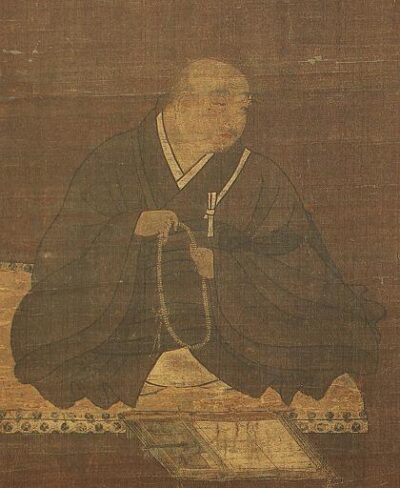
Senchaku Hongan Nembutsushū
Senchaku Hongan Nembutsushū is a Buddhist work by Hōnen, founder of the Jōdo-shū. It came out in 1198.
- Came out
- 1198
- Written by
- Hōnen
- Country of origin
- Kamakura shogunate
All 6 facts, and where they come from
Facts
6 facts · 0 confirmed by two sources · 0 cited · 6 from one source
Where this comes from
Papalocal keeps its own record. It started from these sources; what each one said is kept here as it was copied, so a change on their side never changes this page by itself. Tap one to read its version.
What Wikidata says · copied November 17, 2026 · revision 2342169971
- Described as
- Buddhist work by Hōnen, founder of the Jōdo-shū
- Other names
- Senchakushū, Passages on the Selection of the Nembutsu in the Original Vow, Senchaku hongan nembutsu-shu, Senjaku Hongan Nembutsushū, Senjakushū, Collection on the Choice of the Nembutsu of the Original Vow (Senchaku hongan nembutsu-shū or Senchaku-shū), T. 2608
- What it is
- magnum opus; literary work
- Written by
- Hōnen
- Language
- kanbun
- Country of origin
- Kamakura shogunate
- Came out
- 1198
- Wikipedias with a page
- 3
Wikidata item Q7450101 (wikidata.org/wiki/Q7450101), public domain (CC0). Copied 2026-11-17.
What Wikipedia says · copied November 17, 2026 · revision 1309537563
The Senchaku Hongan Nembutsushū (選択本願念仏集), abbreviated to Senchakushū, is the magnum opus of Hōnen, founder of the Jōdo-shū school of Japanese Pure Land Buddhism. The title means "Collection of Selections on Nenbutsu and the Original Vow" and draws upon past Pure Land Buddhist sources, sutras and especially from the writings of Chinese Pure Land Buddhists Shandao and Tan-luan to bolster Hōnen's doctrine of relying upon the sole recitation of Amitābha Buddha's name for rebirth in the Pure Land. Hōnen also asserts for the first time that he is establishing a new school of Buddhism.
Originally the Senchakushū had been composed at the behest of Hōnen's patron and disciple, Lord Kūjō Kanezane, in 1198, but Hōnen was hesitant to show the Senchakushū to a wider audience during his lifetime due to fears of criticism. Instead, he showed the text to his closest disciples only including Benchō, Shinran, Shōkū among others. Hōnen stated that his disciples could do what they wanted with the text after his death, and in time the Senchakushū was distributed among Buddhist circles. Jōkei, Hōnen's strongest critic, analyzed the Senchakushū as part of his refutation of Hōnen's Pure Land doctrine, as did Myōe.
From the Wikipedia article “Senchakushū” (en.wikipedia.org/wiki/Senchakushū), by its contributors, under CC BY-SA 4.0 (creativecommons.org/licenses/by-sa/4.0/). Copied 2026-11-17; not changed.
Confirmed Two sources agree. Cited One source, and it names where it got it. One source One source, without a reference of its own. Sources disagree The sources disagree. We show the best-supported value and keep theirs below.