
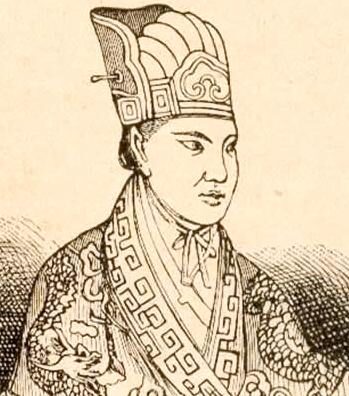
Hong Xiuquan
Hong Xiuquan was a Chinese revolutionary and leader of Taiping Rebellion. Born January 1, 1814, in Huadu District. Died June 1, 1864, in Nanjing. Positions held include Emperor of China (1851–1864).
Facts
13 facts · 2 confirmed by two sources · 2 cited · 9 from one source
Where this comes from
Papalocal keeps its own record. It started from these sources; what each one said is kept here as it was copied, so a change on their side never changes this page by itself. Tap one to read its version.
What Wikidata says · copied November 16, 2026 · revision 2568064509
- Described as
- Chinese revolutionary and leader of Taiping Rebellion (1814–1864)
- Other names
- Hong Huoxiu, Hung Hsiu-ch'üan
- Born
- January 1, 1814 · 2 references
- Died
- June 1, 1864 · 3 references
- Born in
- Huadu District
- Died in
- Nanjing · 1 reference
- Citizen of
- Qing dynasty; Taiping Heavenly Kingdom (1851–)
- Occupation
- politician; teacher (–1844) · 1 reference
- Positions held
- Emperor of China (1851–1864)
- Children
- Hong Tianguifu
- Siblings
- Hong Xuanjiao; Hong Renfa; Hong Renda
- Wikipedias with a page
- 43
Wikidata item Q334732 (wikidata.org/wiki/Q334732), public domain (CC0). Copied November 16, 2026.
What Wikipedia says · copied November 16, 2026 · revision 1385756283
Hong Xiuquan (1 January 1814 – 1 June 1864), born Hong Huoxiu and with the courtesy name Renkun, was a Chinese revolutionary and religious leader who led the Taiping Rebellion against the Qing dynasty. He established the Taiping Heavenly Kingdom over large portions of southern China, with himself as its "Heavenly King".
Born into a Hakka family in Guangzhou, Hong claimed to have experienced mystical visions after repeatedly failing the imperial examinations. He came to believe that his celestial father, whom he saw in the visions, was God the Father, his celestial elder brother was Jesus Christ, and he had been directed to rid the world of demon worship. He rejected Confucianism and began propagating a fusion of Christianity, Daoism and millenarianism, which Hong presented as a restoration of the ancient Chinese faith in Shangdi. His associate Feng Yunshan then founded the God Worshipping Society to spread Hong's teachings. By 1850, Hong's sect had over 10,000 followers and increasingly came into conflict with Qing authorities.
In January 1851, Hong organized a rebel army and routed the Qing forces at Jintian, marking the beginning of the Taiping Rebellion. He then declared himself the Heavenly King of the Heavenly Kingdom of Peace. Taiping rebels captured the city of Nanjing in March 1853 and renamed it Tianjing (Heavenly Capital), after which Hong withdrew to his new palace and began ruling through proclamations. He became increasingly suspicious of Yang Xiuqing, his fellow Taiping leader, and engineered Yang's murder in an 1856 purge now known as the Tianjing incident that spiraled into the further purge of more Taiping leaders. The kingdom gradually lost ground and in June 1864, in the face of Qing advance, Hong died following a period of illness and was succeeded by his son, Hong Tianguifu. Nanjing fell a month later.
- Born, in its opening lines
- January 1, 1814
- Died, in its opening lines
- June 1, 1864
From the Wikipedia article “Hong Xiuquan” (en.wikipedia.org/wiki/Hong_Xiuquan), by its contributors, under CC BY-SA 4.0 (creativecommons.org/licenses/by-sa/4.0/). Copied November 16, 2026; not changed.
Confirmed Two sources agree. Cited One source, and it names where it got it. One source One source, without a reference of its own. Sources disagree The sources disagree. We show the best-supported value and keep theirs below.
