
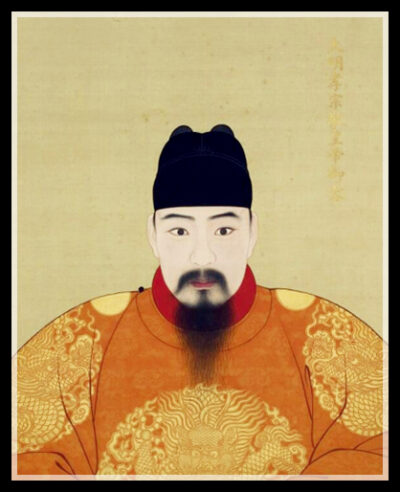
Hongzhi Emperor
Hongzhi Emperor was the 10th emperor of the Ming Dynasty. Born July 30, 1470, in Beijing. Died June 8, 1505, in Beijing. Positions held include Emperor of China (1487–1505) and crown prince (1475–1487).
Facts
26 facts · 2 confirmed by two sources · 1 cited · 22 from one source · 1 where the sources disagree
What’s different
- Buried in: we show Ming tombs (Sources disagree). Wikidata also lists Tailing Mausoleum (Ming dynasty)
Where this comes from
Papalocal keeps its own record. It started from these sources; what each one said is kept here as it was copied, so a change on their side never changes this page by itself. Tap one to read its version.
What Wikidata says · copied November 16, 2026 · revision 2569074297
- Described as
- 10th emperor of the Ming Dynasty (1470–1505)
- Other names
- Zhu Youcheng, Datianmingdaochunchengzhongzhengshengwenshenwuzhirendadejinghuangdi, Hongzhi, Zhu Youtang, Xiao Zong, Jing Di
- Born
- July 30, 1470
- Died
- June 8, 1505
- Born in
- Beijing
- Died in
- Beijing
- Buried in
- Tailing Mausoleum (Ming dynasty); Ming tombs · 1 reference
- Citizen of
- Ming dynasty
- Occupation
- painter; poet
- Positions held
- Emperor of China (1487–1505); crown prince (1475–1487)
- Spouse
- Empress Xiaochengjing
- Children
- Zhengde Emperor; Zhu Houwei; Princess Taikang
- Father
- Chenghua Emperor · 1 reference
- Mother
- Empress Xiaomu
- Siblings
- Princess Deqing; Princess Yongkang; Princess Renhe; Princess Xianyou; Princess Changtai; Zhu Youbin; Zhu Youyuan; Zhu Youji; Zhu Youyun; Zhu Youshu
- Wikipedias with a page
- 34
Wikidata item Q9994 (wikidata.org/wiki/Q9994), public domain (CC0). Copied November 16, 2026.
What Wikipedia says · copied November 16, 2026 · revision 1386094999
The Hongzhi Emperor (30 July 1470 – 8 June 1505), personal name Zhu Youcheng, was the tenth emperor of the Ming dynasty of China, reigning from 1487 to 1505. He succeeded his father, the Chenghua Emperor.
The Hongzhi Emperor was born during a time in which his father's favorite concubine, Lady Wan, and her supporters were eliminating all potential heirs to the throne. The former empress protected the young prince from Lady Wan, and he did not reunite with his father until the age of five, when he was named heir to the throne. From a young age, he displayed exceptional intelligence and excelled in his studies, receiving a comprehensive Confucian education.
After the Hongzhi Emperor ascended the throne in 1487, he was known for his diligence and hard work, and Confucian ideology guided his administration. He closely oversaw all state affairs, implementing measures such as reducing taxes and government spending, and appointing capable officials to ministerial positions. This marked a rare period of harmonious cooperation between the monarch and his ministers during the Middle Ming period. In addition, the Emperor encouraged his ministers to openly express their opinions and even criticize his decisions, thus diminishing the power of the court eunuchs and eliminating the palace intrigues characteristic of previous reigns. This led to a more transparent government and revitalized the functioning of the authorities.
The Emperor oversaw updates to the Great Ming Code. The empire's economy was thriving, and the government sought to address the shortage of currency by resuming the production of coins that had been abolished in the 1430s. Despite facing a series of floods, the Yellow River was successfully regulated, and foreign trade with Southeast Asia flourished. The Hongzhi Emperor's foreign policy was peaceful, with the only major military campaign during his reign being the expedition to Hami in 1495. Ming troops also effectively suppressed several smaller rebellions, and the people prospered under his rule. In comparison to his predecessors, the Hongzhi Emperor can be considered one of the most successful rulers of the Ming dynasty, alongside the Hongwu and Yongle emperors.
- Born, in its opening lines
- July 30, 1470
- Died, in its opening lines
- June 8, 1505
From the Wikipedia article “Hongzhi Emperor” (en.wikipedia.org/wiki/Hongzhi_Emperor), by its contributors, under CC BY-SA 4.0 (creativecommons.org/licenses/by-sa/4.0/). Copied November 16, 2026; not changed.
Confirmed Two sources agree. Cited One source, and it names where it got it. One source One source, without a reference of its own. Sources disagree The sources disagree. We show the best-supported value and keep theirs below.
