
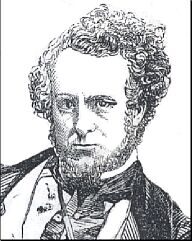
Howard Staunton
Howard Staunton was an English chess master and Shakespearean scholar. Born April 1, 1810, in Westmorland. Died June 22, 1874, in London.
Facts
12 facts · 2 confirmed by two sources · 3 cited · 7 from one source
Where this comes from
Papalocal keeps its own record. It started from these sources; what each one said is kept here as it was copied, so a change on their side never changes this page by itself. Tap one to read its version.
What Wikidata says · copied November 16, 2026 · revision 2510659185
- Described as
- English chess master and Shakespearean scholar (1810-1874)
- Born
- April 1, 1810
- Died
- June 22, 1874 · 3 references
- Born in
- Westmorland
- Died in
- London · 1 reference
- Buried in
- Kensal Green Cemetery · 1 reference
- Cause of death
- cardiovascular disease
- Citizen of
- United Kingdom of Great Britain and Ireland
- Occupation
- literary historian; chess player; non-fiction writer; philologist · 1 reference
- Sport
- chess
- Wikipedias with a page
- 40
Wikidata item Q311631 (wikidata.org/wiki/Q311631), public domain (CC0). Copied November 16, 2026.
What Wikipedia says · copied November 16, 2026 · revision 1384446501
Howard Staunton (April 1810 – 22 June 1874) was an English chess master who is generally regarded as the world's strongest player from 1843 to 1851, largely as a result of his 1843 victory over Pierre Charles Fournier de Saint-Amant. He promoted a chess set of clearly distinguishable pieces of standardised shape – the Staunton pattern promulgated by Nathaniel Cooke – that is still the style required for competitions. He was the principal organiser of the first international chess tournament in 1851, which made England the world's leading chess centre and caused Adolf Anderssen to be recognised as the world's strongest player.
From 1840 onwards he became a leading chess commentator, and won matches against top players of the 1840s. In 1847 he entered a parallel career as a Shakespearean scholar. Ill health and his two writing careers led him to give up competitive chess after 1851. In 1858 attempts were made to organise a match between Staunton and Paul Morphy, but it never came about. It was alleged by British Chess Association president Lord Lyttelton that Staunton misled Morphy while trying to avoid the match; it is also possible Staunton overestimated his chances of getting physically fit and of making time available for a match.
Modern commentators consider Staunton's understanding of positional play to have been far ahead of his contemporaries. Although not a rampant attacking player, he attacked when his preparations were complete. His chess articles and books were widely read and encouraged the development of chess in the United Kingdom, and his Chess-Players' Handbook (1847) was a reference for decades. The chess openings the English Opening and Staunton Gambit were named for his advocacy of them. Staunton has been a controversial figure since his own time, and his chess writings could be spiteful. On the other hand, he maintained good working relationships with several strong players and influential chess enthusiasts, and demonstrated excellent management skills.
- Born, in its opening lines
- April 1810
- Died, in its opening lines
- June 22, 1874
From the Wikipedia article “Howard Staunton” (en.wikipedia.org/wiki/Howard_Staunton), by its contributors, under CC BY-SA 4.0 (creativecommons.org/licenses/by-sa/4.0/). Copied November 16, 2026; not changed.
Confirmed Two sources agree. Cited One source, and it names where it got it. One source One source, without a reference of its own. Sources disagree The sources disagree. We show the best-supported value and keep theirs below.
