
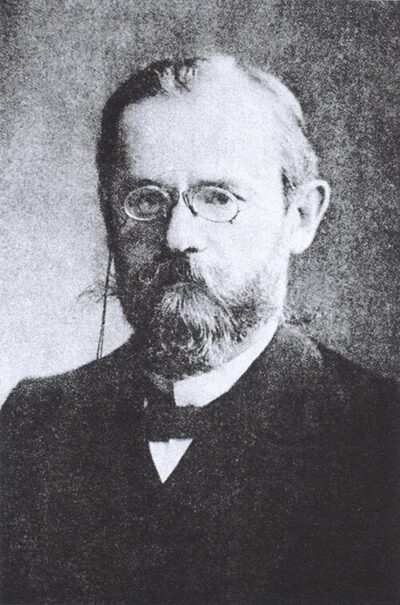
Hugo Winckler
Hugo Winckler was a German archaeologist. Born July 4, 1863, in Gräfenhainichen. Died April 19, 1913, in Berlin. Educated at Humboldt-Universität zu Berlin.
Facts
18 facts · 2 confirmed by two sources · 6 cited · 10 from one source
Where this comes from
Papalocal keeps its own record. It started from these sources; what each one said is kept here as it was copied, so a change on their side never changes this page by itself. Tap one to read its version.
What Wikidata says · copied November 17, 2026 · revision 2569157910
- Described as
- German archaeologist (1863–1913)
- Born
- July 4, 1863 · 5 references
- Died
- April 19, 1913 · 4 references
- Born in
- Gräfenhainichen · 2 references
- Died in
- Berlin · 3 references
- Citizen of
- Kingdom of Prussia
- Occupation
- anthropologist; archaeologist · 1 reference; assyriologist; university teacher · 1 reference; historian · 1 reference; linguist · 1 reference; orientalist · 1 reference; Semitist · 1 reference
- Worked for
- Humboldt-Universität zu Berlin
- Education
- Humboldt-Universität zu Berlin
- Field
- archaeology · 1 reference; philology; Assyriology
- Wikipedias with a page
- 27
Wikidata item Q64339 (wikidata.org/wiki/Q64339), public domain (CC0). Copied November 17, 2026.
What Wikipedia says · copied November 17, 2026 · revision 1372011582
Hugo Winckler (4 July 1863 – 19 April 1913) was a German orientalist, archaeologist, and historian who uncovered the capital of the Hittite Empire (Hattusa) at Boğazkale, Turkey.
A student of the languages of the ancient Middle East, he wrote extensively on Assyrian cuneiform and the Old Testament, compiled a history of Babylonia and Assyria that was published in 1891, and translated both the Code of Hammurabi and the Amarna letters. In 1904, he was appointed professor of Oriental languages at the University of Berlin.
- Born, in its opening lines
- July 4, 1863
- Died, in its opening lines
- April 19, 1913
From the Wikipedia article “Hugo Winckler” (en.wikipedia.org/wiki/Hugo_Winckler), by its contributors, under CC BY-SA 4.0 (creativecommons.org/licenses/by-sa/4.0/). Copied November 17, 2026; not changed.
Confirmed Two sources agree. Cited One source, and it names where it got it. One source One source, without a reference of its own. Sources disagree The sources disagree. We show the best-supported value and keep theirs below.
