
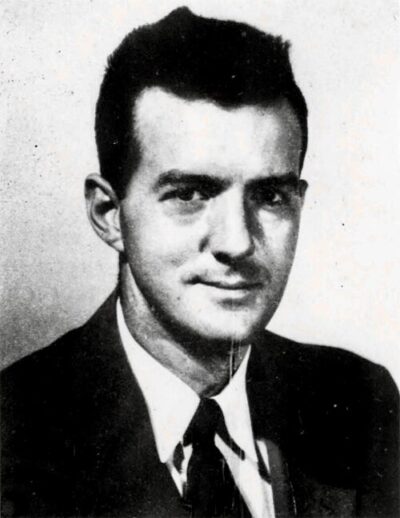
Ian Stevenson
Ian Stevenson was a Canadian parapsychologist, reincarnation researcher. Born October 31, 1918, in Montreal. Died February 8, 2007, in Charlottesville. Educated at University of St Andrews and McGill Faculty of Medicine and Health Sciences.
Facts
14 facts · 2 confirmed by two sources · 4 cited · 8 from one source
Where this comes from
Papalocal keeps its own record. It started from these sources; what each one said is kept here as it was copied, so a change on their side never changes this page by itself. Tap one to read its version.
What Wikidata says · copied November 15, 2026 · revision 2567124447
- Described as
- Canadian parapsychologist, reincarnation researcher (1918–2007)
- Other names
- Ian Pretyman Stevenson, Ian P. Stevenson
- Born
- October 31, 1918 · 2 references
- Died
- February 8, 2007 · 3 references
- Born in
- Montreal · 1 reference
- Died in
- Charlottesville · 1 reference
- Cause of death
- pneumonia
- Citizen of
- Canada
- Occupation
- psychiatrist; parapsychologist · 1 reference; university teacher; psychologist · 1 reference
- Worked for
- University of Virginia
- Education
- University of St Andrews; McGill Faculty of Medicine and Health Sciences
- Field
- parapsychology
- Wikipedias with a page
- 27
Wikidata item Q731300 (wikidata.org/wiki/Q731300), public domain (CC0). Copied November 15, 2026.
What Wikipedia says · copied November 15, 2026 · revision 1384534119
Ian Pretyman Stevenson (October 31, 1918 – February 8, 2007) was a Canadian-born American psychiatrist, the founder and director of the Division of Perceptual Studies at the University of Virginia School of Medicine. He was a professor at the University of Virginia School of Medicine for fifty years. He was chair of their department of psychiatry from 1957 to 1967, Carlson Professor of Psychiatry from 1967 to 2001, and research professor of psychiatry from 2002 until his death in 2007. He helped to found the Society for Scientific Exploration in 1982.
He is best known for his research into evidence of reincarnation – the premise that emotions, memories, and even physical bodily features can be passed on from one life to another. Over his forty years of international research, he amassed three thousand cases of children who claimed to remember past lives. Stevenson was the author of around three hundred papers and fourteen books on reincarnation, including Twenty Cases Suggestive of Reincarnation (1966), Reincarnation and Biology and its simplified version Where Reincarnation and Biology Intersect (both 1997), and European Cases of the Reincarnation Type (2003).
Stevenson was cautious in making claims about reincarnation. He emphasized that the information he collected was suggestive of reincarnation but "was not flawless and it certainly does not compel such a belief." He did, however, believe he had produced a body of evidence for reincarnation that should be taken seriously. His position was that reincarnation might possibly represent a third contributing factor, in addition to genetics and the environment, in the development of certain phobias, philias, unusual abilities, and illnesses.
In an obituary for Stevenson in The New York Times, Margalit Fox wrote that Stevenson's supporters saw him as a misunderstood genius, that his detractors regarded him as earnest but gullible, but that most scientists had simply ignored his research. Stevenson's critics contend that ultimately his conclusions are undermined by confirmation bias and motivated reasoning, and were reliant on anecdotal evidence rather than controlled experimental work. His case reports were also criticized for containing errors and omissions. Upon his retirement, Stevenson's work was continued by research colleagues such as Jim B. Tucker, Antonia Mills, Satwant Pasricha, and Erlendur Haraldsson.
- Born, in its opening lines
- October 31, 1918
- Died, in its opening lines
- February 8, 2007
From the Wikipedia article “Ian Stevenson” (en.wikipedia.org/wiki/Ian_Stevenson), by its contributors, under CC BY-SA 4.0 (creativecommons.org/licenses/by-sa/4.0/). Copied November 15, 2026; not changed.
Confirmed Two sources agree. Cited One source, and it names where it got it. One source One source, without a reference of its own. Sources disagree The sources disagree. We show the best-supported value and keep theirs below.
