
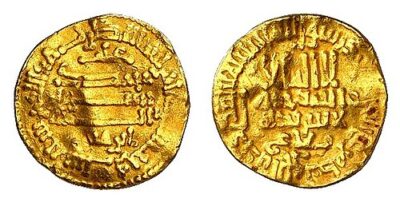
Ibn al-Aghlab
Ibn al-Aghlab was an Emir of Ifriqiya from 875 to 902. Born June 27, 850, in Kairouan. Died October 23, 902, in Cosenza. Positions held include Emir of Ifriqiya (875–902).
Facts
12 facts · 2 confirmed by two sources · 3 cited · 7 from one source
Where this comes from
Papalocal keeps its own record. It started from these sources; what each one said is kept here as it was copied, so a change on their side never changes this page by itself. Tap one to read its version.
What Wikidata says · copied November 18, 2026 · revision 2550376141
- Described as
- Emir of Ifriqiya from 875 to 902
- Other names
- Abu Ishaq Ibrahim II ibn Ahmad
- Born
- June 27, 850
- Died
- October 23, 902
- Born in
- Kairouan · 1 reference
- Died in
- Cosenza
- Citizen of
- Ifriqiya
- Occupation
- sovereign; Amir · 1 reference; wali · 1 reference
- Positions held
- Emir of Ifriqiya (875–902)
- Children
- Abdallah II of Ifriqiya
- Father
- Abu Ibrahim Ahmad · 1 reference
- Siblings
- Muhammad II of Ifriqiya
- Wikipedias with a page
- 24
Wikidata item Q336991 (wikidata.org/wiki/Q336991), public domain (CC0). Copied November 18, 2026.
What Wikipedia says · copied November 18, 2026 · revision 1360603366
Abu Ishaq Ibrahim II ibn Ahmad (Arabic: أبو اسحاق ابراهيم الثاني) (27 June 850 – 23 October 902) was the Emir of Ifriqiya. He ruled from 875 until his abdication in 902. After the demise of his brother, Ibrahim was endorsed as emir where he took steps to improve safety in his domain and secured the development of commercial activities. He improved public works, such as building a vast reservoir, erecting walls as well as the development of mosques and his Raqqada palace.
A centralizing ruler, Ibrahim mistrusted the old Arab high aristocracy of Ifriqiya. He was involved in conflicts with the ambitious Tulunids, who after seizing Egypt (868), Syria and the Hejaz (878), decided to attack him. When Egypt fell into chaos in 896, Ibrahim led a campaign to recover his eastern borders against the Tulunids in 896–897.
Despite having a fierce reputation as an oppressor, he was an efficient and fair ruler, treating reports of mistreatment of a commoner by a noble as lèse-majesté. However, it was also reported that he took great pleasure in cruelty and killing. Ibn al-Athir and Ibn Khaldun summarized Ibrahim's emirate as seven good years, before he became unhinged by "melancholia" (malihulia). Citing mistreatment of his subjects, Abbasid Caliph al-Mu'tadid dispatched a messenger to Tunis in 901/902 where he demanded Ibrahim to Baghdad and deprived him of the governorship of Ifriqiya. Later, he began his advertised march to Baghdad by way of Europe and his plans to conquer Constantinople for Islam. He advanced through Sicily, and after laying siege to Taormina, he marched to Messina in 902 and ferried his army across the straits to Calabria. Ibrahim, however, got bogged down laying siege to Cosenza, and took ill with dysentery and died.
- Born, in its opening lines
- June 27, 850
- Died, in its opening lines
- October 23, 902
From the Wikipedia article “Ibrahim II of Ifriqiya” (en.wikipedia.org/wiki/Ibrahim_II_of_Ifriqiya), by its contributors, under CC BY-SA 4.0 (creativecommons.org/licenses/by-sa/4.0/). Copied November 18, 2026; not changed.
Confirmed Two sources agree. Cited One source, and it names where it got it. One source One source, without a reference of its own. Sources disagree The sources disagree. We show the best-supported value and keep theirs below.
