
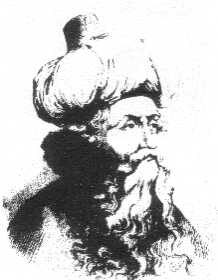
Ibn Arabi
Ibn Arabi was a Sufi scholar and Sunni philosopher. Born July 28, 1165, in Murcia. Died November 16, 1240, in Damascus. Known for The Meccan Revelations, The Ringstones of Wisdom and The Interpreter of Desires.
Facts
16 facts · 0 confirmed by two sources · 6 cited · 10 from one source
Where this comes from
Papalocal keeps its own record. It started from these sources; what each one said is kept here as it was copied, so a change on their side never changes this page by itself. Tap one to read its version.
What Wikidata says · copied November 16, 2026 · revision 2567790329
- Described as
- Sufi scholar and Sunni philosopher (1165–1240)
- Other names
- Ibn ʿArabī
- Born
- July 28, 1165
- Died
- November 16, 1240
- Born in
- Murcia · 3 references
- Died in
- Damascus · 1 reference
- Name at birth
- محمد بن علي بن محمد بن عربي الحاتمي الطائي الأندلسي
- Citizen of
- Almohad Caliphate · 1 reference
- Occupation
- philosopher · 3 references; poet · 1 reference; writer · 5 references
- Known for
- The Meccan Revelations; The Ringstones of Wisdom; The Interpreter of Desires; Al-Salat al-Nariyya; Al-Wasaya
- Field
- Sufism
- Religion
- Islam
- Wikipedias with a page
- 90
Wikidata item Q46420 (wikidata.org/wiki/Q46420), public domain (CC0). Copied November 16, 2026.
What Wikipedia says · copied November 16, 2026 · revision 1379026857
Ibn al-ʿArabī (August, 1165 – November, 1240) was a Muslim Arab scholar, mystic, poet, and philosopher from al-Andalus, who exercised notable influence within Sufi metaphysics and Islamic thought in general. There are 850 works attributed to Ibn al-ʿArabī, though only 700 of these are considered authentic, and only 400 are extant. His cosmological teachings became a dominant intellectual framework in many regions of the Muslim world.
His traditional title was Muḥyiddīn (Arabic: محيي الدين, lit. 'The Reviver of Religion'). After his death, practitioners of Sufism began referring to him by the honorific title Shaykh al-Akbar (Arabic: الشيخ الأكبر, lit. 'The Greatest Shaykh'), from which the term Akbarism is derived.
Ibn ʿArabī is considered a wali (saint) by some scholars and Muslim communities.
Ibn al-ʿArabī is known for being the first person to explicitly delineate the concept of waḥdat al-wujūd (the transcendent unity of being), a monist doctrine that claimed that all things in the universe are manifestations of a singular reality. Ibn al-ʿArabī equated this reality with the entity he called "the Absolute" (al-wujūd al-muṭlaq, "Absolute Being").
From the Wikipedia article “Ibn Arabi” (en.wikipedia.org/wiki/Ibn_Arabi), by its contributors, under CC BY-SA 4.0 (creativecommons.org/licenses/by-sa/4.0/). Copied November 16, 2026; not changed.
Confirmed Two sources agree. Cited One source, and it names where it got it. One source One source, without a reference of its own. Sources disagree The sources disagree. We show the best-supported value and keep theirs below.
