
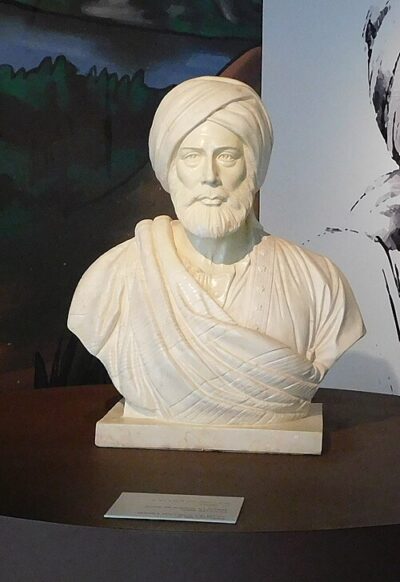
Ibn Battuta
Ibn Battuta was the 14th century Muslim Maghrebi scholar and explorer. Born February 24, 1304, in Tangier. Died 1368, in Fez. Known for The Rihla.
Facts
19 facts · 0 confirmed by two sources · 5 cited · 14 from one source
Where this comes from
Papalocal keeps its own record. It started from these sources; what each one said is kept here as it was copied, so a change on their side never changes this page by itself. Tap one to read its version.
What Wikidata says · copied November 16, 2026 · revision 2559621005
- Described as
- 14th century Muslim Maghrebi scholar and explorer
- Other names
- Ibn Battouta, Muhammad ibn Abdullah Ibn Battuta, Shams al-Dīn Abū ʿAbd Allāh Muḥammad ibn ʿAbd Allāh ibn Muḥammad ibn Ibrāhīm ibn Muḥammad ibn Ibrāhīm ibn Yūsuf al-Lawātī al-Ṭanji, Abu Abdullah Muhammad ibn Battutah, Muḥammad ibn ʻAbdallâh Ibn Baṭṭûṭa
- Born
- February 24, 1304 · 3 references
- Died
- 1368 · 1 reference
- Born in
- Tangier · 1 reference
- Died in
- Fez · 1 reference
- Buried in
- Tomb of Ibn Batutta
- Occupation
- explorer; geographer; writer · 1 reference; cartographer; qadi; merchant · 1 reference; Islamic jurist
- Known for
- The Rihla
- Field
- geography; jurisdiction; exploration; fiqh
- Spouse
- first wife of Ibn Battuta (1325–)
- Religion
- Islam
- Wikipedias with a page
- 166
Wikidata item Q7331 (wikidata.org/wiki/Q7331), public domain (CC0). Copied November 16, 2026.
What Wikipedia says · copied November 16, 2026 · revision 1385821029
Ibn Battuta (; 24 February 1304–1368/1369) was a Maghrebi Muslim traveller, explorer, and scholar from Tangier, Morocco. Over a 30-year period (1325–1354) he visited much of Africa, Asia, and the Iberian Peninsula. Near the end of his life, Ibn Battuta dictated an account of his journeys, titled A Gift to Those Who Contemplate the Wonders of Cities and the Marvels of Travelling, commonly known as The Rihla.
Ibn Battuta travelled more than any other explorer in pre-modern history, totalling around 117,000 km (73,000 mi), surpassing Zheng He with about 50,000 km (31,000 mi) and Marco Polo with 24,000 km (15,000 mi).
From the Wikipedia article “Ibn Battuta” (en.wikipedia.org/wiki/Ibn_Battuta), by its contributors, under CC BY-SA 4.0 (creativecommons.org/licenses/by-sa/4.0/). Copied November 16, 2026; not changed.
Confirmed Two sources agree. Cited One source, and it names where it got it. One source One source, without a reference of its own. Sources disagree The sources disagree. We show the best-supported value and keep theirs below.
