
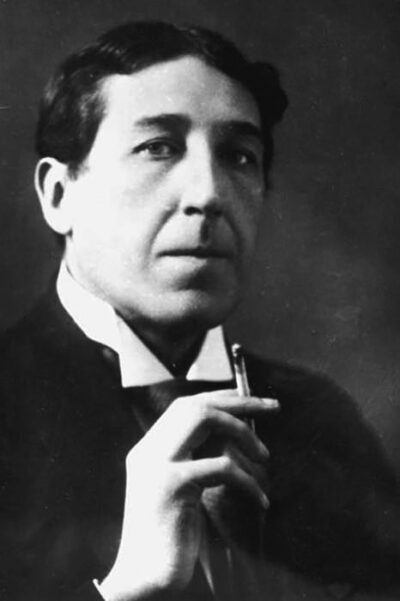
Igor Severyanin
Igor Severyanin was a Russian poet. Born May 16, 1887, in Saint Petersburg. Died December 20, 1941, in Tallinn.
Facts
16 facts · 2 confirmed by two sources · 4 cited · 9 from one source · 1 where the sources disagree
What’s different
- Born: we show May 16, 1887 (Confirmed). Wikidata also lists May 4, 1887
- Died in: we show Tallinn (Sources disagree). Wikidata also lists Tartu
Where this comes from
Papalocal keeps its own record. It started from these sources; what each one said is kept here as it was copied, so a change on their side never changes this page by itself. Tap one to read its version.
What Wikidata says · copied November 17, 2026 · revision 2557928006
- Described as
- Russian poet (1887–1941)
- Other names
- Igor Vasilyevich Severyanin, Игорь Северянин
- Born
- May 4, 1887 · 3 references; May 16, 1887 · 2 references
- Died
- December 20, 1941 · 8 references
- Born in
- Saint Petersburg · 4 references
- Died in
- Tallinn · 3 references; Tartu · 1 reference
- Buried in
- Alexander Nevsky cemetery
- Cause of death
- myocardial infarction
- Name at birth
- Игорь Васильевич Лотарев · 1 reference
- Citizen of
- Russian Empire; Estonia · 1 reference
- Occupation
- poet; writer · 2 references; translator; translator of Adam Mickiewicz
- Genre
- poetry
- Lived in
- Tallinn (1918–1941)
- Website
- http://severyanin.narod.ru/
- Wikipedias with a page
- 27
Wikidata item Q707569 (wikidata.org/wiki/Q707569), public domain (CC0). Copied November 17, 2026.
What Wikipedia says · copied November 17, 2026 · revision 1370157352
Igor Severyanin (Russian: И́горь Северя́нин; pen name, real name Igor Vasilyevich Lotaryov: И́горь Васи́льевич Лотарёв; May 16, 1887 – December 20, 1941) was a Russian poet who presided over the circle of the so-called Ego-Futurists.
Igor was born in St. Petersburg in the family of an army engineer. Through his mother, he was remotely related to Nikolai Karamzin and Afanasy Fet. In 1904 he left for Harbin with his father but later returned to St. Petersburg to publish first poems at his own expense. It was not until 1913 that, in the words of D.S. Mirsky, "the moment came when vulgarity claimed a place on Parnassus and issued its declaration of rights in the verse of Igor Severyanin". That year, Severyanin (his pen name means "Northerner" in Russian) brought out a collection entitled The Cup of Thunder (Громокипящий кубок), with a preface written by Fyodor Sologub.
In one of his most celebrated poems, Lotaryov introduced himself to the readers with the following words: "I am Igor Severyanin, a genius!" He soon gained a cult following, especially in the provinces of Imperial Russia. The poet "captured the popular imagination and reached stardom with his slick pomaded hair parted in the middle; his melancholy, darkly circled eyes; his impeccable tails; and an ever-present lily in his hands".
Severyanin's poems treated such extraordinary themes as "ice cream of lilacs" and "pineapples in champagne", intending to overwhelm the bourgeois audience with a riot of colors and glamour associated by them with high society. In his verse, Severyanin admired dirigibles and automobiles, everything that could convey to his followers the notion of modernity. He would often shock the public by professing his admiration for Oscar Wilde or scandalize his emulators with cynical statements and megalomania. During one party, they declared Severyanin "the king of poets", although some respected critics professed their distaste for his work.
After the Russian Revolution of 1917, Severyanin was one of the first poets to leave Russia. Having settled in Estonia in 1918, he tried to return to Russia afterwards, but could not for various reasons (namely, the civil war, his marriage to a local woman (Felissa Kruut), unreceptive literary climate in Soviet Russia, etc.). After the Soviet occupation of Estonia, 1940 Severyanin continued literary activities, and later died of a heart attack in the German occupied Tallinn in 1941. He was buried in Alexander Nevsky cemetery, Tallinn.
- Born, in its opening lines
- May 16, 1887
- Died, in its opening lines
- December 20, 1941
From the Wikipedia article “Igor Severyanin” (en.wikipedia.org/wiki/Igor_Severyanin), by its contributors, under CC BY-SA 4.0 (creativecommons.org/licenses/by-sa/4.0/). Copied November 17, 2026; not changed.
Confirmed Two sources agree. Cited One source, and it names where it got it. One source One source, without a reference of its own. Sources disagree The sources disagree. We show the best-supported value and keep theirs below.
