
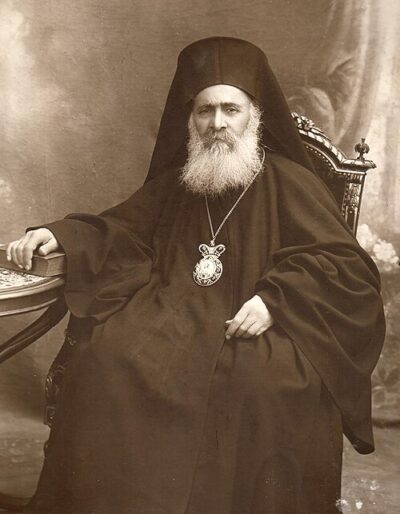
III. Basileios was an Orthodox patriarch. Born 1846, in Constantinople. Died September 29, 1929, in Constantinople. Positions held include Ecumenical Patriarch of Constantinople (1925–1929). Educated at National and Kapodistrian University of Athens.
Facts
10 facts · 2 confirmed by two sources · 0 cited · 8 from one source
Where this comes from
Papalocal keeps its own record. It started from these sources; what each one said is kept here as it was copied, so a change on their side never changes this page by itself. Tap one to read its version.
What Wikidata says · copied November 18, 2026 · revision 2554197923
- Described as
- Orthodox patriarch (1846–1929)
- Born
- 1846
- Died
- September 29, 1929
- Born in
- Constantinople
- Died in
- Constantinople
- Citizen of
- Turkey; Ottoman Empire
- Occupation
- Eastern Orthodox priest
- Positions held
- Ecumenical Patriarch of Constantinople (1925–1929)
- Education
- National and Kapodistrian University of Athens
- Religion
- Eastern Orthodoxy
- Wikipedias with a page
- 21
Wikidata item Q1816615 (wikidata.org/wiki/Q1816615), public domain (CC0). Copied November 18, 2026.
What Wikipedia says · copied November 18, 2026 · revision 1356563525
Ecumenical Patriarch Basil III (Greek: Βασίλειος Γʹ; 1846 – 29 September 1929), born Vasileios Georgiadis (Βασίλειος Γεωργιάδης), was Ecumenical Patriarch of Constantinople from July 1925, and serving until his death in September 1929, serving as the primus inter pares (first among equals) and spiritual leader of Easter Orthodox Christianity worldwide.
He studied theology and philology at the University of Athens, and obtained a PhD at the Ludwig-Maximilians-Universität München.
- Born, in its opening lines
- 1846
- Died, in its opening lines
- September 29, 1929
From the Wikipedia article “Basil III of Constantinople” (en.wikipedia.org/wiki/Basil_III_of_Constantinople), by its contributors, under CC BY-SA 4.0 (creativecommons.org/licenses/by-sa/4.0/). Copied November 18, 2026; not changed.
Confirmed Two sources agree. Cited One source, and it names where it got it. One source One source, without a reference of its own. Sources disagree The sources disagree. We show the best-supported value and keep theirs below.
