
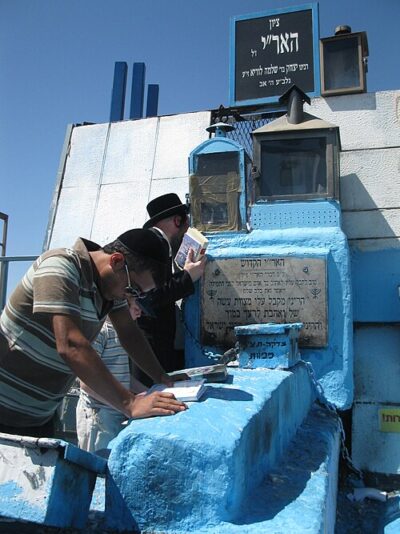
Isaac Luria was an Ottoman rabbi in Egypt and Palestine. Born 1534, in Jerusalem. Died July 25, 1572, in Safed.
Facts
10 facts · 1 confirmed by two sources · 2 cited · 7 from one source
Where this comes from
Papalocal keeps its own record. It started from these sources; what each one said is kept here as it was copied, so a change on their side never changes this page by itself. Tap one to read its version.
What Wikidata says · copied November 16, 2026 · revision 2564806384
- Described as
- Ottoman rabbi in Egypt and Palestine
- Other names
- Isaac (ben Solomon) Luria Ashkenazi, Ha'ARI, Ha'ARI Hakadosh, ARIZaL, Isaac ben Solomon Luria Ashkenazi
- Born
- 1534 · 15 references
- Died
- July 25, 1572
- Born in
- Jerusalem
- Died in
- Safed
- Buried in
- Safed old cemetery
- Citizen of
- Ottoman Empire · 1 reference
- Occupation
- rabbi; kabbalist; mystic · 1 reference
- Religion
- Judaism
- Wikipedias with a page
- 31
Wikidata item Q339509 (wikidata.org/wiki/Q339509), public domain (CC0). Copied November 16, 2026.
What Wikipedia says · copied November 16, 2026 · revision 1384634696
Isaac ben Solomon Ashkenazi Luria (Hebrew: יִצְחָק בן שלמה אשכנזי לוּרְיָא; born 5294 c. 1534 – died 5332, c. July 25, 1572), commonly known in Jewish religious circles as Ha'ari, Ha'ari Hakadosh or Arizal, was a leading rabbi and Jewish mystic in the community of Safed in the Galilee region of Ottoman Palestine, now Israel. He is considered the father of contemporary Kabbalah. His teachings are referred to as Lurianic Kabbalah.
His direct literary contribution to the Kabbalistic school of Safed was extremely minute (he wrote only a few poems), however his spiritual fame led to their veneration and the acceptance of his authority. Luria's disciples compiled his oral teachings into their writings, and every custom of Luria was scrutinized; many were accepted, even against previous practice.
Luria died at Safed on July 25, 1572, and is buried at the Safed Old Jewish Cemetery. The Ari Ashkenazi Synagogue, also located in Safed, was built in memory of Luria during the late 16th century.
- Died, in its opening lines
- July 25, 1572
From the Wikipedia article “Isaac Luria” (en.wikipedia.org/wiki/Isaac_Luria), by its contributors, under CC BY-SA 4.0 (creativecommons.org/licenses/by-sa/4.0/). Copied November 16, 2026; not changed.
Confirmed Two sources agree. Cited One source, and it names where it got it. One source One source, without a reference of its own. Sources disagree The sources disagree. We show the best-supported value and keep theirs below.
