
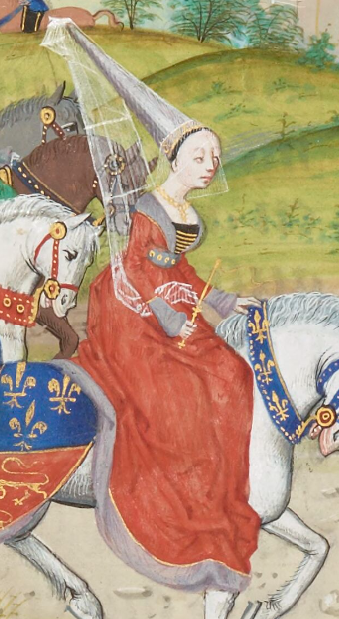
Isabella of France was a Queen consort of England. Born 1295, in Paris. Died August 22, 1358, in Castle Rising. Positions held include regent.
Facts
19 facts · 2 confirmed by two sources · 8 cited · 9 from one source
What’s different
- Born: we show 1295 (Confirmed). Wikidata also lists 1296
Where this comes from
Papalocal keeps its own record. It started from these sources; what each one said is kept here as it was copied, so a change on their side never changes this page by itself. Tap one to read its version.
What Wikidata says · copied November 16, 2026 · revision 2554926561
- Described as
- Queen consort of England
- Other names
- She-wolf of France
- Born
- 1295 · 2 references; 1296 · 1 reference
- Died
- August 22, 1358
- Born in
- Paris
- Died in
- Castle Rising
- Buried in
- Christ Church Greyfriars
- Citizen of
- France
- Occupation
- regent
- Positions held
- regent
- Spouse
- Edward II of England (1308–1327) · 2 references
- Children
- Edward III of England · 1 reference; John of Eltham, Earl of Cornwall; Eleanor of Woodstock; Joan of The Tower · 1 reference
- Father
- Philip IV of France · 1 reference
- Mother
- Joan I of Navarre · 1 reference
- Siblings
- Louis X of France · 1 reference; Philip V of France · 1 reference; Charles IV of France · 1 reference
- Religion
- Catholic Church
- Wikipedias with a page
- 52
Wikidata item Q228642 (wikidata.org/wiki/Q228642), public domain (CC0). Copied November 16, 2026.
What Wikipedia says · copied November 16, 2026 · revision 1378302247
Isabella of France (sometimes described as the She-Wolf of France French: La Louve de France; c. 1295 – 22 August 1358) was Queen of England as the wife of King Edward II, and de facto regent of England from 1327 until 1330. She was the youngest surviving child and only surviving daughter of King Philip IV of France and Joan I of Navarre.
Isabella arrived in England at age 12 during a period of growing conflict between the king and the powerful baronial factions. Her new husband was notorious for the patronage he lavished on his favourite, Piers Gaveston, but the queen supported Edward during these early years, forming a working relationship with Piers and using her relationship with the French monarchy to bolster her own authority and power. After the death of Gaveston at the hands of the barons in 1312, however, Edward turned to a new favourite, Hugh Despenser the Younger, and attempted to take revenge on the barons, resulting in the Despenser War and a period of internal repression across England. Isabella could not tolerate Hugh Despenser, and by 1325, her marriage to Edward was at a breaking point.
Travelling to France on a diplomatic mission, Isabella may have begun an affair with Roger Mortimer, and the two may possibly have agreed at this point to depose Edward and oust the Despenser family. The queen returned to England with a small mercenary army in 1326, moving rapidly across England. The king's forces deserted him. Isabella deposed Edward, becoming regent on behalf of her young son, Edward III. Some believe that Isabella then arranged the murder of Edward II. Isabella and Mortimer's regime began to crumble, partly because of her lavish spending, but also because the queen successfully, but unpopularly, resolved long-running problems such as the War of Scottish Independence.
In 1330, aged 18, Isabella's son, Edward III, forcibly asserted his authority. Mortimer was executed, Isabella's regency was ended, and she was imprisoned, but soon released. She lived out her remaining years as a wealthy courtier and grew close again to her family, especially her daughter Joan, Queen of Scots, and her grandson Edward, Prince of Wales.
- Born, in its opening lines
- c. 1295
- Died, in its opening lines
- August 22, 1358
From the Wikipedia article “Isabella of France” (en.wikipedia.org/wiki/Isabella_of_France), by its contributors, under CC BY-SA 4.0 (creativecommons.org/licenses/by-sa/4.0/). Copied November 16, 2026; not changed.
Confirmed Two sources agree. Cited One source, and it names where it got it. One source One source, without a reference of its own. Sources disagree The sources disagree. We show the best-supported value and keep theirs below.
