
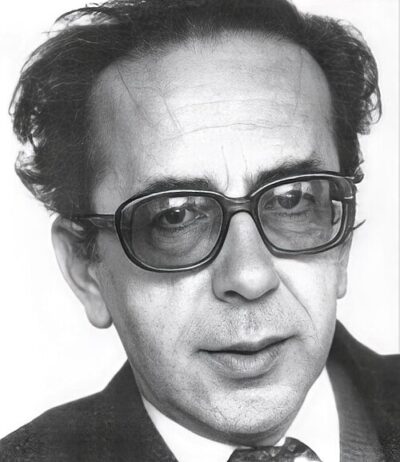
Ismail Kadare
Ismail Kadare was an Albanian writer. Born January 28, 1936, in Gjirokastër. Died July 1, 2024, in Tirana. Positions held include Member of the Parliament of Albania (1970–1982). Known for The General of the Dead Army, The Castle and Chronicle in Stone. Educated at University of Tirana and Maxim Gorky Literature Institute. Awards include Princess of Asturias Literary Prize, Herder Prize and Prix mondial Cino Del Duca.
Facts
46 facts · 2 confirmed by two sources · 17 cited · 27 from one source
Where this comes from
Papalocal keeps its own record. It started from these sources; what each one said is kept here as it was copied, so a change on their side never changes this page by itself. Tap one to read its version.
What Wikidata says · copied November 16, 2026 · revision 2565601349
- Described as
- Albanian writer (1936–2024)
- Other names
- Ismail Kadaré, Prince of Asturia, Kadare
- Born
- January 28, 1936 · 10 references
- Died
- July 1, 2024 · 2 references
- Born in
- Gjirokastër · 4 references
- Died in
- Tirana · 2 references
- Cause of death
- myocardial infarction · 1 reference
- Citizen of
- Albania · 1 reference; France · 2 references; Kosovo
- Occupation
- poet; novelist; translator; writer · 2 references
- Positions held
- Member of the Parliament of Albania (1970–1982)
- Education
- University of Tirana; Maxim Gorky Literature Institute
- Member of
- Academy of Sciences of Albania; Académie des Sciences Morales et Politiques; Academy of Sciences and Arts of Kosovo · 1 reference; Montenegrin Academy of Sciences and Arts · 2 references
- Known for
- The General of the Dead Army; The Castle; Chronicle in Stone; Broken April; The Three-Arched Bridge; The File on H.; The Palace of Dreams
- Awards
- Princess of Asturias Literary Prize (2009); Herder Prize (1998); Prix mondial Cino Del Duca (1992) · 1 reference; International Booker Prize (2005) · 1 reference; Jerusalem Prize (2015); International Nonino Prize (2018); Commandeur des Arts et des Lettres (1996); Grand Officer of the Legion of Honour (2019); Neustadt International Prize for Literature (2020) · 1 reference; Decoration of the National Flag; Honor of Nation Order; honorary doctorate of Grenoble-III University (1992) · 1 reference; honorary doctorate from University of Jean-Monnet-Saint-Étienne (1997) · 1 reference; Flaiano Literary Prize
- Field
- literary activity · 1 reference; poetry · 1 reference; prose · 1 reference
- Spouse
- Helena Kadare (1963–2024) · 1 reference
- Children
- Besiana Kadare
- Religion
- atheism
- Wikipedias with a page
- 87
Wikidata item Q179695 (wikidata.org/wiki/Q179695), public domain (CC0). Copied November 16, 2026.
What Wikipedia says · copied November 16, 2026 · revision 1380107070
Ismail Kadare (Albanian: [ismaˈil kadaˈɾe]; 28 January 1936 – 1 July 2024) was an Albanian novelist, poet, essayist, screenwriter and playwright. He was a leading international literary figure and intellectual, focusing on poetry until the publication of his first novel, The General of the Dead Army, which made him famous internationally.
Kadare is regarded by some as one of the greatest writers and intellectuals of the 20th and 21st centuries, and as a universal voice against totalitarianism. Living in Albania during a time of strict censorship, he devised stratagems to outwit Communist censors who had banned three of his books, using devices such as parable, myth, fable, folk-tale, allegory, and legend, sprinkled with double-entendre, allusion, insinuation, satire, and coded messages. In 1990, to escape the Communist regime and its Sigurimi secret police, he defected to Paris. From the 1990s he was asked by both major political parties in Albania to become a consensual President of the country, but declined. In 1996, France made him a foreign associate of the Académie des Sciences Morales et Politiques, and in 2016, he was a Commandeur de la Légion d'Honneur recipient.
Kadare was nominated for the Nobel Prize in Literature 15 times. In 1992, he was awarded the Prix mondial Cino Del Duca; in 1998, the Herder Prize; in 2005, the inaugural Man Booker International Prize; in 2009, the Prince of Asturias Award of Arts; and in 2015, the Jerusalem Prize. He was awarded the Park Kyong-ni Prize in 2019, and the Neustadt International Prize for Literature in 2020. His nominating juror for the Neustadt Prize wrote: "Kadare is the successor of Franz Kafka. No one since Kafka has delved into the infernal mechanism of totalitarian power and its impact on the human soul in as much hypnotic depth as Kadare." His writing has also been compared to that of Nikolai Gogol, George Orwell, Gabriel García Márquez, Milan Kundera, and Balzac. His works have been published in 45 languages. The New York Times wrote that he was a national figure in Albania comparable in popularity perhaps to Mark Twain in the United States, and that "there is hardly an Albanian household without a Kadare book".
He was the husband of author Helena Kadare and the father of United Nations Ambassador and UN General Assembly Vice-president Besiana Kadare. In 2023 he was granted citizenship of Kosovo, by president Vjosa Osmani.
- Born, in its opening lines
- January 28, 1936
- Died, in its opening lines
- July 1, 2024
From the Wikipedia article “Ismail Kadare” (en.wikipedia.org/wiki/Ismail_Kadare), by its contributors, under CC BY-SA 4.0 (creativecommons.org/licenses/by-sa/4.0/). Copied November 16, 2026; not changed.
Confirmed Two sources agree. Cited One source, and it names where it got it. One source One source, without a reference of its own. Sources disagree The sources disagree. We show the best-supported value and keep theirs below.
