
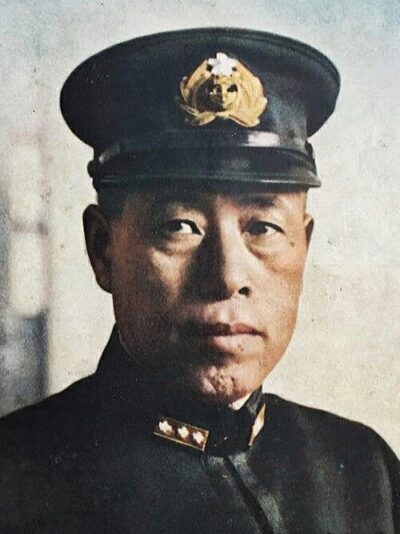
Isoroku Yamamoto
Isoroku Yamamoto was a Japanese Marshal Admiral. Born April 4, 1884, in Nagaoka. Died April 18, 1943, in Bougainville Island. Educated at Harvard University and Naval War College. Awards include Knight's Cross of the Iron Cross with Oak Leaves and Swords, Order of the Rising Sun, 1st class and Grand Cordon of the Supreme Order of the Chrysanthemum.
Facts
28 facts · 2 confirmed by two sources · 2 cited · 24 from one source
Where this comes from
Papalocal keeps its own record. It started from these sources; what each one said is kept here as it was copied, so a change on their side never changes this page by itself. Tap one to read its version.
What Wikidata says · copied November 16, 2026 · revision 2554112810
- Described as
- Japanese Marshal Admiral (1884–1943)
- Other names
- Yamamoto, Yamamoto Isoroku, Admiral Yamamoto
- Born
- April 4, 1884 · 7 references
- Died
- April 18, 1943 · 9 references
- Born in
- Nagaoka · 1 reference
- Died in
- Bougainville Island
- Buried in
- Tama Cemetery
- Cause of death
- ditching
- Citizen of
- Japan
- Occupation
- military officer; admiral · 1 reference
- Education
- Harvard University; Naval War College; Imperial Japanese Naval Academy
- Awards
- Knight's Cross of the Iron Cross with Oak Leaves and Swords (1943); Order of the Rising Sun, 1st class (1940); Grand Cordon of the Supreme Order of the Chrysanthemum (1943); Order of the Golden Kite, 1st Class (1943); Order of the Sacred Treasure, 1st Class (1939); Japanese Red Cross Society Silver Merit Medal; Grand Cross of the Order of the German Eagle (1940); Knight grand cross of the order of the crown of Italy (1938); Order of the Paulownia Flowers (1920) · 1 reference; Order of the Sacred Treasure, 2nd Class (1931); Order of the Sacred Treasure, 5th Class (1911); Order of the Rising Sun, 4th class (1920); Order of the Golden Kite, 2nd Class (1942)
- Spouse
- Reiko Mihashi
- Military branch
- Imperial Japanese Navy · 1 reference
- Military rank
- admiral
- Wikipedias with a page
- 75
Wikidata item Q152325 (wikidata.org/wiki/Q152325), public domain (CC0). Copied November 16, 2026.
What Wikipedia says · copied November 16, 2026 · revision 1385310339
Isoroku Yamamoto (山本 五十六, Yamamoto Isoroku; April 4, 1884 – April 18, 1943) was an admiral of the Imperial Japanese Navy (IJN) and the commander of the Combined Fleet during World War II. He commanded the fleet from 1939 until his death in 1943, overseeing the start of the Pacific War in 1941 and Japan's early successes and defeats, before his plane was shot down by U.S. fighter aircraft over New Guinea.
Yamamoto graduated from the Imperial Naval Academy in 1904 and served in the Russo-Japanese War, where he lost two fingers at the Battle of Tsushima. He later studied at Harvard University in the United States and was appointed naval attaché to the Japanese embassy in Washington. His experiences convinced him that naval power depended on access to oil and industrial capacity, and that Japan thus had little hope to defeat the U.S. in a war. He was one of the first naval leaders to conclude that naval aviation and aircraft carriers would play a decisive role in any future conflict.
In 1936, Yamamoto was appointed navy vice minister, and opposed Japan's alliance with Germany and Italy in the Tripartite Pact of 1940. In 1939, he was appointed commander-in-chief of the Combined Fleet, and was tasked with creating a strategy for war with the United States: he conceived the initial surprise attack on Pearl Harbor in December 1941.
In the early months of the war, the Japanese fleet scored a series of substantial naval victories. These gains were halted at the Battle of Midway in June 1942, in which four Japanese carriers were sunk. Yamamoto committed to the defense of the Solomon Islands in the Guadalcanal campaign, but was unable to prevent their capture. In April 1943, Yamamoto was killed after American code breakers intercepted his flight plans, enabling the United States Army Air Forces to shoot down his aircraft.
- Born, in its opening lines
- April 4, 1884
- Died, in its opening lines
- April 18, 1943
From the Wikipedia article “Isoroku Yamamoto” (en.wikipedia.org/wiki/Isoroku_Yamamoto), by its contributors, under CC BY-SA 4.0 (creativecommons.org/licenses/by-sa/4.0/). Copied November 16, 2026; not changed.
Confirmed Two sources agree. Cited One source, and it names where it got it. One source One source, without a reference of its own. Sources disagree The sources disagree. We show the best-supported value and keep theirs below.
