
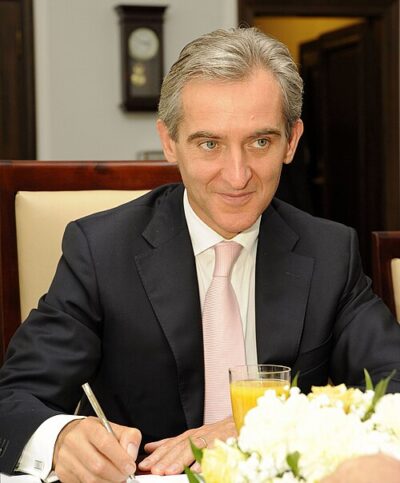
Iurie Leancă
Iurie Leancă is the 9th Prime Minister of Moldova. Born October 20, 1963, in Cimișlia. Positions held include member of the Parliament of Moldova (2014–2019), Prime Minister of Moldova (2013–2015) and Minister of Foreign Affairs (2 times) (2001–2013). Educated at Moscow State Institute of International Relations. Awards include Order of the Republic.
Facts
13 facts · 1 confirmed by two sources · 1 cited · 11 from one source
Where this comes from
Papalocal keeps its own record. It started from these sources; what each one said is kept here as it was copied, so a change on their side never changes this page by itself. Tap one to read its version.
What Wikidata says · copied November 16, 2026 · revision 2568869849
- Described as
- 9th Prime Minister of Moldova (2013 - 2015)
- Born
- October 20, 1963 · 3 references
- Born in
- Cimișlia · 1 reference
- Citizen of
- Moldova; Romania
- Occupation
- politician; diplomat
- Positions held
- member of the Parliament of Moldova (2014–2019); Prime Minister of Moldova (2013–2015); Minister of Foreign Affairs (2 times) (2001–2013)
- Political party
- European People's Party of Moldova (2015–); Liberal Democratic Party of Moldova (2009–2015)
- Education
- Moscow State Institute of International Relations (1981–1986)
- Awards
- Order of the Republic (2014)
- Wikipedias with a page
- 33
Wikidata item Q58087 (wikidata.org/wiki/Q58087), public domain (CC0). Copied November 16, 2026.
What Wikipedia says · copied November 16, 2026 · revision 1365184821
Iurie Leancă (Romanian: [ˈjuri.e ˈle̯aŋkə]; born 20 October 1963) is a Moldovan politician who was the prime minister of Moldova from 2013 until 2015. He was Minister of Foreign Affairs and European Integration from 2009 to 2013 as part of the First and Second Filat Cabinet.
- Born, in its opening lines
- October 20, 1963
From the Wikipedia article “Iurie Leancă” (en.wikipedia.org/wiki/Iurie_Leancă), by its contributors, under CC BY-SA 4.0 (creativecommons.org/licenses/by-sa/4.0/). Copied November 16, 2026; not changed.
Confirmed Two sources agree. Cited One source, and it names where it got it. One source One source, without a reference of its own. Sources disagree The sources disagree. We show the best-supported value and keep theirs below.
