
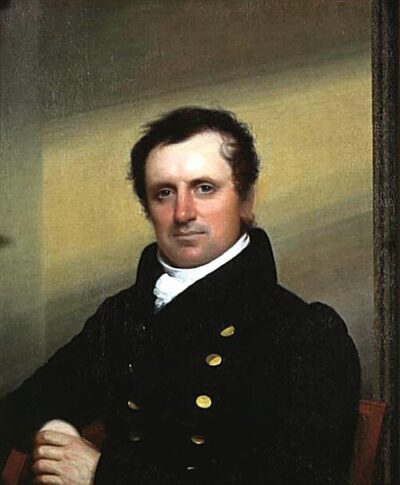
James Fenimore Cooper
James Fenimore Cooper was an American writer. Born September 15, 1789, in Burlington City. Died September 14, 1851, in Cooperstown. Known for The Last of the Mohicans. Educated at Yale University. Awards include New Jersey Hall of Fame.
Facts
25 facts · 2 confirmed by two sources · 8 cited · 15 from one source
Where this comes from
Papalocal keeps its own record. It started from these sources; what each one said is kept here as it was copied, so a change on their side never changes this page by itself. Tap one to read its version.
What Wikidata says · copied November 13, 2026 · revision 2566540776
- Described as
- American writer (1789–1851)
- Born
- September 15, 1789 · 18 references
- Died
- September 14, 1851 · 18 references
- Born in
- Burlington City · 2 references
- Died in
- Cooperstown · 2 references
- Buried in
- Christ Churchyard · 1 reference
- Cause of death
- liver cirrhosis
- Citizen of
- United States · 1 reference
- Occupation
- writer · 4 references; military officer; novelist · 1 reference; children's writer; biographer · 1 reference; Western author
- Education
- Yale University
- Member of
- American Philosophical Society (1823–)
- Genre
- non-fiction; adventure fiction
- Known for
- The Last of the Mohicans
- Awards
- New Jersey Hall of Fame (2015) · 1 reference
- Spouse
- Susan Augusta Delancey
- Children
- Susan Fenimore Cooper; Paul Fenimore Cooper · 1 reference; Charlotte Fenimore Cooper
- Father
- William Cooper
- Military branch
- United States Navy
- Wikipedias with a page
- 93
Wikidata item Q167856 (wikidata.org/wiki/Q167856), public domain (CC0). Copied November 13, 2026.
What Wikipedia says · copied November 13, 2026 · revision 1381547271
James Fenimore Cooper (September 15, 1789 – September 14, 1851) was an American writer of the first half of the 19th century, whose historical romances depicting colonial and indigenous characters from the 17th to the 19th centuries brought him fame and fortune. He lived much of his boyhood and his last 15 years in Cooperstown, New York, which was founded by his father William Cooper on property that he owned. Cooper became a member of the Episcopal Church shortly before his death, and contributed generously to it. He attended Yale University for three years, where he was a member of the Linonian Society.
After a stint on a commercial voyage, Cooper served in the U.S. Navy as a midshipman, where he learned the technology of managing sailing vessels, which greatly influenced many of his novels and other writings. The novel that launched his career was The Spy, a tale about espionage set during the American Revolutionary War and published in 1821. He also created American sea stories. His best-known works are five historical novels of the frontier period, written between 1823 and 1841, known as the Leatherstocking Tales, which introduced the iconic American frontier scout, Natty Bumppo. Cooper's works on the U.S. Navy have been well received among naval historians, but they were sometimes criticized by his contemporaries. Among his more famous works is the Romantic novel The Last of the Mohicans, often regarded as his masterpiece. Throughout his career, he published numerous social, political, and historical works of fiction and nonfiction, with the objective of countering European prejudices and nurturing an original American art and culture.
- Born, in its opening lines
- September 15, 1789
- Died, in its opening lines
- September 14, 1851
From the Wikipedia article “James Fenimore Cooper” (en.wikipedia.org/wiki/James_Fenimore_Cooper), by its contributors, under CC BY-SA 4.0 (creativecommons.org/licenses/by-sa/4.0/). Copied November 13, 2026; not changed.
Confirmed Two sources agree. Cited One source, and it names where it got it. One source One source, without a reference of its own. Sources disagree The sources disagree. We show the best-supported value and keep theirs below.
