
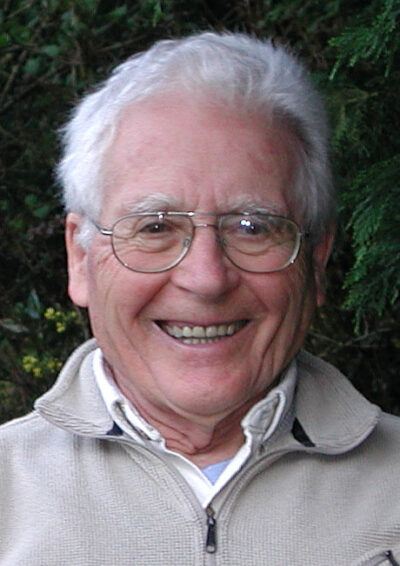
James Lovelock
James Lovelock was an English scientist. Born July 26, 1919, in Letchworth Garden City. Died July 26, 2022, in Abbotsbury. Known for electron capture detector and Gaia hypothesis. Educated at University of Manchester and Strand School. Awards include Fellow of the Royal Society, Commander of the Order of the British Empire and Dr A. H. Heineken Prize for Environmental Sciences.
Facts
45 facts · 2 confirmed by two sources · 23 cited · 20 from one source
Where this comes from
Papalocal keeps its own record. It started from these sources; what each one said is kept here as it was copied, so a change on their side never changes this page by itself. Tap one to read its version.
What Wikidata says · copied November 16, 2026 · revision 2569007103
- Described as
- English scientist (1919–2022)
- Other names
- James Ephraim Lovelock, James E. Lovelock, James E Lovelock, J. E. Lovelock, J E Lovelock, Jim Lovelock, J. Lovelock, J.E. Lovelock, J Lovelock, Lovelock, Lovelock J, Lovelock J.
- Born
- July 26, 1919 · 4 references
- Died
- July 26, 2022 · 2 references
- Born in
- Letchworth Garden City · 1 reference
- Died in
- Abbotsbury · 1 reference
- Cause of death
- complication · 1 reference
- Citizen of
- United Kingdom · 1 reference
- Occupation
- chemist · 1 reference; university teacher; mythographer; ecologist; environmentalist; science fiction writer · 1 reference; biochemist · 1 reference; futurist
- Worked for
- Green College, Oxford · 1 reference
- Education
- University of Manchester · 1 reference; Strand School · 1 reference; London School of Hygiene and Tropical Medicine
- Member of
- Royal Society of London (1974–); Environmentalists for Nuclear Energy
- Known for
- electron capture detector; Gaia hypothesis
- Awards
- Fellow of the Royal Society (1974) · 1 reference; Commander of the Order of the British Empire (1990) · 1 reference; Dr A. H. Heineken Prize for Environmental Sciences (1990) · 1 reference; Volvo Environment Prize (1996) · 1 reference; Blue Planet Prize (1997) · 1 reference; Companion of Honour (2003) · 1 reference; Fonseca Prize (2009) · 1 reference; honorary doctor of the University of Kent; honorary doctor of the University of Edinburgh; Wollaston Medal (2006) · 1 reference; International Nonino Prize (1996) · 1 reference; Order of the Companions of Honour · 1 reference; Edinburgh Medal (2006); Fellow of the American Association for the Advancement of Science (2008) · 1 reference
- Field
- medical research; Earth science; futures studies · 1 reference; natural environment · 1 reference; nature conservation · 1 reference; environmentalism · 1 reference
- Father
- Tom Arthur Lovelock · 2 references
- Mother
- Nell March · 2 references
- Website
- http://www.jameslovelock.org/
- Wikipedias with a page
- 59
Wikidata item Q210898 (wikidata.org/wiki/Q210898), public domain (CC0). Copied November 16, 2026.
What Wikipedia says · copied November 16, 2026 · revision 1372742301
James Ephraim Lovelock (26 July 1919 – 26 July 2022) was an English independent scientist, environmentalist and futurist. He is best known for proposing the Gaia hypothesis, which postulates that the Earth functions as a self-regulating system.
With a PhD in the chemistry of disinfection, Lovelock began his career performing cryopreservation experiments on rodents, including successfully thawing and reviving frozen specimens. His methods were influential in the theories of cryonics (the cryopreservation of humans). He invented the electron capture detector and, using it, became the first to detect the widespread presence of chlorofluorocarbons in the atmosphere. While designing scientific instruments for NASA, he developed the Gaia hypothesis.
In the 2000s, he proposed a method of climate engineering to restore carbon dioxide–consuming algae. He was an outspoken member of Environmentalists for Nuclear Energy, asserting that fossil fuel interests have been behind opposition to nuclear energy, citing the effects of carbon dioxide as being harmful to the environment and warning of global warming due to the greenhouse effect. He wrote several environmental science books based upon the Gaia hypothesis from the late 1970s.
He also worked for MI5, the British security service, for decades. Bryan Appleyard, writing in The Sunday Times, described him as "basically Q in the James Bond films".
- Born, in its opening lines
- July 26, 1919
- Died, in its opening lines
- July 26, 2022
From the Wikipedia article “James Lovelock” (en.wikipedia.org/wiki/James_Lovelock), by its contributors, under CC BY-SA 4.0 (creativecommons.org/licenses/by-sa/4.0/). Copied November 16, 2026; not changed.
Confirmed Two sources agree. Cited One source, and it names where it got it. One source One source, without a reference of its own. Sources disagree The sources disagree. We show the best-supported value and keep theirs below.
