
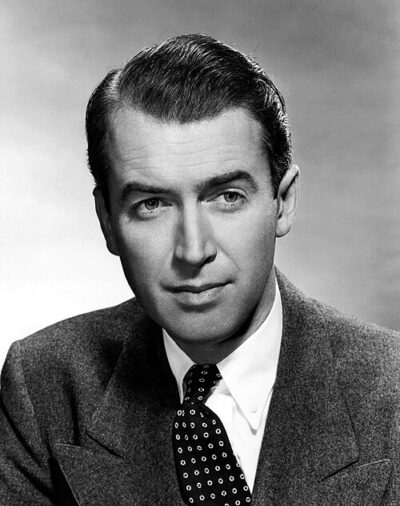
James Stewart
James Stewart was an American actor and military officer. Born May 20, 1908, in Indiana. Died July 2, 1997, in Beverly Hills. Known for It's a Wonderful Life, Vertigo and Rear Window. Educated at Princeton University School of Architecture and Mercersburg Academy. Awards include Croix de guerre 1939–1945, Distinguished Flying Cross and Presidential Medal of Freedom.
Facts
60 facts · 2 confirmed by two sources · 8 cited · 49 from one source · 1 where the sources disagree
What’s different
- Cause of death: we show pulmonary embolism (Sources disagree). Wikidata also lists myocardial infarction and thrombosis
Where this comes from
Papalocal keeps its own record. It started from these sources; what each one said is kept here as it was copied, so a change on their side never changes this page by itself. Tap one to read its version.
What Wikipedia says · copied November 13, 2026 · revision 1385352486
James Maitland Stewart (May 20, 1908 – July 2, 1997) was an American actor and military aviator. Known for his distinctive drawl and everyman screen persona, Stewart appeared in 80 films from 1935 to 1991. His films are considered among the greatest of all time. In 1999, the American Film Institute (AFI) ranked him third on its list of the greatest American male actors; he received numerous honors including the AFI Life Achievement Award in 1980, the Kennedy Center Honor in 1983, as well as the Academy Honorary Award and Presidential Medal of Freedom, both in 1985.
Born and raised in the city of Indiana, Pennsylvania, Stewart started acting while at Princeton University. After graduating, he began a career as a stage actor, making his Broadway debut in 1932 in the play Carry Nation. He landed his first supporting role in The Murder Man (1935) and had his breakthrough in Frank Capra's ensemble comedy You Can't Take It with You (1938). He later starred in Capra's political comedy Mr. Smith Goes to Washington (1939), and Ernst Lubitsch's romantic comedy The Shop Around the Corner (1940), Stewart went on to receive the Academy Award for Best Actor for his performance in the George Cukor romantic comedy The Philadelphia Story (1940). After returning home from World War II, he went on to star in Capra's It's a Wonderful Life (1946), which was a critical and commercial disappointment upon its release, but has since become a beloved classic after its copyright expired in the early 1970s.
Stewart went on to star in four films directed by Alfred Hitchcock, Rope (1948), Rear Window (1954), The Man Who Knew Too Much (1956), and Vertigo (1958), as well as Anatomy of a Murder (1959), and The Man Who Shot Liberty Valance (1962).
With his private pilot's skills, he enlisted in the US Army Air Forces during the war, seeking combat duty and rose to be deputy commanding officer of the 2nd Bombardment Wing and commanding the 703d Bombardment Squadron from 1941 to 1947. He later transferred to the Air Force Reserve, and held various command positions until his retirement in 1968 as a brigadier general.
- Born, in its opening lines
- May 20, 1908
- Died, in its opening lines
- July 2, 1997
From the Wikipedia article “James Stewart” (en.wikipedia.org/wiki/James_Stewart), by its contributors, under CC BY-SA 4.0 (creativecommons.org/licenses/by-sa/4.0/). Copied November 13, 2026; not changed.
What Wikidata says · copied November 14, 2026 · revision 2568946354
- Described as
- American actor and military officer (1908–1997)
- Other names
- Jimmy Stewart, James Maitland Stewart
- Born
- May 20, 1908 · 13 references
- Died
- July 2, 1997 · 16 references
- Born in
- Indiana · 1 reference
- Died in
- Beverly Hills · 4 references
- Buried in
- Forest Lawn Memorial Park
- Cause of death
- pulmonary embolism; myocardial infarction; thrombosis
- Name at birth
- James Maitland Stewart
- Citizen of
- United States
- Occupation
- military officer; aircraft pilot; film actor · 1 reference; television director; screenwriter; military personnel; stage actor; poet
- Political party
- Republican Party · 2 references
- Education
- Princeton University School of Architecture (1928–1932); Mercersburg Academy (–1928) · 1 reference
- Genre
- Western film; thriller film; psychological thriller film; drama film; film noir; comedy film
- Known for
- It's a Wonderful Life; Vertigo; Rear Window; Rope; You Can't Take It With You; Mr. Smith Goes to Washington; The Philadelphia Story; The Man Who Shot Liberty Valance; Winchester '73; Harvey
- Awards
- Croix de guerre 1939–1945; Distinguished Flying Cross; Presidential Medal of Freedom (1985) · 1 reference; Air Medal; Commendation Medal; Armed Forces Reserve Medal; Croix de Guerre; Academy Award for Best Actor (1941); Golden Globe Cecil B. DeMille Award (1964); SAG-AFTRA Life Achievement Award (1968); AFI Life Achievement Award (1980); Kennedy Center Honors (1983); Academy Honorary Award (1984); National Aviation Hall of Fame (2009) · 1 reference; World War II Victory Medal
- Field
- acting · 1 reference
- Spouse
- Gloria Hatrick McLean (1949–1994)
- Father
- Alexander Maitland Stewart · 1 reference
- Mother
- Elizabeth Ruth Stewart · 1 reference
- Religion
- Presbyterianism
- Military branch
- United States Air Force; United States Army Air Corps; United States Army Air Forces
- Military rank
- brigadier general
- Height
- 1.91 m (6 ft 3 in)
- Wikipedias with a page
- 98
Wikidata item Q102462 (wikidata.org/wiki/Q102462), public domain (CC0). Copied November 14, 2026.
Confirmed Two sources agree. Cited One source, and it names where it got it. One source One source, without a reference of its own. Sources disagree The sources disagree. We show the best-supported value and keep theirs below.
