
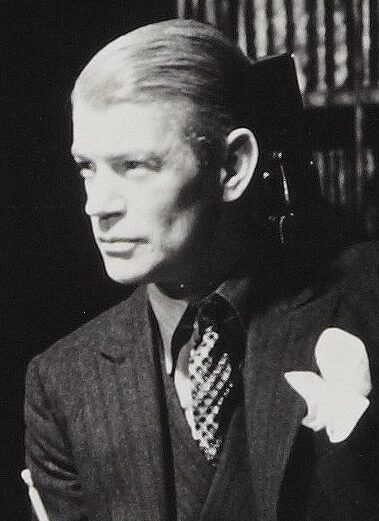
James Whale
James Whale was a British-born American film director. Born July 22, 1889, in Dudley. Died May 29, 1957, in Hollywood.
Facts
13 facts · 2 confirmed by two sources · 6 cited · 5 from one source
Where this comes from
Papalocal keeps its own record. It started from these sources; what each one said is kept here as it was copied, so a change on their side never changes this page by itself. Tap one to read its version.
What Wikidata says · copied November 16, 2026 · revision 2568808787
- Described as
- British-born American film director
- Born
- July 22, 1889 · 4 references
- Died
- May 29, 1957 · 3 references
- Born in
- Dudley · 2 references
- Died in
- Hollywood · 1 reference
- Buried in
- Forest Lawn Memorial Park
- Cause of death
- drowning
- Citizen of
- United Kingdom
- Occupation
- film director · 2 references; theatre director · 1 reference; screenwriter; director · 2 references
- Military branch
- British Army · 1 reference
- Website
- http://www.jameswhale.com
- Wikipedias with a page
- 32
Wikidata item Q381831 (wikidata.org/wiki/Q381831), public domain (CC0). Copied November 16, 2026.
What Wikipedia says · copied November 16, 2026 · revision 1385850915
James Whale (22 July 1889 – 29 May 1957) was an English film director, theatre director and actor, who spent the greater part of his career in Hollywood. He is best remembered for several horror films: Frankenstein (1931), The Old Dark House (1932), The Invisible Man (1933) and Bride of Frankenstein (1935), all considered classics. Whale also directed films in other genres, including the 1936 film version of the musical Show Boat.
Whale was born into a large family in Dudley, Worcestershire (now the Metropolitan Borough of Dudley). He discovered his artistic talent early on and studied art. With the outbreak of World War I, he enlisted in the British Army and became an officer. He was captured by the Germans and during his time as a prisoner of war he realised he was interested in drama. Following his release at the end of the war he became an actor, set designer and director. His success directing the 1928 play Journey's End led to his move to the US, first to direct the play on Broadway and then to Hollywood, California, to direct films. He lived in Hollywood for the rest of his life, most of that time with his longtime romantic partner, producer David Lewis. Apart from Journey's End (1930), which was released by Tiffany Films, and Hell's Angels (1930), released by United Artists, he directed a dozen films for Universal Pictures between 1931 and 1937, developing a style characterised by the influence of German Expressionism and a highly mobile camera.
At the height of his career as a director, Whale directed The Road Back (1937), a sequel to All Quiet on the Western Front. Studio interference, possibly spurred by political pressure from Nazi Germany, led to the film's being altered from Whale's vision, and it was a critical failure. A run of box-office disappointments followed and, while he would make one final short film in 1950, by 1941 his film directing career was effectively over. He continued to direct for the stage and also rediscovered his love for painting and travel. His investments made him wealthy and he lived a comfortable retirement until suffering strokes in 1956 that robbed him of his vigor and left him in pain. He took his own life on 29 May 1957 by drowning himself in his swimming pool.
Whale was openly gay throughout his career, something that was very rare in the 1920s and 1930s. As knowledge of his sexual orientation has become more widespread, some of his films, Bride of Frankenstein in particular, have been interpreted as having a gay subtext and it has been claimed that his refusal to remain in the closet led to the end of his career. Other commentators have contended that his retirement was provoked by a succession of poorly received projects with which Whale was growing personally dissatisfied (particularly deleterious to his career was The Road Back, which went through development hell at multiple stages, whereafter the buck was perceived to stop with Whale as principal director).
- Born, in its opening lines
- July 22, 1889
- Died, in its opening lines
- May 29, 1957
From the Wikipedia article “James Whale” (en.wikipedia.org/wiki/James_Whale), by its contributors, under CC BY-SA 4.0 (creativecommons.org/licenses/by-sa/4.0/). Copied November 16, 2026; not changed.
Confirmed Two sources agree. Cited One source, and it names where it got it. One source One source, without a reference of its own. Sources disagree The sources disagree. We show the best-supported value and keep theirs below.
