
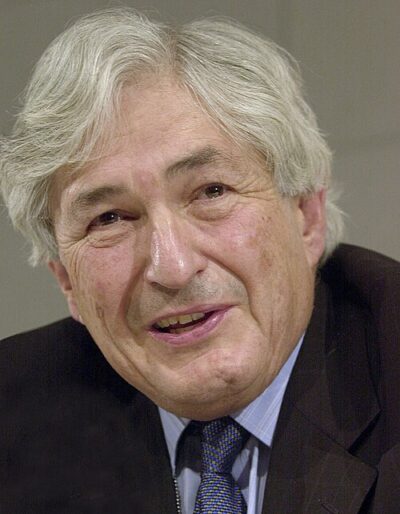
James Wolfensohn
James Wolfensohn was a President of the World Bank. Born December 1, 1933, in Sydney. Died November 25, 2020, in Manhattan. Positions held include President of the World Bank Group (1995–2005). Educated at University of Sydney and Harvard Business School. Awards include Knight Commander of the Order of the British Empire, honorary doctor of the Hebrew University of Jerusalem and honorary doctor of Ben-Gurion University.
Facts
37 facts · 2 confirmed by two sources · 15 cited · 20 from one source
Where this comes from
Papalocal keeps its own record. It started from these sources; what each one said is kept here as it was copied, so a change on their side never changes this page by itself. Tap one to read its version.
What Wikidata says · copied November 15, 2026 · revision 2510689687
- Described as
- President of the World Bank (1933–2020)
- Other names
- James David Wolfensohn, James D. Wolfensohn, Sir James David Wolfensohn
- Born
- December 1, 1933 · 3 references
- Died
- November 25, 2020 · 2 references
- Born in
- Sydney · 1 reference
- Died in
- Manhattan · 1 reference
- Buried in
- Sharon Gardens Cemetery · 1 reference
- Citizen of
- United States; Australia
- Occupation
- economist; banker; fencer; politician; lawyer; jurist · 1 reference; manager · 1 reference
- Positions held
- President of the World Bank Group (1995–2005)
- Education
- University of Sydney; Harvard Business School
- Member of
- American Academy of Arts and Sciences; American Philosophical Society (1997–) · 1 reference; American Association for the Advancement of Science · 1 reference
- Sport
- fencing
- Instrument
- cello · 1 reference
- Awards
- Knight Commander of the Order of the British Empire (1995); honorary doctor of the Hebrew University of Jerusalem (2011) · 1 reference; honorary doctor of Ben-Gurion University; Theodor Heuss Award (2006) · 1 reference; Leo-Baeck-Medal (2006); Order of Friendship; Order of the Golden Fleece · 1 reference; Honorary Officer of the Order of Australia (1987) · 1 reference; Great Immigrants Award (2006) · 1 reference; Grand Cordon of the Order of the Rising Sun (2006)
- Field
- economics · 2 references; law · 1 reference; economics of banking · 1 reference
- Religion
- Judaism
- Website
- http://www.wolfensohn.com/
- Wikipedias with a page
- 26
Wikidata item Q504387 (wikidata.org/wiki/Q504387), public domain (CC0). Copied November 15, 2026.
What Wikipedia says · copied November 15, 2026 · revision 1381932608
Sir James David Wolfensohn (1 December 1933 – 25 November 2020) was an Australian-American lawyer, investment banker, and economist who served as the ninth president of the World Bank Group (1995–2005). During his tenure at the World Bank, he is credited with the focus on poverty alleviation and a rethink on development financing, earning him recognition as a banker to the world's poor. In his other roles, he is credited with actions that brought Chrysler Corporation back from the brink of bankruptcy, and also improving the finances of major United States cultural institutions, including Carnegie Hall and the Kennedy Center. He served two terms as president of the World Bank on the nomination of U.S. president Bill Clinton, and thereafter held various positions with charitable organizations and policy think-tanks including the Brookings Institution.
He was born in Sydney, Australia, and was a graduate of the University of Sydney and Harvard Business School; he was also an Olympic fencer. He worked for various companies in Britain and the United States before forming his own investment firm. Wolfensohn became an American citizen in 1980 and renounced his Australian citizenship, although he eventually regained it in 2010.
- Born, in its opening lines
- December 1, 1933
- Died, in its opening lines
- November 25, 2020
From the Wikipedia article “James Wolfensohn” (en.wikipedia.org/wiki/James_Wolfensohn), by its contributors, under CC BY-SA 4.0 (creativecommons.org/licenses/by-sa/4.0/). Copied November 15, 2026; not changed.
Confirmed Two sources agree. Cited One source, and it names where it got it. One source One source, without a reference of its own. Sources disagree The sources disagree. We show the best-supported value and keep theirs below.
