
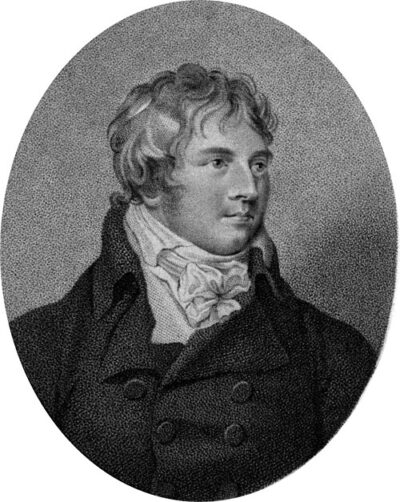
Jan Ladislav Dussek
Jan Ladislav Dussek was a Czech composer and pianist. Born February 12, 1760, in Čáslav. Died March 20, 1812, in Saint-Germain-en-Laye.
Facts
17 facts · 2 confirmed by two sources · 8 cited · 7 from one source
Where this comes from
Papalocal keeps its own record. It started from these sources; what each one said is kept here as it was copied, so a change on their side never changes this page by itself. Tap one to read its version.
What Wikidata says · copied November 16, 2026 · revision 2568748189
- Described as
- Czech composer and pianist (1760–1812)
- Other names
- Jan Václav Dusík, Jan Vaclav Dusik, Václav Jan Dusík
- Born
- February 12, 1760 · 9 references
- Died
- March 20, 1812 · 12 references
- Born in
- Čáslav · 8 references
- Died in
- Saint-Germain-en-Laye · 2 references
- Buried in
- Malostranský hřbitov
- Occupation
- composer · 3 references; pianist · 2 references; organist; chapelmaster · 1 reference; musician · 1 reference
- Genre
- opera
- Instrument
- piano
- Spouse
- Sophia Dussek · 1 reference
- Children
- Olivia Buckley · 1 reference
- Father
- Johann Joseph Dussek
- Siblings
- František Josef Dusík; Katerina Veronika Anna Dusíkova · 1 reference
- Wikipedias with a page
- 28
Wikidata item Q357172 (wikidata.org/wiki/Q357172), public domain (CC0). Copied November 16, 2026.
What Wikipedia says · copied November 16, 2026 · revision 1385059309
Jan Ladislav Dussek (baptised Jan Václav Dusík, with surname also written as Duschek or Düssek; 12 February 1760 – 20 March 1812) was a Czech classical period composer and virtuoso pianist. He was an important representative of Czech music abroad in the second half of the 18th century and the beginning of the 19th century. Some of his more forward-looking piano works have traits often associated with Romanticism.
Dussek was one of the first piano virtuosos to travel widely throughout Europe. He performed at courts and concert venues from London to Saint Petersburg to Milan, and was celebrated for his technical prowess. During a nearly ten-year stay in London, he was instrumental (sic) in extending the size of the pianoforte, and was the recipient of one of John Broadwood's first 6-octave pianos, CC-c4. Harold Schonberg wrote that he was the first pianist to sit at the piano with his profile to the audience, earning him the appellation "le beau visage." All subsequent pianists have sat on stage in this manner. He was one of the best-regarded pianists in Europe before Beethoven's rise to prominence.
His music is marked by lyricism interrupted by sudden dynamic contrasts. As well as his many compositions for the piano, he also composed for the harp: his music for that instrument contains a great variety of figuration within a largely diatonic harmony, avoids chromatic passages. His music is considered standard repertoire for all harpists, particularly his Six Sonatas/Sonatinas and especially the Sonata in C minor. Less well known to the general public than that of his more renowned Classical period contemporaries, his piano music is highly valued by many teachers and not infrequently programmed. Franz Liszt has been called an indirect successor of Dussek in the composition and performance of virtuoso piano music. His music remained popular to some degree in 19th-century Great Britain and the USA, some still in print, with more available in period editions online.
- Born, in its opening lines
- February 12, 1760
- Died, in its opening lines
- March 20, 1812
From the Wikipedia article “Jan Ladislav Dussek” (en.wikipedia.org/wiki/Jan_Ladislav_Dussek), by its contributors, under CC BY-SA 4.0 (creativecommons.org/licenses/by-sa/4.0/). Copied November 16, 2026; not changed.
Confirmed Two sources agree. Cited One source, and it names where it got it. One source One source, without a reference of its own. Sources disagree The sources disagree. We show the best-supported value and keep theirs below.
