
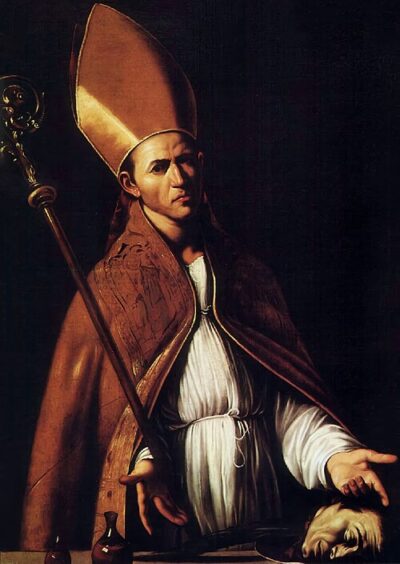
Januarius
Januarius was a Bishop of Naples. Born April 21, 272, in Benevento. Died September 19, 305, in Pozzuoli. Positions held include diocesan bishop (302–305).
Facts
12 facts · 0 confirmed by two sources · 5 cited · 7 from one source
Where this comes from
Papalocal keeps its own record. It started from these sources; what each one said is kept here as it was copied, so a change on their side never changes this page by itself. Tap one to read its version.
What Wikidata says · copied November 16, 2026 · revision 2568753258
- Described as
- Bishop of Naples (232-305)
- Other names
- Saint Januarius, Ianuarius, St. Januarius
- Born
- April 21, 272
- Died
- September 19, 305
- Born in
- Benevento
- Died in
- Pozzuoli · 1 reference
- Buried in
- Naples Cathedral · 1 reference
- Cause of death
- decapitation
- Citizen of
- Ancient Rome
- Occupation
- Catholic priest; Catholic bishop · 1 reference; bishop · 1 reference
- Positions held
- diocesan bishop (302–305) · 1 reference
- Religion
- Catholic Church · 1 reference
- Wikipedias with a page
- 41
Wikidata item Q315312 (wikidata.org/wiki/Q315312), public domain (CC0). Copied November 16, 2026.
What Wikipedia says · copied November 16, 2026 · revision 1377369240
Januarius ( JAN-yoo-AIR-ee-əs; Latin: Ianuarius; Neapolitan and Italian: Gennaro), also known as Januarius I of Benevento, was Bishop of Benevento and is a martyr and saint of the Catholic Church. While no contemporary sources on his life are preserved, later sources and legends say he died during the Great Persecution, which ended with Diocletian's retirement in 305.
Januarius is the patron saint of Naples, where the faithful gather three times a year in Naples Cathedral to witness the liquefaction of what is claimed to be a sample of his blood kept in a sealed ampoule.
From the Wikipedia article “Januarius” (en.wikipedia.org/wiki/Januarius), by its contributors, under CC BY-SA 4.0 (creativecommons.org/licenses/by-sa/4.0/). Copied November 16, 2026; not changed.
Confirmed Two sources agree. Cited One source, and it names where it got it. One source One source, without a reference of its own. Sources disagree The sources disagree. We show the best-supported value and keep theirs below.
