
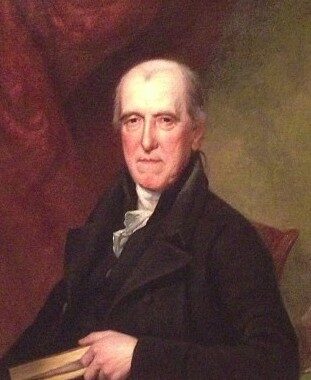
Jared Ingersoll
Jared Ingersoll was an American judge. Born October 24, 1749, in New Haven. Died October 31, 1822, in Philadelphia. Positions held include Pennsylvania Attorney General (1811–1816) and Delegate to the United States Constitutional Convention (1787). Educated at Yale University and Hopkins School.
Facts
20 facts · 2 confirmed by two sources · 8 cited · 10 from one source
Where this comes from
Papalocal keeps its own record. It started from these sources; what each one said is kept here as it was copied, so a change on their side never changes this page by itself. Tap one to read its version.
What Wikidata says · copied November 18, 2026 · revision 2567428869
- Described as
- American judge (1749-1822)
- Other names
- Jared Ingersoll Jr.
- Born
- October 24, 1749 · 1 reference
- Died
- October 31, 1822 · 3 references
- Born in
- New Haven · 1 reference
- Died in
- Philadelphia · 1 reference
- Buried in
- Old Pine Street Presbyterian Church Cemetery · 1 reference
- Citizen of
- United States
- Occupation
- lawyer; judge · 1 reference; politician · 2 references; jurist · 1 reference
- Positions held
- Pennsylvania Attorney General (1811–1816); Delegate to the United States Constitutional Convention (1787) · 1 reference
- Political party
- federalist
- Education
- Yale University; Hopkins School
- Member of
- American Philosophical Society (1781–)
- Children
- Charles Jared Ingersoll; Joseph Reed Ingersoll
- Father
- Jared Ingersoll, Sr. · 1 reference
- Mother
- Hannah Ingersoll (Whiting) · 1 reference
- Wikipedias with a page
- 17
Wikidata item Q2622320 (wikidata.org/wiki/Q2622320), public domain (CC0). Copied November 18, 2026.
What Wikipedia says · copied November 18, 2026 · revision 1380704962
Jared Ingersoll Jr. (October 24, 1749 – October 31, 1822) was an American Founding Father, lawyer, and statesman from Philadelphia, Pennsylvania. He was a delegate to the Continental Congress and a signer of the United States Constitution. He served as DeWitt Clinton's running mate in the 1812 election, but Clinton and Ingersoll were defeated by James Madison and Elbridge Gerry.
Born in New Haven, Connecticut, Ingersoll established a legal career in Philadelphia after graduating from Yale College. The son of British colonial official Jared Ingersoll Sr., Ingersoll lived in Europe from 1773 to 1776 to avoid the growing political conflict between Britain and the Thirteen Colonies. In 1778, having committed himself to the cause of American independence, Ingersoll returned to Philadelphia and won election to the Continental Congress. Ingersoll became convinced of the need for a stronger national government than what was provided by the Articles of Confederation, and he was a delegate to the 1787 Philadelphia Convention. Though he was initially seeking amendments for the Articles of Confederation, he eventually came to support the new Constitution that was produced by the convention.
He served as the Pennsylvania Attorney General from 1791 to 1800 and from 1811 to 1816. He also served as the United States Attorney for Pennsylvania and as the city solicitor for Philadelphia. He argued the cases of Chisholm v. Georgia and Hylton v. United States, two of the first cases to appear before the United States Supreme Court.
Ingersoll affiliated with the Federalist Party and was deeply disturbed by Thomas Jefferson's victory in the 1800 presidential election. In 1812, the Democratic-Republican Party split between President Madison and Clinton. The Federalists decided to support a ticket of Clinton and Ingersoll in hopes of defeating the incumbent president. Madison prevailed in the election, winning Ingersoll's crucial home state of Pennsylvania.
- Born, in its opening lines
- October 24, 1749
- Died, in its opening lines
- October 31, 1822
From the Wikipedia article “Jared Ingersoll” (en.wikipedia.org/wiki/Jared_Ingersoll), by its contributors, under CC BY-SA 4.0 (creativecommons.org/licenses/by-sa/4.0/). Copied November 18, 2026; not changed.
Confirmed Two sources agree. Cited One source, and it names where it got it. One source One source, without a reference of its own. Sources disagree The sources disagree. We show the best-supported value and keep theirs below.
