
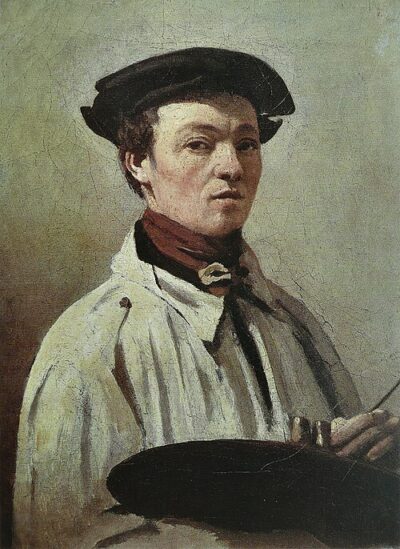
Jean-Baptiste Camille Corot
Jean-Baptiste Camille Corot was a French landscape and portrait painter and printmaker in etching. Born July 16, 1796, in Rue du Bac. Died February 22, 1875, in rue du Faubourg-Poissonnière. Known for The Bridge at Narni, Femme Lisant and The road from Sèvres to Paris. Educated at Lycée Pierre-Corneille and Académie Suisse. Awards include Knight of the Legion of Honour, Officer of the Legion of Honour and Knight of the Order of Leopold.
Facts
32 facts · 2 confirmed by two sources · 16 cited · 14 from one source
Where this comes from
Papalocal keeps its own record. It started from these sources; what each one said is kept here as it was copied, so a change on their side never changes this page by itself. Tap one to read its version.
What Wikidata says · copied November 16, 2026 · revision 2568111014
- Described as
- French landscape and portrait painter and printmaker in etching (1796-1875)
- Other names
- jean baptist corot, Jean B. Cam. Corot, j. b. camille corot, J.-B. Corot, Camille Jean Baptiste Corot, Camille Jean-Baptiste Corot, Jean Bapt. Corot, jean-bapt. camille corot, J.B.C. Corot, Pere Corot, c. corot, Jean-Baptiste-Camille Corot
- Born
- July 16, 1796 · 15 references
- Died
- February 22, 1875 · 18 references
- Born in
- Rue du Bac
- Died in
- rue du Faubourg-Poissonnière · 1 reference
- Buried in
- Père Lachaise Cemetery · 1 reference
- Cause of death
- stomach cancer
- Name at birth
- Jean-Baptiste Camille Corot
- Citizen of
- France · 2 references
- Occupation
- painter · 2 references; photographer · 2 references; printmaker · 1 reference; draftsperson · 1 reference; architectural drafter · 1 reference; visual artist · 1 reference
- Education
- Lycée Pierre-Corneille (1807–1812); Académie Suisse
- Member of
- Barbizon school · 1 reference
- Genre
- landscape painting · 2 references; allegory · 1 reference; religious art · 1 reference; genre art · 1 reference; history painting · 1 reference; marine art · 1 reference
- Known for
- The Bridge at Narni; Femme Lisant; The road from Sèvres to Paris; Pastoral Concert
- Awards
- Knight of the Legion of Honour (1846) · 1 reference; Officer of the Legion of Honour (1867) · 1 reference; Knight of the Order of Leopold (1872)
- Field
- painting · 3 references
- Religion
- Catholicism · 1 reference
- Wikipedias with a page
- 77
Wikidata item Q148475 (wikidata.org/wiki/Q148475), public domain (CC0). Copied November 16, 2026.
What Wikipedia says · copied November 16, 2026 · revision 1380476587
Jean-Baptiste-Camille Corot (UK: KORR-oh, US: kə-ROH, kor-OH; French: [ʒɑ̃ batist kamij kɔʁo]; 16 July 1796 – 22 February 1875), or simply Camille Corot, was a French landscape and portrait painter as well as a printmaker in etching. A pivotal figure in landscape painting, his vast output simultaneously referenced the neoclassical tradition and anticipated the plein-air innovations of Impressionism.
- Born, in its opening lines
- July 16, 1796
- Died, in its opening lines
- February 22, 1875
From the Wikipedia article “Jean-Baptiste-Camille Corot” (en.wikipedia.org/wiki/Jean-Baptiste-Camille_Corot), by its contributors, under CC BY-SA 4.0 (creativecommons.org/licenses/by-sa/4.0/). Copied November 16, 2026; not changed.
Confirmed Two sources agree. Cited One source, and it names where it got it. One source One source, without a reference of its own. Sources disagree The sources disagree. We show the best-supported value and keep theirs below.
