
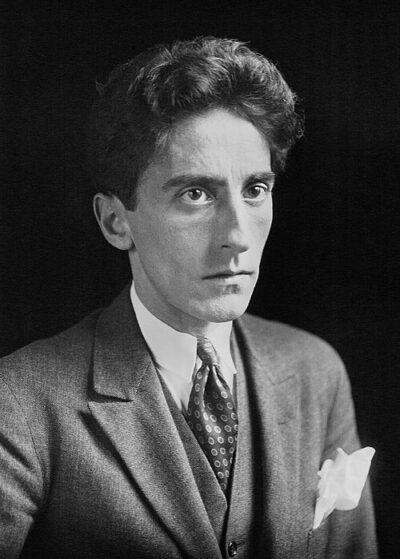
Jean Cocteau
Jean Cocteau was a French writer and film director. Born July 5, 1889, in Maisons-Laffitte. Died October 11, 1963, in Milly-la-Forêt. Positions held include President of the Jury at the Cannes Festival (1953) and Member of the Académie française (1955–1963). Known for Orpheus, The Blood of a Poet and Beauty and the Beast. Educated at Lycée Condorcet. Awards include Commander of the Legion of Honour and Louis Delluc Prize.
Facts
32 facts · 2 confirmed by two sources · 16 cited · 14 from one source
Where this comes from
Papalocal keeps its own record. It started from these sources; what each one said is kept here as it was copied, so a change on their side never changes this page by itself. Tap one to read its version.
What Wikidata says · copied November 16, 2026 · revision 2569091755
- Described as
- French writer and film director (1889–1963)
- Other names
- Zhan Kokto, Eugene Jean Maurice Cocteau, Clément Eugène Jean Pierre Cocteau, Eugène Jean Maurice Cocteau
- Born
- July 5, 1889 · 16 references
- Died
- October 11, 1963 · 23 references
- Born in
- Maisons-Laffitte · 3 references
- Died in
- Milly-la-Forêt · 1 reference
- Buried in
- Chapelle Saint-Blaise-des-Simples (1964–) · 1 reference
- Cause of death
- myocardial infarction
- Name at birth
- Jean Maurice Eugène Clément Cocteau
- Citizen of
- France · 2 references
- Occupation
- painter · 3 references; playwright · 1 reference; film director · 1 reference; poet · 3 references; actor · 1 reference; illustrator · 1 reference; novelist; screenwriter
- Positions held
- President of the Jury at the Cannes Festival (1953); Member of the Académie française (1955–1963)
- Education
- Lycée Condorcet · 1 reference
- Member of
- Académie Française (1955–); German Academy for Language and Literature; Academie Royale de Langue et de littérature Françaises (1955–1963) · 1 reference; Société des poètes français
- Genre
- drama; tragedy
- Known for
- Orpheus · 1 reference; The Blood of a Poet · 1 reference; Beauty and the Beast · 1 reference; Les Enfants Terribles · 1 reference
- Awards
- Commander of the Legion of Honour; Louis Delluc Prize (1946)
- Mother
- Eugénie Cocteau
- Wikipedias with a page
- 122
Wikidata item Q83158 (wikidata.org/wiki/Q83158), public domain (CC0). Copied November 16, 2026.
What Wikipedia says · copied November 16, 2026 · revision 1383581648
Jean Maurice Eugène Clément Cocteau (UK: KOK-toh, US: kok-TOH; French: [ʒɑ̃ mɔʁis øʒɛn klemɑ̃ kɔkto]; 5 July 1889 – 11 October 1963) was a French poet, playwright, screenwriter, novelist, designer, film director, visual artist and critic. He was one of the foremost avant-garde artists of the 20th century and highly influential on the Surrealist and Dadaist movements, among others. The National Observer suggested that "of the artistic generation whose daring gave birth to Twentieth Century Art, Cocteau came closest to being a Renaissance man".
He is most notable for his novels Le Grand Écart (1923), Le Livre blanc (1928), and Les Enfants Terribles (1929); the stage plays La Voix Humaine (1930), La Machine Infernale (1934), Les Parents terribles (1938), La Machine à écrire (1941), and L'Aigle à deux têtes (1946); and the films The Blood of a Poet (1930), Les Parents Terribles (1948), Beauty and the Beast (1946), Orpheus (1950), and Testament of Orpheus (1960), which alongside Blood of a Poet and Orpheus constitute the so-called Orphic Trilogy. He was described as "one of [the] avant-garde's most successful and influential filmmakers" by AllMovie. Cocteau, according to Annette Insdorf, "left behind a body of work unequalled for its variety of artistic expression".
Though his body of work encompassed many different media, Cocteau insisted on calling himself a poet, classifying the great variety of his works — poems, novels, plays, essays, drawings, films — as poésie, poésie de roman, poésie de thêatre, poésie critique, poésie graphique and poésie cinématographique.
- Born, in its opening lines
- July 5, 1889
- Died, in its opening lines
- October 11, 1963
From the Wikipedia article “Jean Cocteau” (en.wikipedia.org/wiki/Jean_Cocteau), by its contributors, under CC BY-SA 4.0 (creativecommons.org/licenses/by-sa/4.0/). Copied November 16, 2026; not changed.
Confirmed Two sources agree. Cited One source, and it names where it got it. One source One source, without a reference of its own. Sources disagree The sources disagree. We show the best-supported value and keep theirs below.
