
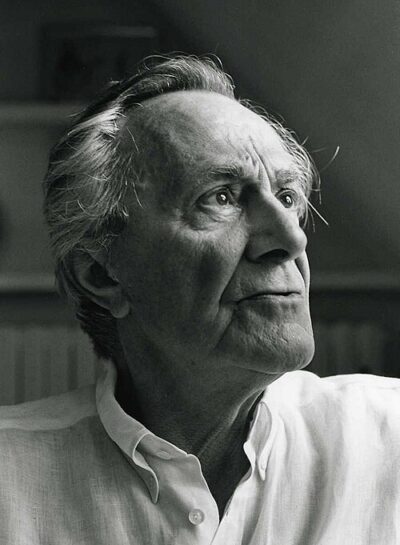
Jean-François Lyotard
Jean-François Lyotard was a French philosopher, sociologist, and literary theorist. Born August 10, 1924, in Versailles. Died April 21, 1998, in 15th arrondissement of Paris. Educated at Lycée Louis-le-Grand and University of Paris.
Facts
32 facts · 2 confirmed by two sources · 9 cited · 20 from one source · 1 where the sources disagree
What’s different
- Buried in: we show Père Lachaise Cemetery (Sources disagree). Wikidata also lists Grave of Jean-François Lyotard
Where this comes from
Papalocal keeps its own record. It started from these sources; what each one said is kept here as it was copied, so a change on their side never changes this page by itself. Tap one to read its version.
What Wikidata says · copied November 16, 2026 · revision 2559983738
- Described as
- French philosopher, sociologist, and literary theorist (1924-1998)
- Other names
- Jean François Lyotard
- Born
- August 10, 1924 · 10 references
- Died
- April 21, 1998 · 11 references
- Born in
- Versailles · 2 references
- Died in
- 15th arrondissement of Paris · 1 reference
- Buried in
- Père Lachaise Cemetery; Grave of Jean-François Lyotard
- Cause of death
- leukemia
- Citizen of
- France · 1 reference
- Occupation
- philosopher · 2 references; philologist · 1 reference; writer · 1 reference; linguist · 1 reference; epistemologist; sociologist · 1 reference; literary theorist · 1 reference; university teacher
- Worked for
- Emory University; Paris 8 University (1972–1987) · 1 reference; University of California, Irvine · 1 reference; Prytanée National Militaire (1952–1956); University of Paris 1 Pantheon-Sorbonne (1970–1972); Paris Nanterre University (1967–1970); University of Paris (1959–1967)
- Education
- Lycée Louis-le-Grand; University of Paris; Paris Nanterre University
- Member of
- Socialisme ou Barbarie; Pouvoir ouvrier
- Field
- aesthetics; psychoanalysis; ethics; politics
- Children
- Corinne Enaudeau
- Wikipedias with a page
- 63
Wikidata item Q193257 (wikidata.org/wiki/Q193257), public domain (CC0). Copied November 16, 2026.
What Wikipedia says · copied November 16, 2026 · revision 1381459861
Jean-François Lyotard (; French: [ʒɑ̃ fʁɑ̃swa ljɔtaʁ]; 10 August 1924 – 21 April 1998) was a French philosopher, sociologist, and literary theorist. His interdisciplinary discourse spans such topics as epistemology and communication, the human body, modern art and postmodern art, literature and critical theory, music, film, time and memory, space, the city and landscape, the sublime, and the relation between aesthetics and politics. He is best known for his articulation of postmodernism after the late 1970s and the analysis of the impact of postmodernity on the human condition. Lyotard was a key personality in contemporary continental philosophy and authored 26 books and many articles. He was a director of the International College of Philosophy founded by Jacques Derrida, François Châtelet, Jean-Pierre Faye, and Dominique Lecourt.
- Born, in its opening lines
- August 10, 1924
- Died, in its opening lines
- April 21, 1998
From the Wikipedia article “Jean-François Lyotard” (en.wikipedia.org/wiki/Jean-François_Lyotard), by its contributors, under CC BY-SA 4.0 (creativecommons.org/licenses/by-sa/4.0/). Copied November 16, 2026; not changed.
Confirmed Two sources agree. Cited One source, and it names where it got it. One source One source, without a reference of its own. Sources disagree The sources disagree. We show the best-supported value and keep theirs below.
