
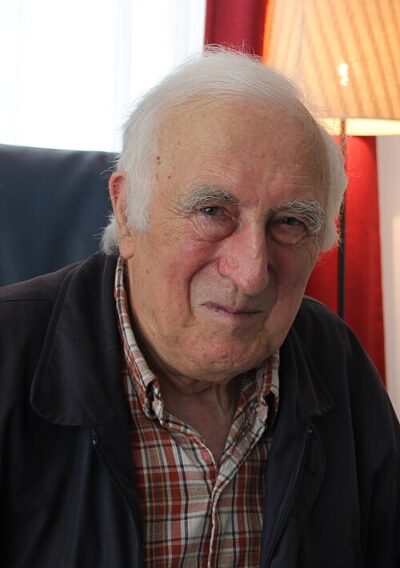
Jean Vanier
Jean Vanier was a Canadian humanitarian, Catholic philosopher, and theologian. Born September 10, 1928, in Geneva. Died May 7, 2019, in Paris. Educated at Britannia Royal Naval College and Catholic University of Paris. Awards include Companion of the Order of Canada, Templeton Prize and Pacem in Terris Award.
Facts
37 facts · 2 confirmed by two sources · 22 cited · 13 from one source
Where this comes from
Papalocal keeps its own record. It started from these sources; what each one said is kept here as it was copied, so a change on their side never changes this page by itself. Tap one to read its version.
What Wikidata says · copied November 15, 2026 · revision 2563212775
- Described as
- Canadian humanitarian, Catholic philosopher, and theologian (1928–2019)
- Born
- September 10, 1928 · 9 references
- Died
- May 7, 2019 · 7 references
- Born in
- Geneva · 1 reference
- Died in
- Paris · 1 reference
- Cause of death
- thyroid cancer
- Name at birth
- Jean François Vanier · 1 reference
- Citizen of
- Canada · 1 reference; France · 1 reference
- Occupation
- writer · 1 reference; philosopher · 1 reference; Catholic theologian · 1 reference
- Worked for
- University of Toronto
- Education
- Britannia Royal Naval College; Catholic University of Paris (–1962) · 1 reference
- Member of
- L'Arche
- Awards
- Companion of the Order of Canada (1986) · 1 reference; Templeton Prize (2015) · 1 reference; Pacem in Terris Award (2013) · 1 reference; Commander of the Legion of Honour (2015) · 1 reference; Officer of the Order of Canada (1971) · 1 reference; Queen Elizabeth II Diamond Jubilee Medal (2012) · 1 reference; Queen Elizabeth II Golden Jubilee Medal (2002) · 1 reference; Grand Officer of the National Order of Quebec (1992) · 1 reference; Knight of the Legion of Honour (1994) · 1 reference; Order Ecce Homo (2004) · 1 reference; Officer of the Legion of Honour (2002) · 1 reference
- Field
- Catholic theology · 1 reference; dogmatic theology · 1 reference; philosophy · 1 reference; meaning of life · 1 reference; philanthropy · 1 reference
- Father
- Georges Vanier
- Mother
- Pauline Vanier
- Siblings
- Thérèse Vanier
- Religion
- Catholicism · 1 reference
- Military branch
- Royal Canadian Navy (1947–1950); Royal Navy (1942–1947)
- Wikipedias with a page
- 35
Wikidata item Q545644 (wikidata.org/wiki/Q545644), public domain (CC0). Copied November 15, 2026.
What Wikipedia says · copied November 15, 2026 · revision 1376037855
Jean Vanier (French pronunciation: [ʒɑ̃ vanje], September 10, 1928 – May 7, 2019) was a Canadian Catholic philosopher and theologian. In 1964, he founded L'Arche, an international federation of communities spread over 37 countries for people with developmental disabilities and those who assist them. In 1971, he co-founded Faith and Light with Marie-Hélène Mathieu, which also works for people with developmental disabilities, their families, and friends in over 80 countries. He continued to live as a member of the original L'Arche community in Trosly-Breuil, France, until his death.
Over the years he wrote 30 books on religion, disability, normality, success, and tolerance. Among the honours he received were the Companion of the Order of Canada (1986), Grand Officer of the National Order of Quebec (1992), French Legion of Honour (2003), Community of Christ International Peace Award (2003, later revoked), the Pacem in Terris Peace and Freedom Award (2013), and the Templeton Prize (2015).
In February 2020, an internal report published by L'Arche concluded that Vanier sexually abused six women in Trosly-Breuil, France, between 1970 and 2005. The investigation was conducted by the UK-based GCPS Consulting Group.
- Born, in its opening lines
- September 10, 1928
- Died, in its opening lines
- May 7, 2019
From the Wikipedia article “Jean Vanier” (en.wikipedia.org/wiki/Jean_Vanier), by its contributors, under CC BY-SA 4.0 (creativecommons.org/licenses/by-sa/4.0/). Copied November 15, 2026; not changed.
Confirmed Two sources agree. Cited One source, and it names where it got it. One source One source, without a reference of its own. Sources disagree The sources disagree. We show the best-supported value and keep theirs below.
