
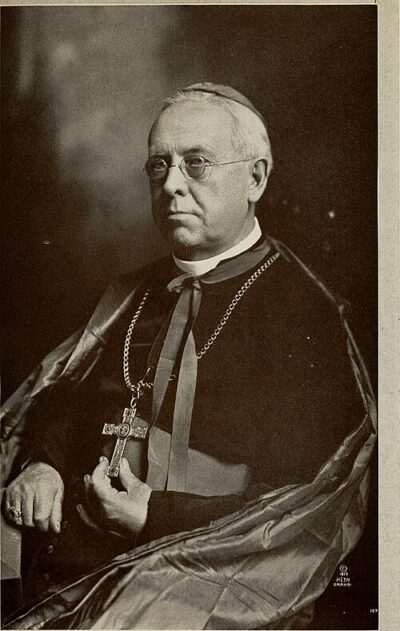
Jeremiah James Harty
Jeremiah James Harty was an American Roman Catholic archbishop. Born November 5, 1853, in St. Louis. Died October 29, 1927, in Los Angeles. Positions held include Metropolitan Archbishop of Manila (1903–) and Roman Catholic Bishop of Omaha (1916–).
Facts
12 facts · 2 confirmed by two sources · 4 cited · 6 from one source
Where this comes from
Papalocal keeps its own record. It started from these sources; what each one said is kept here as it was copied, so a change on their side never changes this page by itself. Tap one to read its version.
What Wikidata says · copied November 20, 2026 · revision 2565168483
- Described as
- American Roman Catholic archbishop (1853–1927)
- Born
- November 5, 1853
- Died
- October 29, 1927
- Born in
- St. Louis
- Died in
- Los Angeles
- Buried in
- Calvary Cemetery · 1 reference
- Citizen of
- United States
- Occupation
- Catholic priest (1878–) · 1 reference; Catholic bishop (1903–); archbishop · 1 reference
- Positions held
- Metropolitan Archbishop of Manila (1903–) · 2 references; Roman Catholic Bishop of Omaha (1916–) · 2 references
- Religion
- Catholic Church · 1 reference
- Wikipedias with a page
- 9
Wikidata item Q2623707 (wikidata.org/wiki/Q2623707), public domain (CC0). Copied November 20, 2026.
What Wikipedia says · copied November 20, 2026 · revision 1357827926
Jeremiah James Harty (November 5, 1853 – October 29, 1927) was an American prelate of the Catholic Church. He served as the 26th archbishop of the Archdiocese of Manila in the Philippines from 1903 to 1916. He later served as bishop (with the personal title of archbishop known as archbishop ad personam) of the Diocese of Omaha in Nebraska from 1916 until he died in 1927.
- Born, in its opening lines
- November 5, 1853
- Died, in its opening lines
- October 29, 1927
From the Wikipedia article “Jeremiah James Harty” (en.wikipedia.org/wiki/Jeremiah_James_Harty), by its contributors, under CC BY-SA 4.0 (creativecommons.org/licenses/by-sa/4.0/). Copied November 20, 2026; not changed.
Confirmed Two sources agree. Cited One source, and it names where it got it. One source One source, without a reference of its own. Sources disagree The sources disagree. We show the best-supported value and keep theirs below.
