
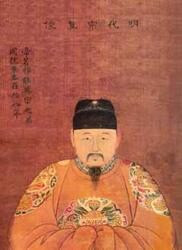
Jingtai Emperor
Jingtai Emperor was an emperor of the Ming Dynasty. Born September 21, 1428, in Beijing. Died March 14, 1457, in Beijing. Positions held include Emperor of China (1449–1457).
Facts
18 facts · 2 confirmed by two sources · 2 cited · 13 from one source · 1 where the sources disagree
What’s different
- Buried in: we show Ming tombs (Sources disagree). Wikidata also lists Jingtai Tomb
Where this comes from
Papalocal keeps its own record. It started from these sources; what each one said is kept here as it was copied, so a change on their side never changes this page by itself. Tap one to read its version.
What Wikidata says · copied November 16, 2026 · revision 2569074291
- Described as
- emperor of the Ming Dynasty
- Other names
- Ming Daizong, Zhu Qiyu, Gongrenkangdingjinghuangdi, Jingtai, Emperor Gongren Kangding Jing, Dai Zong, Lihui, Jing Di
- Born
- September 21, 1428
- Died
- March 14, 1457
- Born in
- Beijing
- Died in
- Beijing
- Buried in
- Ming tombs; Jingtai Tomb
- Citizen of
- Ming dynasty · 1 reference
- Occupation
- ruler
- Positions held
- Emperor of China (1449–1457)
- Spouse
- Empress Xiaoyuanjing; Empress Hang
- Children
- Zhu Jianji; Princess Gu'an
- Father
- Xuande Emperor · 1 reference
- Mother
- Empress Dowager Xiaoyi, of the Wu clan
- Siblings
- Zhengtong Emperor; Princess Changde; Princess Yongqing; Princess Shunde
- Wikipedias with a page
- 37
Wikidata item Q9988 (wikidata.org/wiki/Q9988), public domain (CC0). Copied November 16, 2026.
What Wikipedia says · copied November 16, 2026 · revision 1383201269
The Jingtai Emperor (21 September 1428 – 14 March 1457), personal name Zhu Qiyu, was the seventh emperor of the Ming dynasty of China, reigning from 1449 to 1457. He succeeded his elder brother, Emperor Yingzong.
In 1449, Emperor Yingzong personally led the army to battle against the Mongolian army of Esen Taishi. He left Zhu Qiyu in charge of government affairs. However, in the Battle of Tumu Fortress, the Mongols defeated the Ming army and captured the Emperor. This event caused shock and concern throughout the country, and the court eventually elevated Zhu Qiyu to the throne. The former emperor, who had formed a positive relationship with Esen, was released in 1450 but did not regain his position. He was instead placed under house arrest in the Southern Palace of the Forbidden City.
During his reign, the Jingtai Emperor, with the support of prominent minister Yu Qian, worked to restore the country's infrastructure. This included repairing the Grand Canal and the Yellow River's dam system, resulting in economic prosperity and a bolstering of the country's strength. After ruling for eight years, the Emperor fell ill and his death was imminent in early 1457. He had not designated an heir after his son had died in the fourth year of his reign. In February 1457, a group of officials overthrew the Jingtai Emperor in a palace coup, restoring Emperor Yingzong to the throne. The Jingtai Emperor died a month later.
- Born, in its opening lines
- September 21, 1428
- Died, in its opening lines
- March 14, 1457
From the Wikipedia article “Jingtai Emperor” (en.wikipedia.org/wiki/Jingtai_Emperor), by its contributors, under CC BY-SA 4.0 (creativecommons.org/licenses/by-sa/4.0/). Copied November 16, 2026; not changed.
Confirmed Two sources agree. Cited One source, and it names where it got it. One source One source, without a reference of its own. Sources disagree The sources disagree. We show the best-supported value and keep theirs below.
