
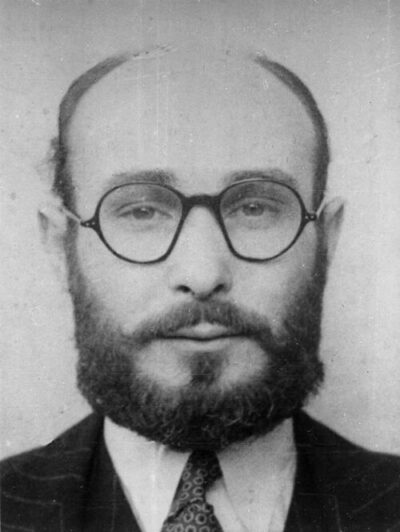
Joan Pujol García
Joan Pujol García was a Spanish spy, double agent for the British in World War II. Born February 14, 1914, in Barcelona. Died October 10, 1988, in Caracas. Educated at Centre educatiu privat Maristes Valldemia. Awards include Iron Cross and Honorary Member of the Order of the British Empire.
Facts
16 facts · 1 confirmed by two sources · 5 cited · 9 from one source · 1 where the sources disagree
What’s different
- Born: we show February 14, 1914 (Sources disagree). Wikipedia says February 14, 1912
Where this comes from
Papalocal keeps its own record. It started from these sources; what each one said is kept here as it was copied, so a change on their side never changes this page by itself. Tap one to read its version.
What Wikidata says · copied November 16, 2026 · revision 2560543808
- Described as
- Spanish spy, double agent for the British in World War II
- Other names
- Joan Pujol i Garcia, Joan Pujol, Garbo, Juan Pujol, Juan Pujol Garcia, Arabel, Bovril, Alaric
- Born
- February 14, 1914 · 2 references
- Died
- October 10, 1988 · 2 references
- Born in
- Barcelona · 1 reference
- Died in
- Caracas · 1 reference
- Citizen of
- Spain
- Occupation
- spy · 1 reference; military personnel; double agent; shopkeeper; English teacher; merchant · 1 reference
- Education
- Centre educatiu privat Maristes Valldemia
- Awards
- Iron Cross · 1 reference; Honorary Member of the Order of the British Empire
- Field
- military deception
- Spouse
- Araceli González Carballo
- Wikipedias with a page
- 30
Wikidata item Q403394 (wikidata.org/wiki/Q403394), public domain (CC0). Copied November 16, 2026.
What Wikipedia says · copied November 16, 2026 · revision 1385136114
Juan Pujol García (Spanish: [ˈxwan puˈʝol ɣaɾˈθi.a]; 14 February 1912 – 10 October 1988) was a Spanish spy who worked as a double agent loyal to the United Kingdom against Nazi Germany during World War II, when he relocated to Britain to carry out fictitious spying activities for the Germans. He was given the codename Garbo by the British; their German counterparts codenamed him Alaric and referred to his non-existent spy network as "Arabal".
After developing a loathing of totalitarianism during the Spanish Civil War, Pujol decided to become a spy for Britain as a way to do something "for the good of humanity". Pujol and his wife contacted the British Embassy in Madrid, which rejected his offer.
Undeterred, he created a false identity as a fanatically pro-Nazi Spanish government official and successfully became a German agent. He was instructed to travel to Britain and recruit additional agents; instead he moved to Lisbon and created bogus reports about Britain from a variety of public sources including a tourist guide to Britain, train timetables, cinema newsreels, and magazine advertisements.
Although the information would not have withstood close examination, Pujol soon established himself as a trustworthy agent. He began inventing fictitious sub-agents who could be blamed for false information and mistakes. The Allies finally accepted Pujol when the Germans expended considerable resources attempting to hunt down a fictitious convoy. Following interviews by Desmond Bristow of Section V MI6 Iberian Section, Pujol was taken on. The family were moved to Britain and Pujol was given the code name "Garbo". Pujol and his handler Tomás Harris spent the rest of the war expanding the fictitious network, communicating to the German handlers at first by letters and later by radio. Eventually the Germans were funding a network of 27 agents, all fictitious.
Pujol had a key role in the success of Operation Fortitude, the deception operation intended to mislead the Germans about the timing, location, and scale of the invasion of Normandy in 1944. The false information Pujol supplied helped persuade the Germans that the main attack would be in the Pas de Calais, so that they kept large forces, including the Fifteenth Army, lead by Hans von Salmuth, there before and even after the invasion. Pujol had the distinction of receiving military decorations from both sides of the war – being awarded the Iron Cross and later becoming a Member of the Order of the British Empire.
- Born, in its opening lines
- February 14, 1912
- Died, in its opening lines
- October 10, 1988
From the Wikipedia article “Juan Pujol García” (en.wikipedia.org/wiki/Juan_Pujol_García), by its contributors, under CC BY-SA 4.0 (creativecommons.org/licenses/by-sa/4.0/). Copied November 16, 2026; not changed.
Confirmed Two sources agree. Cited One source, and it names where it got it. One source One source, without a reference of its own. Sources disagree The sources disagree. We show the best-supported value and keep theirs below.
