
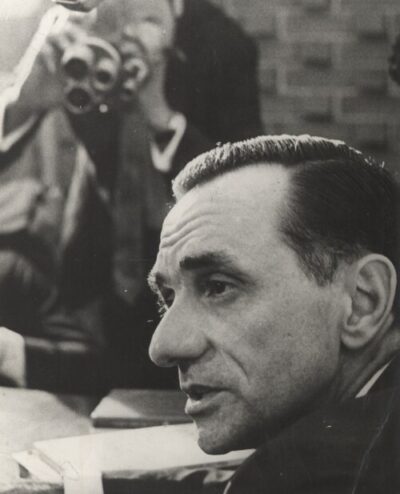
João Cabral de Melo Neto
João Cabral de Melo Neto was a Brazilian writer. Born January 9, 1920, in Recife. Died October 9, 1999, in Rio de Janeiro. Awards include Camões Prize, Prêmio Jabuti and Neustadt International Prize for Literature.
Facts
18 facts · 1 confirmed by two sources · 11 cited · 5 from one source · 1 where the sources disagree
What’s different
- Born: we show January 9, 1920 (Sources disagree). Wikipedia says January 6, 1920
Where this comes from
Papalocal keeps its own record. It started from these sources; what each one said is kept here as it was copied, so a change on their side never changes this page by itself. Tap one to read its version.
What Wikidata says · copied November 18, 2026 · revision 2558042405
- Described as
- Brazilian writer (1920-1999)
- Born
- January 9, 1920 · 4 references
- Died
- October 9, 1999 · 5 references
- Born in
- Recife · 1 reference
- Died in
- Rio de Janeiro · 3 references
- Citizen of
- Brazil · 3 references
- Occupation
- poet · 3 references; diplomat · 1 reference; writer · 5 references; playwright
- Member of
- Brazilian Academy of Letters
- Awards
- Camões Prize (1990) · 1 reference; Prêmio Jabuti (1967); Neustadt International Prize for Literature (1992) · 1 reference; Order of Cultural Merit (Brazil) (2010); Grand Cross of the Military Order of Christ · 1 reference; Grand Officer of the Military Order of Saint James of the Sword · 1 reference; Reina Sofía Award (1994) · 1 reference
- Spouse
- Marly de Oliveira (1986–1999)
- Wikipedias with a page
- 22
Wikidata item Q1152840 (wikidata.org/wiki/Q1152840), public domain (CC0). Copied November 18, 2026.
What Wikipedia says · copied November 18, 2026 · revision 1371896484
João Cabral de Melo Neto (January 6, 1920 – October 9, 1999) was a Brazilian poet and diplomat, and one of the most influential writers in late Brazilian modernism. He was awarded the 1990 Camões Prize and the 1992 Neustadt International Prize for Literature, the only Brazilian poet to receive such award to date. He was considered until his death a perennial competitor for the Nobel Prize in Literature.
Melo Neto's works are noted for the rigorous, yet inventive attention they pay to the formal aspects of poetry. He derives his characteristic sound from a traditional verse of five or seven syllables (called ‘’redondilha’’) and from the constant use of oblique rhymes. His style ranges from the surrealist tendency which marked his early poetry to the use of regional elements of his native northeastern Brazil. In many works, including the famed auto Morte e Vida Severina, Melo Neto's addresses the life of those affected by the poverty and inequality in Pernambuco.
- Born, in its opening lines
- January 6, 1920
- Died, in its opening lines
- October 9, 1999
From the Wikipedia article “João Cabral de Melo Neto” (en.wikipedia.org/wiki/João_Cabral_de_Melo_Neto), by its contributors, under CC BY-SA 4.0 (creativecommons.org/licenses/by-sa/4.0/). Copied November 18, 2026; not changed.
Confirmed Two sources agree. Cited One source, and it names where it got it. One source One source, without a reference of its own. Sources disagree The sources disagree. We show the best-supported value and keep theirs below.
