
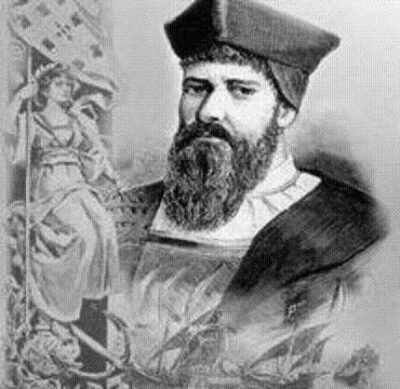
João de Nóvoa
João de Nóvoa was a Galician explorer, Navigator and Politician. Born 1450, in Maceda. Died July 10, 1509, in Kochi. Positions held include Mayor of Lisbon.
Facts
10 facts · 0 confirmed by two sources · 2 cited · 8 from one source
Where this comes from
Papalocal keeps its own record. It started from these sources; what each one said is kept here as it was copied, so a change on their side never changes this page by itself. Tap one to read its version.
What Wikidata says · copied November 17, 2026 · revision 2528614891
- Described as
- Galician explorer, Navigator and Politician
- Other names
- João da Nova the Galician
- Born
- 1450 · 1 reference
- Died
- July 10, 1509
- Born in
- Maceda
- Died in
- Kochi
- Citizen of
- Kingdom of Galicia; Kingdom of Portugal
- Occupation
- explorer; seafarer; Alfonso de Alemcastre · 2 references
- Positions held
- Mayor of Lisbon
- Wikipedias with a page
- 26
Wikidata item Q435882 (wikidata.org/wiki/Q435882), public domain (CC0). Copied November 17, 2026.
What Wikipedia says · copied November 17, 2026 · revision 1379759552
João da Nova (Galician: Xoán de Novoa, Joam de Nôvoa; Spanish: Juan de Nova; Portuguese pronunciation: [ʒuˈɐ̃w dɐ ˈnɔvɐ]; c. 1460 in Maceda, Ourense, Galicia, Spain – July 16, 1509, in Kochi, India) was a Galician-born explorer in the service of Portugal. He is credited as the discoverer of Ascension and Saint Helena islands.
The Juan de Nova Island, in the Mozambique Channel, is named after him. The Farquhar atoll (in the Seychelles) was, for a long time, known as the João da Nova islands. It is sometimes thought that the Agaléga islands (in the Indian Ocean) were also named after him (although it is almost certain he never visited them).
From the Wikipedia article “João da Nova” (en.wikipedia.org/wiki/João_da_Nova), by its contributors, under CC BY-SA 4.0 (creativecommons.org/licenses/by-sa/4.0/). Copied November 17, 2026; not changed.
Confirmed Two sources agree. Cited One source, and it names where it got it. One source One source, without a reference of its own. Sources disagree The sources disagree. We show the best-supported value and keep theirs below.
